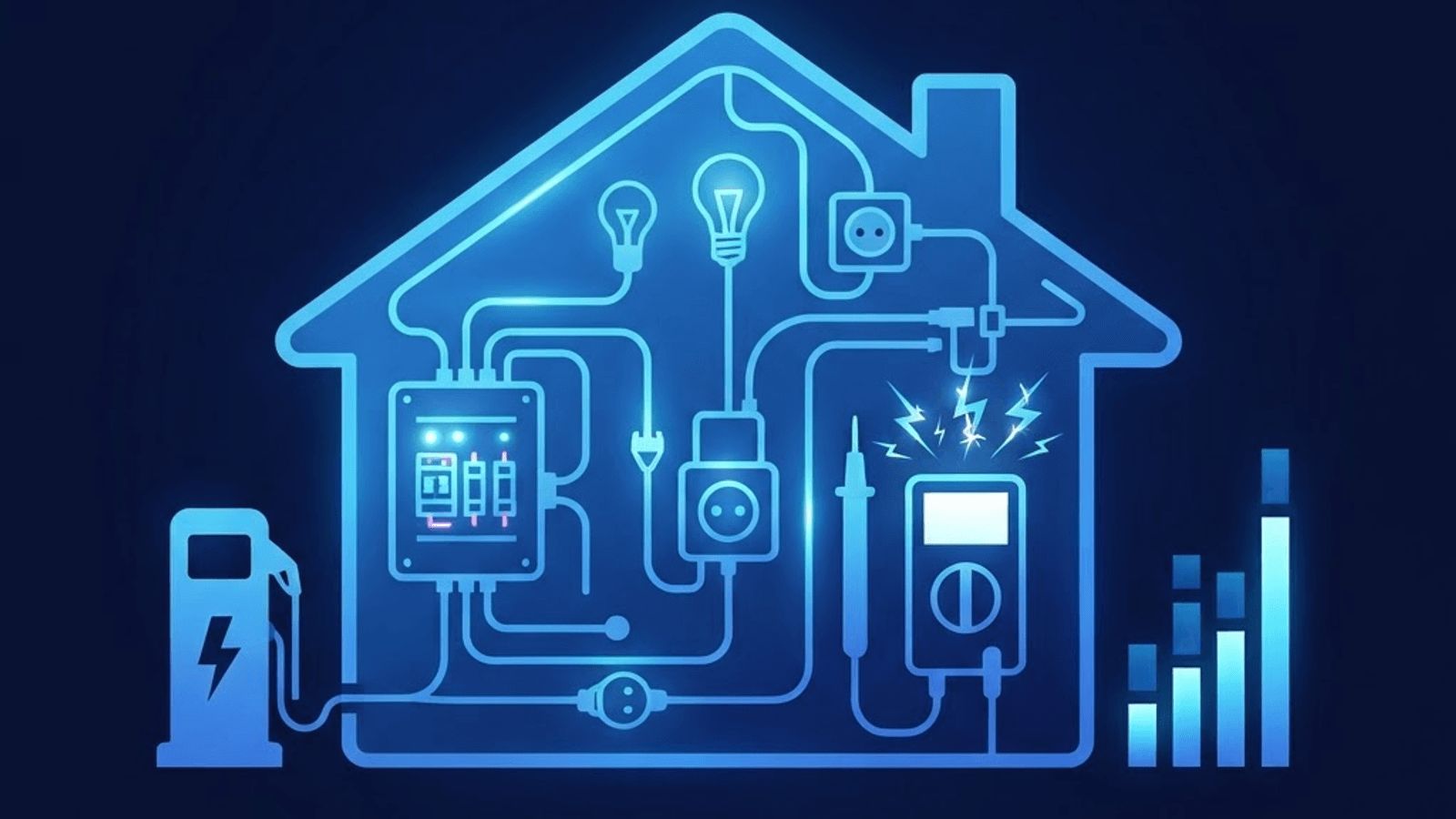
Choosing an Electrician in Gedling
Electricity is unforgiving of poor workmanship, and unlike most trades, defective electrical work often gives no warning before it becomes dangerous. That reality explains why the sector carries some of the strictest regulation in construction, and why the question of who you allow to work on your installation deserves real thought.
Gedling's housing stock produces a wide variety of electrical situations. Victorian and Edwardian properties in Carlton and Netherfield may still contain wiring installed many decades ago, sometimes with degraded insulation. Interwar and post-war semis across Arnold, Daybrook and Mapperley frequently retain old fuse boards, minimal socket provision and lighting circuits never designed for modern loads. Newer homes on the regenerated colliery land have contemporary installations but are increasingly being asked to support electric vehicles, heat pumps and solar generation.
Ten Electricians Serving the Borough
Gedling Electricians handles general domestic work including additional sockets, lighting, fault finding, consumer unit upgrades and small rewires, with registered status allowing self-certification of notifiable work.
Arnold Domestic Electrical focuses on household installations and is known for careful work in occupied homes, minimising damage to decoration and making good properly after cable routing.
Carlton Rewire Experts specialises in full and partial rewires of older properties, planning cable routes to preserve original features and phasing work so households can remain in the property where possible.
Netherfield Electrical Testing concentrates on inspection and testing, producing electrical installation condition reports for landlords and homeowners along with clear, plain-language explanations of the findings.
Mapperley Lighting Specialists designs and installs interior and exterior lighting schemes, including layered lighting design, dimming controls, garden and security lighting.
Daybrook EV Charge Point Installers handles electric vehicle charger installation with proper load assessment, earthing arrangement verification and smart charging configuration.
Colwick Fault Finding Services specialises in diagnosing intermittent and difficult electrical faults, using insulation resistance testing and circuit tracing rather than replacing components speculatively.
Gedling Emergency Electricians provides urgent attendance for power loss, repeated tripping, burning smells and other conditions requiring immediate assessment.
Burton Joyce Rural Electrical serves the eastern villages including supplies to outbuildings, workshops, stables and garden rooms, and installations subject to rural supply conditions.
Nottingham North Electrical Services completes the list with broader capability across domestic and small commercial work, including fire alarm systems, emergency lighting and data cabling.
Registration and Why It Matters Legally
Certain electrical work in dwellings is notifiable under building regulations. This includes replacing a consumer unit, installing new circuits and work in special locations such as bathrooms and outdoors. Notifiable work must be certified, either by an electrician registered with a competent person scheme or through a building control application.
Using a registered electrician is substantially simpler and cheaper. They issue the compliance certificate directly and notify the local authority on your behalf. Using an unregistered person means either paying building control separately or, more commonly, ending up with uncertified work.
Uncertified electrical work creates real problems. It surfaces during conveyancing and can delay or derail a sale. It may affect insurance claims following a fire. And correcting it later often requires exposing concealed work for inspection, which is expensive and disruptive.
For rented property, landlords must obtain an electrical installation condition report at least every five years, supply it to tenants and remedy any defects classified as requiring urgent or remedial action within a specified period. Enforcement is active and penalties are substantial.
Warning Signs That Need Attention
Some indicators warrant immediate action. A burning smell near sockets, switches or the consumer unit, scorch marks or discolouration on faceplates, sockets warm to the touch, buzzing or crackling sounds, and shocks or tingles from appliances or taps all indicate potentially dangerous conditions. Isolate the affected circuit and call an electrician without delay.
Other signs are less urgent but still important. Frequent circuit breaker tripping usually indicates a genuine fault rather than a nuisance. Flickering or dimming lights when appliances start may point to loose connections or an inadequate supply. A fuse box with rewireable ceramic fuses indicates an installation that predates modern protection standards.
The absence of residual current protection is a significant safety gap. This device detects earth leakage and disconnects within milliseconds, and it is the primary protection against fatal electric shock. Installations without it should be upgraded as a priority.
Understanding Inspection Reports
An electrical installation condition report grades observations using a standard classification. Codes indicating danger present or potentially dangerous require immediate or prompt remedial action and render the installation unsatisfactory. A code indicating improvement is recommended does not make the installation unsafe but identifies where it falls short of current standards.
It is worth understanding that installations are assessed against current standards, and an older installation may receive several improvement recommendations simply because standards have advanced. A competent electrician will explain which items genuinely matter and which are advisory, rather than presenting the whole report as urgent work.
Planning for Increasing Electrical Demand
Household electrical demand is rising steadily as heating, cooking and transport electrify. A property that comfortably served a family a decade ago may be approaching its supply capacity once an electric vehicle charger, heat pump and induction hob are added.
When commissioning any significant electrical work, it is worth discussing future plans with your electrician. Installing a larger consumer unit with spare ways, running cable capacity to a garage, or checking whether the incoming supply can be upgraded are all far cheaper when done as part of planned work than as separate projects later.
Cost and Selection
Electrical pricing varies with the complexity of the work, the age and accessibility of the installation and the extent of making good required. Obtain written quotations specifying the scope, the certification to be issued and whether plastering and decoration are included, as they frequently are not.
Verify scheme registration independently through the scheme's own records rather than relying on displayed logos. Confirm insurance. And prioritise electricians who take the time to test and diagnose rather than those who quote immediately from a description over the phone. Proper diagnosis is the foundation of safe electrical work, and it is the clearest indicator of a professional approach.
Want your brand featured in front of decision-makers? Publish a guest post or get a link insertion in our guides through AAMAX's guest post and link insertion service.
Helpful Links
 SponsoredAAMAX — Full-Service Digital Agency
Write for Us
Share your expertise with our readers. We welcome guest contributions from industry specialists.
Pitch your idea