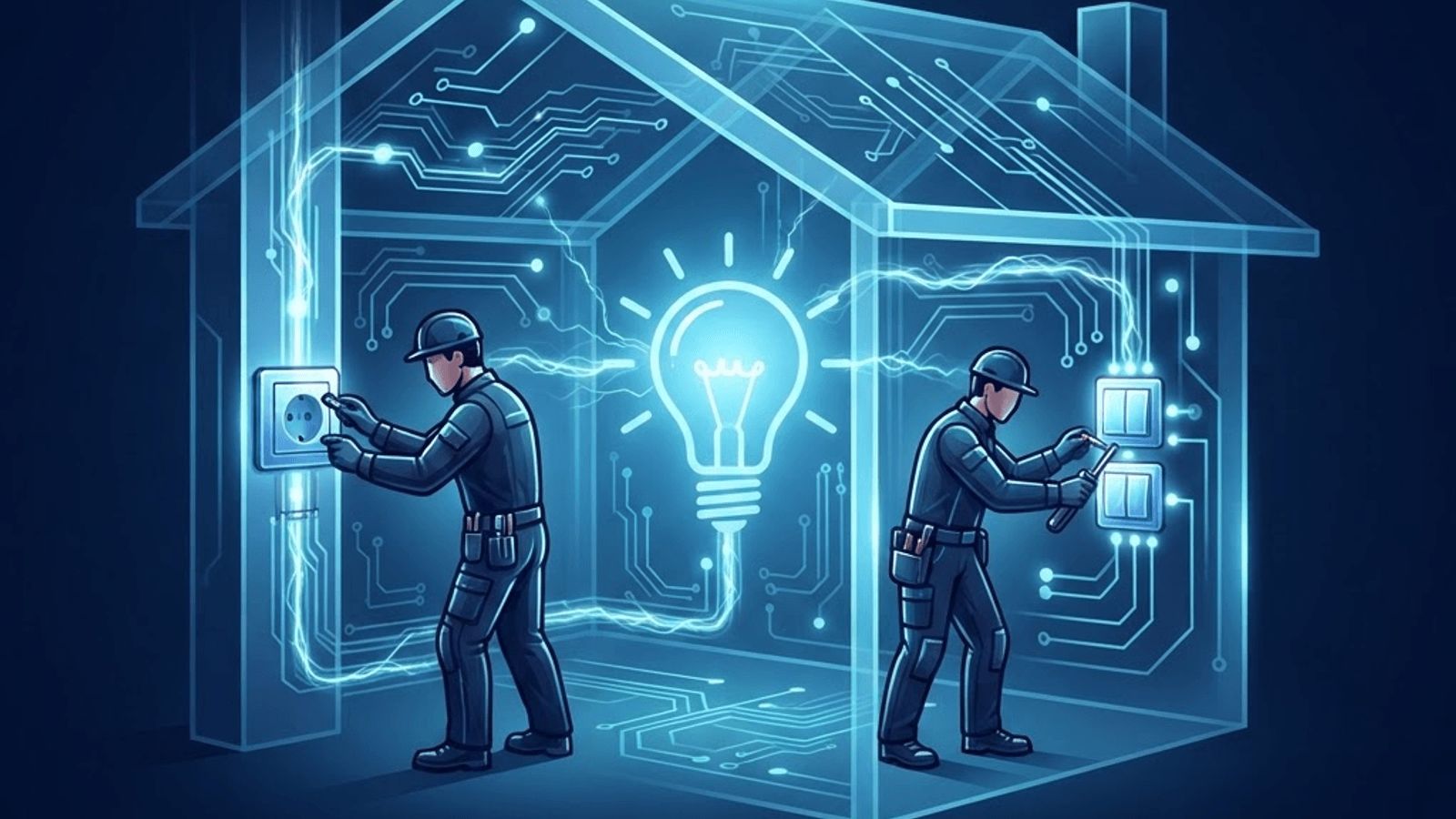
Why Electrical Competence Matters More Than Any Other Trade
Electrical faults cause a substantial proportion of accidental domestic fires in the UK, and electric shock remains a real hazard in poorly maintained installations. Unlike a leaking tap or a cracked tile, a defective electrical installation gives little warning before it becomes dangerous. This is precisely why electrical work in dwellings is regulated more tightly than almost any other building trade.
Fareham's housing stock makes this especially relevant. Many properties in Portchester, Wallington and the older parts of the town were wired decades ago and have been extended piecemeal since. Installations combining original rubber-insulated cable, 1970s additions and recent DIY work are not unusual, and each layer introduces potential problems.
Ten Electricians Serving Fareham
Solent Electrical Services handles domestic rewiring, consumer unit upgrades and inspection reporting across the Fareham area, well regarded for thorough documentation and tidy working.
Meon Electrical covers the Meon valley and surrounding area with domestic installation, fault finding and lighting work, valued for careful work in occupied family homes.
Portchester Electrical provides local domestic electrical services including landlord safety certification, small installations and repairs on a responsive basis.
Hampshire Domestic Electrics undertakes full and partial rewires, kitchen and bathroom electrics and additional circuits for home offices and garden rooms.
EV Charge Solutions specialises in home electric vehicle charge point installation, managing load assessment, earthing arrangements and distribution network operator notification.
Bright Spark Electrical offers general domestic work including socket and lighting installation, outdoor power and fault diagnosis, with straightforward call-out pricing.
Solar Power South installs photovoltaic systems and battery storage, combining renewable design with the electrical competence grid-connected generation requires.
Coastal Electrical Contractors serves properties near the shoreline where damp and corrosion place additional demands on external installations and outbuilding supplies.
Fareham Test and Inspection focuses on Electrical Installation Condition Reports and periodic testing for homeowners, landlords and small commercial premises.
Smart Home Electrical installs integrated lighting control, networked systems and home automation alongside conventional electrical work.
Certification: What to Insist On
Part P of the building regulations governs electrical safety in dwellings. Notifiable work includes installing new circuits, replacing a consumer unit and any work in bathrooms or outdoors. This must either be carried out by an electrician registered with a competent person scheme or notified to building control before work starts.
Registration schemes include NICEIC, NAPIT, ELECSA and STROMA. Registered electricians are periodically assessed and can self-certify their work, issuing a building regulations compliance certificate alongside the electrical installation certificate. Always verify registration on the scheme's public register rather than relying on a logo on a van.
Work should comply with BS 7671, the wiring regulations. Recent amendments have introduced requirements for surge protection devices and, in specified circumstances, arc fault detection devices, both of which improve safety in modern installations.
Warning Signs Your Installation Needs Attention
A fuse box with rewireable fuses rather than circuit breakers indicates an installation likely predating modern safety standards and almost certainly lacking residual current device protection on socket circuits.
Frequently tripping breakers signal an underlying fault rather than an inconvenience to be reset repeatedly. Persistent tripping warrants investigation, not a higher-rated device.
Scorch marks or discolouration around sockets and switches, a burning smell, buzzing from fittings, or sockets warm to the touch all indicate overheating connections requiring immediate attention.
Flickering lights across multiple circuits, mild tingling from appliances, and round-pin sockets or fabric-covered cable visible in the loft all point to an installation needing assessment and probable renewal.
The Work Fareham Homes Most Commonly Need
Consumer unit upgrades replace outdated fuse boxes with modern units providing RCD protection, and increasingly surge and arc fault protection. This is among the highest-value safety improvements available at moderate cost.
Electrical Installation Condition Reports assess an installation's safety and are recommended every ten years for owner-occupiers and legally required every five years for private rented property. Observations coded as requiring urgent or immediate remedial action must be addressed promptly.
Full rewiring is disruptive but necessary where cable insulation has degraded. It involves lifting floors, chasing walls and subsequent making good, so coordinating it with wider refurbishment is sensible.
EV charge point installation has become one of the most requested services. The electrician must assess whether the existing supply can support the additional load, and where it cannot, load-managing chargers offer a considerably cheaper alternative to a supply upgrade.
Additional circuits for garden offices, outbuildings and hot tubs require armoured cable, appropriate protection and careful earthing design, particularly where the supply uses a protective multiple earthing arrangement.
Selecting and Working With an Electrician
Obtain quotations from at least three registered electricians, each specifying the work, materials, certification to be issued and whether making good of plaster and decoration is included. This last point causes more disputes than any other on rewiring projects.
Ask what testing will be performed and request copies of all certificates on completion. These documents matter when selling the property and when making insurance claims.
Discuss disruption honestly. Rewiring an occupied house is invasive, and agreeing a room-by-room sequence and daily working hours in advance makes the process considerably more tolerable.
Safety Practices for Householders
Test RCDs using the test button every six months and contact an electrician if a device fails to trip. Avoid daisy-chaining extension leads and never run high-current appliances such as heaters through them.
Replace damaged cables, cracked sockets and faulty plugs immediately. Keep electrical equipment away from water and ensure outdoor sockets are of an appropriate weatherproof rating.
Never undertake notifiable work yourself. Beyond the legal issues, uncertified work can invalidate home insurance and complicate property sale considerably.
Conclusion
Electrical work is the one trade where cutting corners carries genuinely serious consequences. Fareham has a solid base of registered domestic electricians capable of everything from routine socket installation to full rewiring and EV infrastructure. Verify scheme registration directly, insist on proper certification, act promptly on warning signs, and treat periodic inspection as essential maintenance rather than an optional expense. The cost is modest against the risk it eliminates.
Want your brand featured in front of decision-makers? Publish a guest post or get a link insertion in our guides through AAMAX's guest post and link insertion service.
Helpful Links
 SponsoredAAMAX — Full-Service Digital Agency
Write for Us
Share your expertise with our readers. We welcome guest contributions from industry specialists.
Pitch your idea