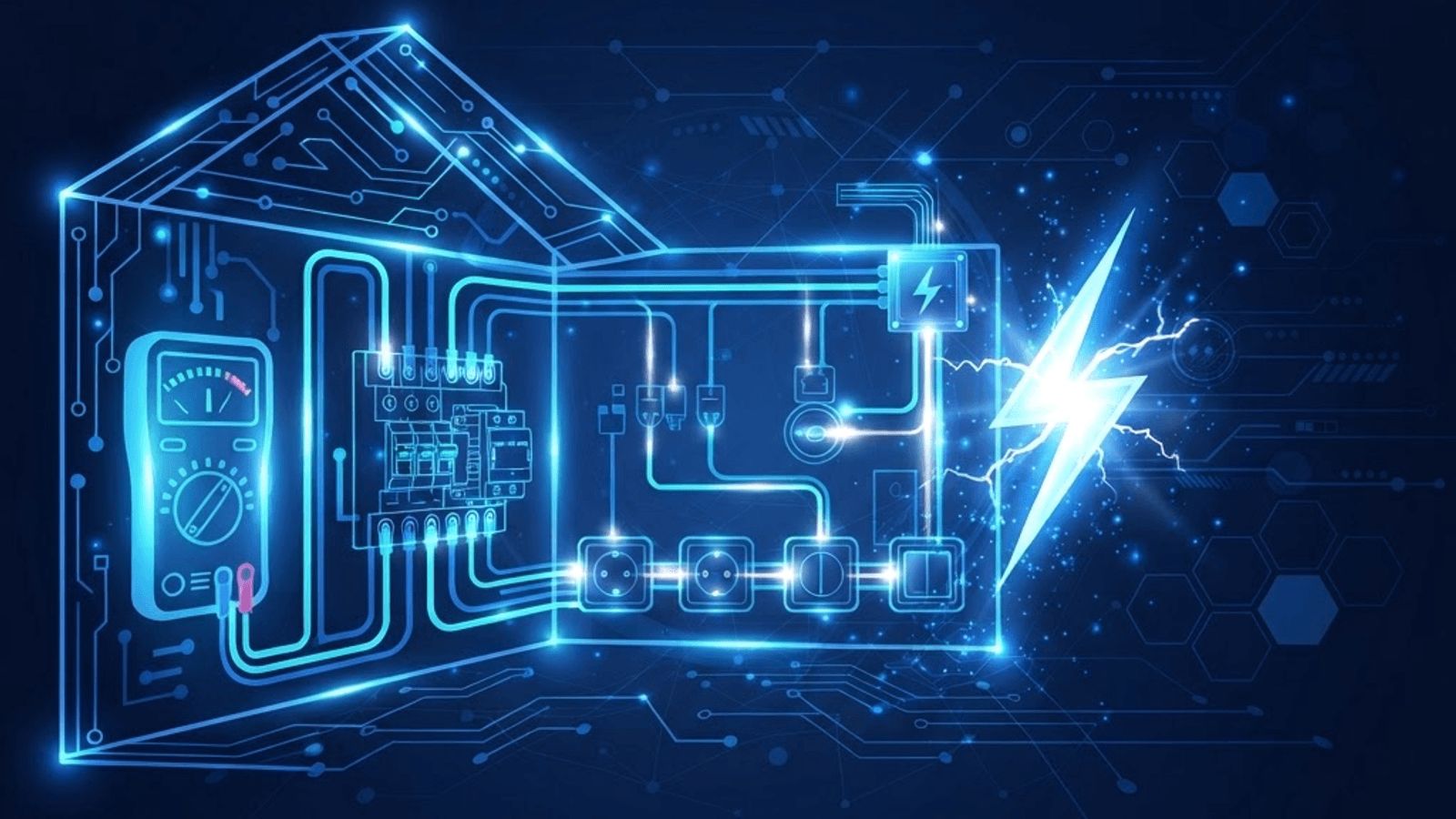
Why Electrician Selection Is a Safety Decision
Unlike most trades, the quality of electrical work cannot be assessed by looking at it. A socket installed with loose terminations, inadequate cable sizing or missing earth continuity looks identical to a perfect one. The difference only becomes apparent when a connection overheats or a fault occurs and the protective device fails to operate. This is why registration, inspection and certification exist, and why they should be the first thing any householder checks.
Broxtowe's older housing makes this especially relevant. A substantial number of properties across Stapleford, Beeston, Eastwood and the former colliery villages still have installations that predate modern protective requirements. Rewireable fuseboards, absent residual current protection, insufficient sockets leading to extension lead overload, and occasional survivals of rubber or lead-sheathed cabling all present genuine risk.
Ten Electricians Serving Broxtowe
Broxtowe Electricians handles domestic electrical work across the borough including additional sockets, lighting, fault finding and consumer unit replacement.
Beeston Electrical Repairs focuses on responsive fault diagnosis, tracing intermittent tripping and earth faults that other electricians have failed to resolve.
Chilwell Electrical Installations carries out full and partial rewires with structured programmes that allow households to remain in occupation.
Stapleford Certified Electrical specialises in electrical installation condition reports for homeowners, landlords and property purchasers.
Kimberley Electrical Contractors serves the north of the borough with domestic and light commercial work including outbuilding supplies.
Eastwood Domestic Electrical provides lighting design and installation, including garden and security lighting and integrated dimming control.
Bramcote Electrical Services concentrates on kitchen and bathroom electrics, where zoning regulations and supplementary bonding apply.
Attenborough EV Charging Installers installs domestic electric vehicle charge points with load assessment and network operator notification.
Toton Electrical and Testing combines installation with periodic testing services for small commercial premises.
Trent Valley Electrical offers landlord compliance packages covering EICRs, remedial works, PAT testing and smoke alarm installation.
Certification and Legal Framework
Part P of the Building Regulations governs electrical safety in dwellings. Notifiable work, including new circuits and consumer unit replacement, must be certified. Electricians registered with a competent person scheme such as NICEIC, NAPIT, ELECSA or STROMA can self-certify, issuing a compliance certificate and notifying building control on your behalf. An unregistered electrician requires a separate building control application, which costs more and takes longer.
Three certificate types matter. The Electrical Installation Certificate covers new installations and circuits. The Minor Electrical Installation Works Certificate covers alterations to existing circuits. The Electrical Installation Condition Report is a periodic assessment recording observations with classification codes: C1 indicating immediate danger, C2 potentially dangerous, C3 improvement recommended, and FI further investigation required.
These documents are not bureaucracy. They are required at property sale, demanded by insurers after a fire, and legally mandatory for landlords, who must obtain an EICR at least every five years, supply it to tenants, and complete C1 and C2 remedial work within twenty-eight days.
Warning Signs in a Domestic Installation
Several indicators suggest an installation needs professional assessment. A fusebox with rewireable fuses rather than circuit breakers is typically decades old and lacks residual current protection. Frequent tripping indicates a genuine fault rather than a nuisance and should be investigated rather than repeatedly reset. Warm or discoloured socket faceplates suggest loose connections generating heat. A burning or fishy smell near outlets is serious and warrants immediate attention.
Flickering lights, particularly when appliances start, may indicate loose neutral connections or supply issues. Buzzing from switches or the consumer unit is abnormal. Older round-pin sockets, black rubber-sheathed cabling, fabric-covered flex or cast iron switches are all signs of an installation well beyond its intended life.
Outside, the absence of residual current protection on socket circuits serving garden equipment is a significant hazard, as is buried cable installed without proper armouring or depth.
Rewiring: What It Involves
A full rewire is disruptive but occasionally unavoidable. It involves lifting floorboards, chasing walls, replacing all cabling, installing a new consumer unit, and adding modern socket and lighting provision. Plaster making good and redecoration follow, and these costs should be clarified upfront since they are frequently excluded from electrical quotations.
Partial rewires are sometimes appropriate where only certain circuits are defective, though mixing old and new can complicate future testing. Renovation is the natural time to rewire, since access is already open and the additional cost is far lower than doing it in a finished house.
During any rewire, consider future needs: data cabling for reliable home working, additional sockets in every room to eliminate extension leads, outdoor supplies, loft and garage circuits, and provision for an EV charger even if the vehicle comes later. Running a cable during a rewire costs a fraction of retrofitting it.
Electric Vehicle Charging and Solar
Home charging installation requires more than fitting a unit to a wall. The electrician must assess the incoming supply capacity, existing maximum demand and earthing arrangement, since certain earthing configurations require specific protective measures for outdoor charging. Smart charge point regulations mandate default off-peak charging schedules and specific functionality. Notification to the distribution network operator is required, and in some cases prior approval.
Solar photovoltaic and battery installations similarly require network notification, appropriate protection, and ideally MCS certification to access export payments. Combining EV charging, solar and battery storage requires coordinated design rather than three separate installations.
Choosing Well
Check scheme registration on the relevant online register rather than trusting a logo. Confirm public liability insurance. Ask for a written quotation detailing circuits, accessories and whether making good is included. Request the certification that will be issued on completion and keep it with your property documents.
Be wary of anyone who dismisses certification as unnecessary for small jobs, who cannot explain why a particular protective device is specified, or who offers a substantially lower price with no accompanying paperwork.
Conclusion
Electrical safety is not an area that rewards economising. Broxtowe's best electricians are registered, test what they install, provide documentation without being asked, and explain their recommendations in terms a householder can follow. Given that the consequences of poor electrical work are fire and electric shock, those standards are the minimum worth accepting.
Want your brand featured in front of decision-makers? Publish a guest post or get a link insertion in our guides through AAMAX's guest post and link insertion service.
Helpful Links
 SponsoredAAMAX — Full-Service Digital Agency
Write for Us
Share your expertise with our readers. We welcome guest contributions from industry specialists.
Pitch your idea