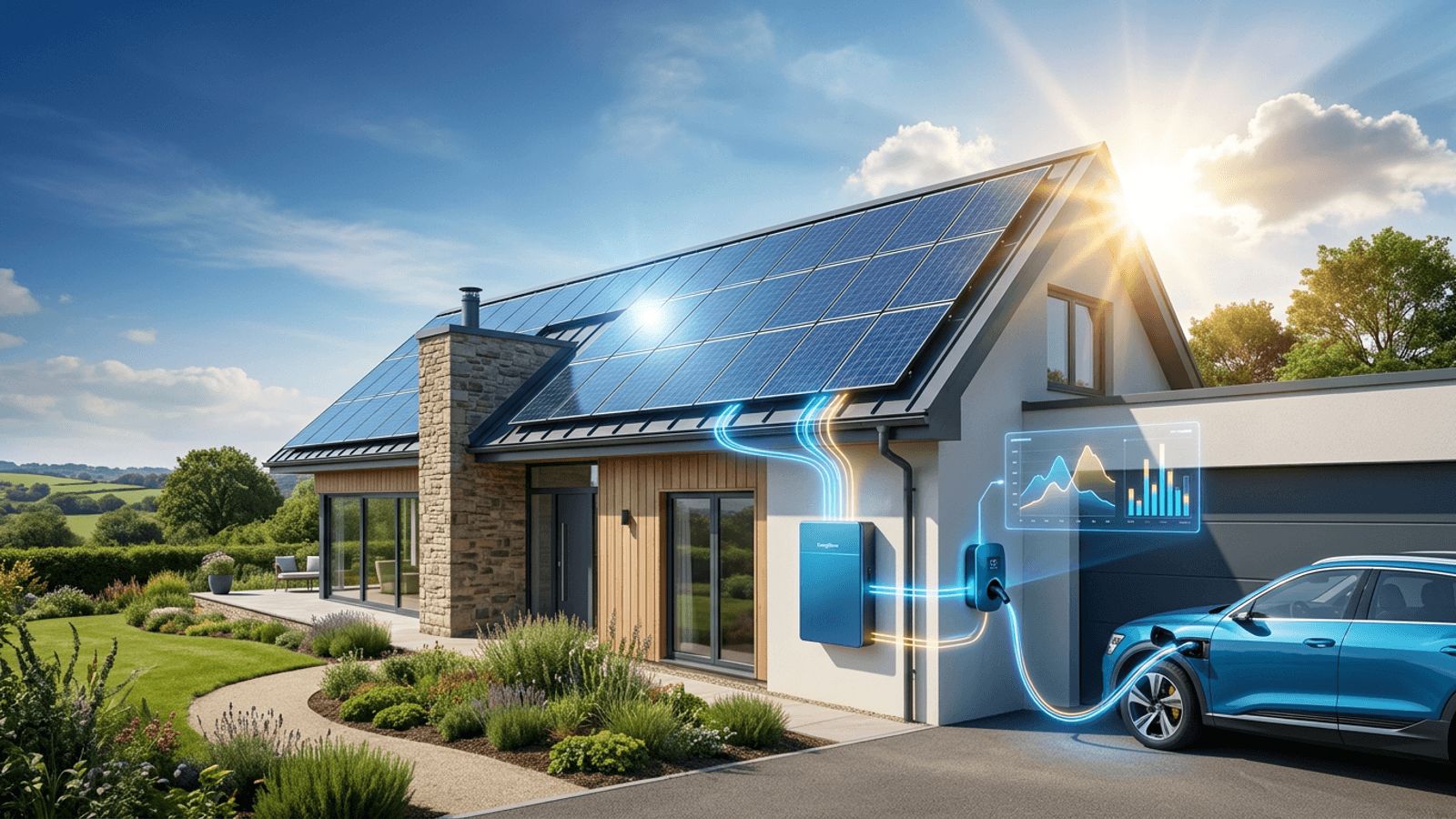
Electrical Work in a Changing Energy Landscape
Electrical installation has changed more in the last decade than in the previous fifty years. Homes that once needed capacity for lighting, sockets and a cooker now support electric vehicle charging, heat pumps, solar generation, battery storage, home offices and extensive smart technology. In the Vale of White Horse, where household incomes support early adoption of these technologies and where many residents commute significant distances, that transition is well advanced.
The district's building stock complicates matters. Period properties in Abingdon and the villages often retain wiring installed decades ago, with insufficient circuits, no earthing to some points and consumer units lacking modern protective devices. Rural properties may have long supply cables, overhead connections vulnerable to storm damage and outbuildings requiring submain provision. Competent electrical contractors navigate all of this while meeting current wiring regulations.
1. Domestic Electricians and Registered Installers
General domestic electricians handle the everyday work of household electrical systems: additional sockets and lighting points, consumer unit replacement, fault finding, outdoor and garden circuits, extractor fan installation and appliance connection. The important qualification consideration is registration with a recognised competent person scheme, which allows the electrician to self-certify notifiable work under building regulations and issue the appropriate certification. Work carried out without this creates problems at sale or remortgage.
2. Rewiring and Consumer Unit Upgrade Specialists
Full and partial rewiring is common in the district's older housing. Rewiring specialists replace deteriorated cable, install adequate circuit provision for modern loads, fit consumer units with residual current protection and arc fault detection where appropriate, and provide proper earthing and bonding to gas, water and structural metalwork. Sensitive rewiring of period property minimises damage to original plaster and joinery through careful cable routing, which is a skill in itself. Completion includes an electrical installation certificate with full test results.
3. Electrical Inspection and Testing Contractors
Periodic inspection and testing assesses the condition and safety of an existing installation, producing an electrical installation condition report that classifies any defects by severity. Landlords are legally required to obtain these reports at defined intervals for rented property, and homeowners are advised to do so periodically or on purchase. Commercial premises require testing to support insurance and statutory duties, along with portable appliance testing. A good report explains findings clearly rather than simply listing code classifications.
4. Electric Vehicle Charging Point Installers
Electric vehicle adoption in the Vale has been strong, and charge point installation is now a mainstream service. Competent installation involves assessing the existing supply capacity, fitting load management where capacity is limited, providing correct earthing arrangements including protection against loss of the supply earth, specifying appropriate residual current protection, and positioning units sensibly for cable routing. Installers also work on workplace charging at business parks and on multi-point installations for fleet operators, which require load balancing across several units.
5. Solar Photovoltaic and Battery Storage Installers
Renewable energy installers design and fit solar photovoltaic arrays, inverters, battery storage and associated monitoring. Good design accounts for roof orientation and pitch, shading from trees and neighbouring buildings, structural capacity, and realistic yield expectations for the location. Battery storage increases self-consumption of generated energy and, when combined with time-of-use tariffs, allows cheap overnight import for daytime use. Installers handle the notification to the distribution network operator that connection requires, and appropriate accreditation is needed for export payment arrangements.
6. Commercial and Industrial Electrical Contractors
Commercial contractors work on offices, laboratories, warehouses, retail units and manufacturing premises across Milton Park, Harwell and the district's industrial estates. Their scope covers three-phase distribution, switchgear and distribution boards, motor control, cable containment systems, emergency lighting design and testing, fire alarm installation, and power provision for specialist equipment. Laboratory and technology facilities often require clean power, uninterruptible supplies and standby generation, which demand specialist design capability.
7. Lighting Design and Installation Specialists
Lighting specialists move beyond simply providing illumination to designing schemes that shape how spaces feel and function. Domestic work includes layered lighting with ambient, task and accent sources, dimming and scene control, and external and garden lighting designed to minimise light pollution, which matters in a rural district with dark skies. Commercial lighting design addresses illuminance levels appropriate to tasks, glare control for screen-based work, and energy efficiency through efficient luminaires and presence detection.
8. Smart Home and Building Automation Installers
Automation specialists integrate heating, lighting, blinds, audio, security and access control into unified systems controlled by app, panel or voice. Properly implemented, this delivers genuine benefits in energy management, convenience and security. The distinction between a professional installation and an accumulation of consumer devices lies in reliability, network design, and having a single coherent system rather than several incompatible ecosystems. Structured data cabling installed during renovation provides a far more robust foundation than relying on wireless alone.
9. Security, Fire and Access Control Specialists
Security installers fit intruder alarms, closed circuit television, video door entry, access control and gate automation. Fire specialists design and install detection and alarm systems appropriate to the building's risk profile, along with emergency lighting and their required periodic testing. For rural properties, where response times are longer and neighbours more distant, well-designed security has particular value. Compliance with data protection requirements applies to camera systems that capture areas beyond the property boundary.
10. Agricultural and Outbuilding Electrical Contractors
The district's rural economy sustains contractors specialising in agricultural electrical work: supplies to barns and workshops, three-phase provision for machinery, livestock building lighting and ventilation controls, grain drying and handling equipment, water pump circuits and electric fencing. This environment is demanding, with dust, moisture, corrosive atmospheres and mechanical damage risk requiring appropriate enclosure ratings and robust installation methods. Submain design to distant outbuildings requires careful attention to voltage drop and earthing arrangements.
Choosing an Electrical Contractor
Registration with a recognised competent person scheme is the essential starting point, and it can be verified independently. Ask what certification will be provided on completion, as an electrical installation certificate or minor works certificate with test results is your evidence of compliance and is required by conveyancers and insurers.
Confirm public liability insurance, and for larger projects check that the contractor holds appropriate qualifications for the specific work, whether that is charge point installation, solar photovoltaic systems or fire alarm design. Obtain written quotations detailing materials and labour, and clarify whether making good of plaster and decoration is included, as this is a frequent misunderstanding.
Safety Practices for Homeowners
Several simple checks improve household electrical safety. Test residual current devices periodically using the test button. Replace any consumer unit still using rewireable fuses, as it almost certainly lacks modern protection. Avoid extending circuits with permanent multi-way adaptors, particularly for high-load appliances. Have any burning smell, warm socket faceplate, repeated tripping or flickering investigated promptly rather than tolerated.
For anyone buying a property in the district, commissioning an electrical installation condition report before purchase is a modest cost that identifies whether rewiring is needed, which is one of the larger renovation expenses.
The Direction of Travel
Electrification of heat and transport is placing new demands on domestic supplies, and capacity assessment is becoming a routine part of home improvement planning. Some properties will require supply upgrades from the distribution network operator, which has cost and lead time implications worth investigating early. Meanwhile, smart metering, flexible tariffs and vehicle-to-home capability are creating opportunities for households to reduce costs actively rather than passively consuming energy. Electrical contractors across the Vale of White Horse who understand this integrated energy picture provide considerably more value than those who simply install to specification.
Want your brand featured in front of decision-makers? Publish a guest post or get a link insertion in our guides through AAMAX's guest post and link insertion service.
Helpful Links
 SponsoredAAMAX — Full-Service Digital Agency
Write for Us
Share your expertise with our readers. We welcome guest contributions from industry specialists.
Pitch your idea