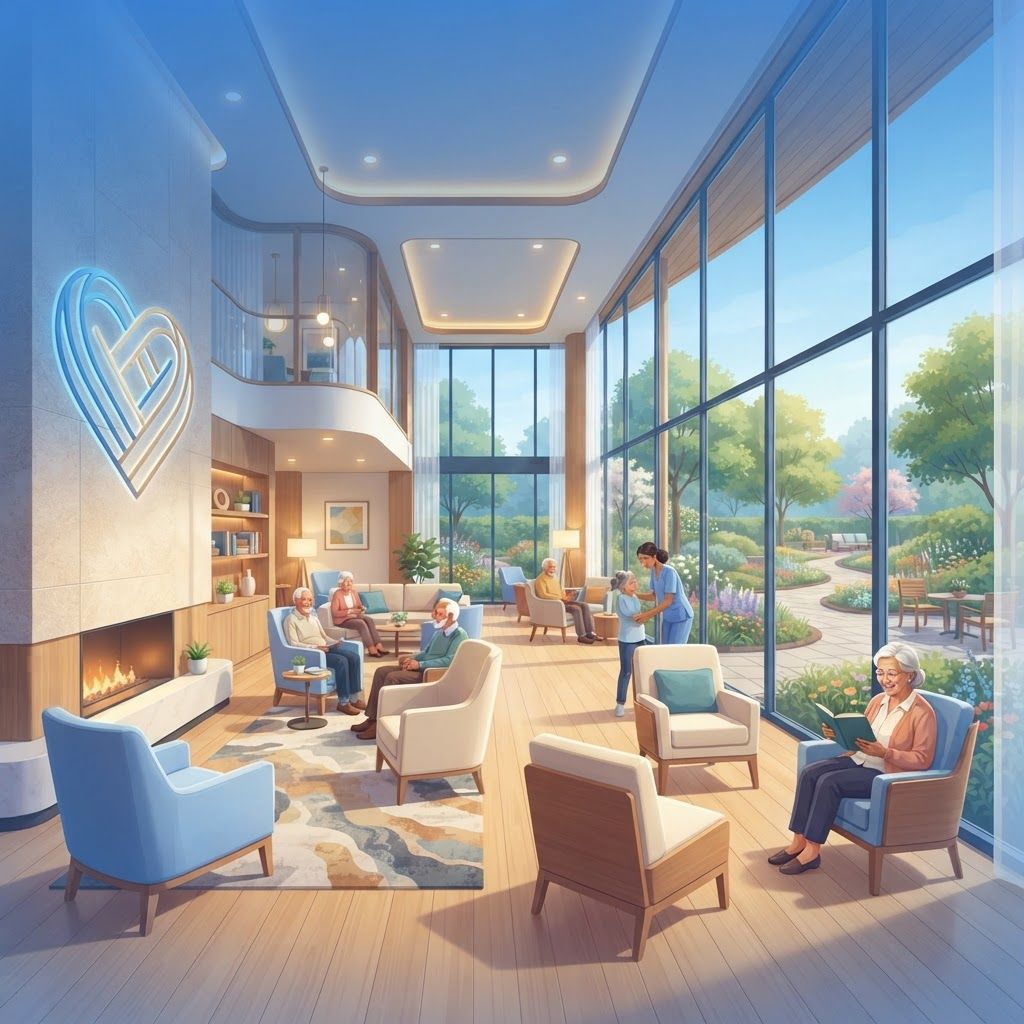
Understanding Elderly Care in Nuneaton and Bedworth
Nuneaton and Bedworth has an ageing population profile typical of many English market towns, with a growing cohort of residents over seventy-five and rising demand for both residential and nursing care. Warwickshire County Council commissions a significant share of local placements, while private and family-run homes serve self-funding residents. The result is a mixed market with genuinely strong options, but also wide variation in facilities, staffing ratios and specialisms.
Understanding the categories of care is the essential first step. Residential care covers help with washing, dressing, medication prompts and meals for people who no longer manage safely at home. Nursing care adds qualified nurses on site around the clock for residents with complex medical needs, catheters, wounds or advanced frailty. Dementia care is a specialism within either category, requiring secure environments, trained staff and thoughtfully designed spaces. Respite care offers short stays that give family carers a break or support recovery after a hospital discharge.
The Top 10 Elderly Care Providers in the Borough
1. Galley Common Nursing Home
Set in a quieter village setting on the edge of Nuneaton, Galley Common Nursing Home is well regarded for its nursing-led provision and calm environment. Families frequently highlight the continuity of staff, which matters enormously for residents with memory difficulties who benefit from familiar faces.
2. Hansa Care Home
Hansa Care Home has built a reputation for culturally sensitive care, including attention to dietary preferences, language and religious observance. For families from the borough's diverse communities, this attentiveness to identity and routine makes a substantial difference to a resident's sense of belonging.
3. The Grange Care Home
The Grange offers residential and dementia care in a purpose-adapted building with landscaped gardens. Its activity programme is a standout feature, with music sessions, gardening clubs and reminiscence work using local Warwickshire imagery that resonates strongly with lifelong residents of the area.
4. Ashlea Mews Care Home
Ashlea Mews provides a more modern, apartment-style environment with en-suite rooms and communal lounges arranged in smaller household groups. This small-unit model reduces noise and confusion, and is increasingly recognised as best practice in dementia-friendly design.
5. Bramcote Hills Care Home
Bramcote Hills combines nursing and residential care with a strong clinical focus, working closely with district nursing teams and local GP practices. It suits families whose relative has significant medical needs but who want a homely setting rather than a hospital atmosphere.
6. Nuneaton Manor Care Centre
A larger facility offering several care categories on one site, Nuneaton Manor allows residents to move between levels of support without relocating as their needs change. That continuity is a genuine advantage, sparing families the upheaval of a second move during a difficult period.
7. Bedworth Grange Residential Home
Serving the Bedworth community, this home emphasises independence, encouraging residents to maintain routines, hobbies and local connections. Its proximity to Bedworth town centre makes visiting straightforward for family members without cars.
8. Camp Hill Care Home
Camp Hill Care Home focuses on person-centred residential care with an approachable, family-run feel. Smaller homes like this often score highly on warmth and individual attention, with managers who know every resident personally.
9. Sunnyside House
Sunnyside House specialises in supporting residents living with dementia, using secure outdoor space, clear wayfinding and consistent daily rhythms to reduce anxiety. Staff training in dementia communication techniques is a defining feature.
10. Attleborough Grange
Attleborough Grange rounds out the list with well-maintained facilities and a reputation for strong end-of-life and palliative support, working alongside local hospice and community nursing services to keep residents comfortable and dignified in their final months.
How to Assess a Care Home Properly
Brochures and websites reveal very little. The most reliable assessment comes from visiting, ideally twice, with one visit unannounced and at a mealtime. Pay attention to whether residents are engaged or parked in front of a television, whether staff speak to people by name and at eye level, and whether the building smells clean without being masked by heavy air freshener.
Ask specific questions. What is the staff-to-resident ratio during the day and overnight? What is the annual staff turnover rate? How many permanent staff versus agency cover a typical week? How are care plans reviewed, and how are families involved? What happens if a resident's needs increase — will they be asked to leave? How are complaints logged and resolved? A confident, well-run home answers these directly; hesitation is informative.
Always check the most recent Care Quality Commission inspection report, reading the detail rather than just the headline rating. A home rated Good with strong comments on caring and responsiveness may suit your relative better than one rated Outstanding for administration but weaker on daily engagement.
Costs and Funding in Warwickshire
Care costs in the borough sit broadly in line with the West Midlands average, with nursing care commanding a premium over residential care. Families should establish early whether their relative is likely to be self-funding or eligible for local authority support following a financial assessment, and whether NHS Continuing Healthcare funding might apply where needs are primarily health-related. Independent financial advice on care fee planning is worth obtaining before committing, particularly where a property sale is involved.
Trends Shaping Local Elderly Care
Several developments are reshaping provision across Nuneaton and Bedworth. Homes are investing in digital care planning, which improves record accuracy and allows families to receive updates more reliably. There is a clear move towards smaller household units rather than long institutional corridors. Intergenerational activities linking care homes with local schools and community groups have grown, with measurable benefits to residents' mood and engagement. Finally, the recruitment and retention challenge across the sector means the best homes increasingly compete on training, career progression and staff wellbeing — factors that directly determine the quality of care residents receive.
Final Thoughts
There is no single best care home, only the best match for a particular person's needs, personality and family circumstances. Nuneaton and Bedworth offers a reasonable spread of quality provision across residential, nursing and dementia care. Take the time to visit several, involve your relative in the decision wherever possible, and trust the evidence of your own eyes over any marketing material.
Want your brand featured in front of decision-makers? Publish a guest post or get a link insertion in our guides through AAMAX's guest post and link insertion service.
Helpful Links
 SponsoredAAMAX — Full-Service Digital Agency
Write for Us
Share your expertise with our readers. We welcome guest contributions from industry specialists.
Pitch your idea