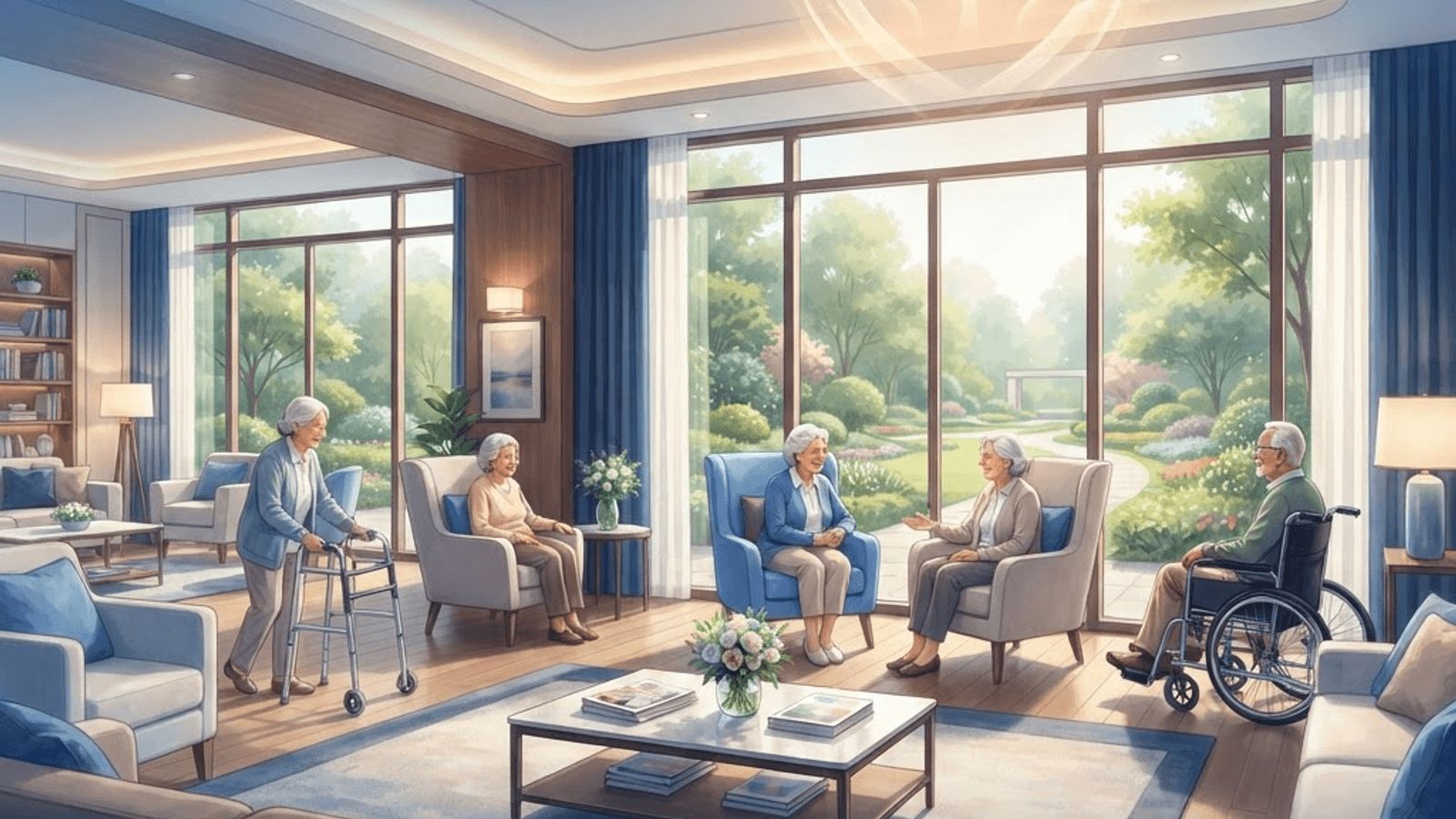
A Decision That Deserves Structure, Not Just Instinct
Selecting elderly care in Hammersmith and Fulham is rarely a leisurely process. It usually follows a hospital admission, a fall, a dementia diagnosis or the gradual realisation that a parent is no longer managing safely at home. Families are asked to make a consequential, expensive and emotionally difficult decision quickly and with limited information. Approaching it with a clear framework makes an enormous difference to the outcome.
The borough presents a specific set of conditions. Property values and land scarcity mean fewer large purpose-built care homes than in outer London boroughs, with provision often in converted period buildings or newer high-specification developments. Costs sit well above the national average. At the same time, the borough benefits from excellent proximity to acute hospital services through Imperial College Healthcare NHS Trust, a strong domiciliary care market and good public transport that makes regular family visiting realistic.
Understanding the Types of Care Available
Residential care provides accommodation, meals, personal care and support with daily activities such as washing, dressing and medication prompting. It suits people who need reliable daily assistance and companionship but not ongoing clinical intervention.
Nursing care includes registered nurses on site around the clock and is appropriate for residents with complex medical needs, wounds requiring management, continence care needs, percutaneous feeding, or advanced frailty. The distinction is important because a residential home cannot lawfully provide nursing care, meaning a resident whose needs escalate may have to move.
Dementia care is a specialism rather than an add-on. Genuine dementia provision involves environmental design with clear wayfinding and secure outdoor access, staff trained in de-escalation and non-pharmacological approaches to distress, meaningful activity programmes, and a strong emphasis on minimising antipsychotic prescribing.
Alongside these, the borough has a substantial home care sector, extra care and supported housing schemes, day centres and respite services. Many families find that a well-structured home care package with adaptations delays residential admission by years, which is usually the preferred outcome.
Ten Providers and Options Serving the Borough
A practical overview would include national residential and nursing operators with London provision such as Care UK, Barchester Healthcare, HC-One, Anchor, Sunrise Senior Living and Signature Senior Lifestyle, all of which operate homes in or within reasonable reach of the borough. Not-for-profit and charitable providers including MHA and Abbeyfield offer alternative models with strong community emphasis. Specialist dementia providers such as Loveday and Care and Hallmark Care Homes serve the premium West London market. For care at home, established agencies including Home Instead, Bluebird Care, Helping Hands and Right at Home operate across Hammersmith and Fulham, alongside the borough's local authority commissioned domiciliary providers. Local authority adult social care remains the essential first point of contact for needs assessment and funding advice.
Regulation and What Inspection Reports Reveal
All care homes in England are registered with and inspected by the Care Quality Commission, which rates services as outstanding, good, requires improvement or inadequate across five domains: safety, effectiveness, care, responsiveness and leadership. These reports are publicly available and should be read in full rather than judged by the headline rating alone.
Pay particular attention to the safe and well-led domains, since problems there tend to be systemic. Check the report date, because a rating from several years ago may not reflect current management, and care home quality is highly sensitive to changes in manager and staffing stability. Look for evidence of low staff turnover, which is one of the most reliable practical indicators of a well-run home.
Costs and Funding
Care in Hammersmith and Fulham is expensive, with residential fees in inner West London frequently well above national averages and nursing or specialist dementia care higher still. Families should establish early whether the local authority will contribute, which depends on both a needs assessment and a financial assessment of capital and income. NHS Continuing Healthcare funding may be available where the primary need is health rather than social, though eligibility is assessed stringently. Attendance Allowance, Personal Independence Payment and NHS-funded nursing care contributions may also apply.
Read the contract carefully. Clarify what is included, how and when fees increase, third-party top-up arrangements, notice periods, and what happens if needs escalate beyond the home's registration.
What to Look For When Visiting
Visit more than once, and at least once unannounced around mealtime or late afternoon, which is when staffing pressure and resident distress are most visible. Observe whether residents are engaged or sitting unoccupied in front of a television, whether staff address residents by name and at eye level, and whether the atmosphere feels calm.
Ask specific questions. What is the staff-to-resident ratio on a night shift? What proportion of staff are permanent rather than agency? How many residents have lived here more than two years? How is a resident's distress managed without medication? What activities happened yesterday, not what is on the timetable? How are families involved in care planning and kept informed? How is end-of-life care handled, and does the home support residents to remain rather than transferring to hospital?
Smell, noise level and the state of shared bathrooms tell you a great deal about basic operational standards. So does whether the manager is visible and known to residents.
Final Thoughts
Hammersmith and Fulham offers families access to well-regulated residential, nursing and dementia care alongside a strong home care market and good proximity to acute services. The quality of the eventual decision depends far more on process than on luck: obtain a local authority needs assessment, understand funding position early, read inspection reports thoroughly, visit repeatedly and unannounced, and prioritise staffing stability and genuine engagement over decorative finish. Families who follow that sequence consistently find placements that hold up over years rather than months.
Want your brand featured in front of decision-makers? Publish a guest post or get a link insertion in our guides through AAMAX's guest post and link insertion service.
Helpful Links
 SponsoredAAMAX — Full-Service Digital Agency
Write for Us
Share your expertise with our readers. We welcome guest contributions from industry specialists.
Pitch your idea