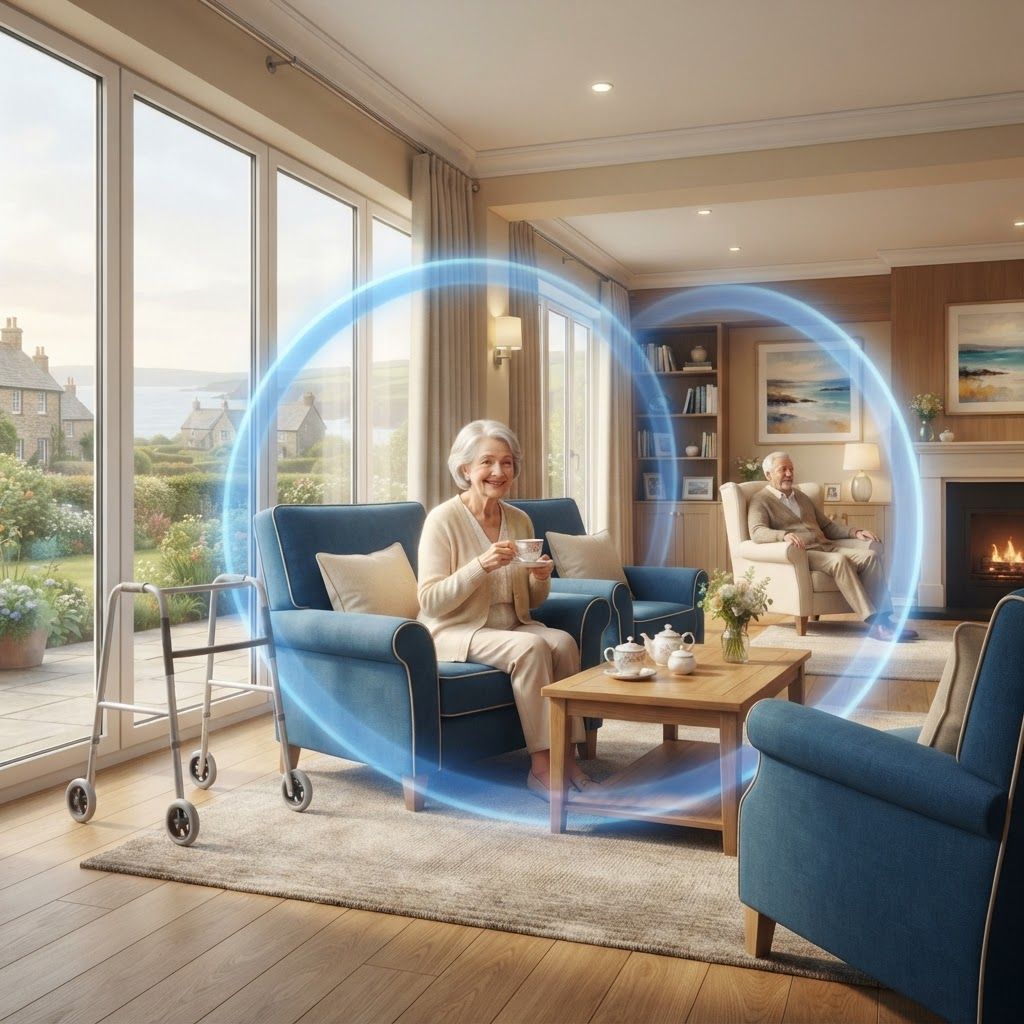
Elderly Care in the Arun District
Arun has one of the highest proportions of residents aged over sixty-five in the South East, a pattern common to English coastal districts where retirement migration has been sustained for decades. That demographic reality has produced an extensive care sector, with residential homes, nursing homes, dementia specialist units, extra care housing and domiciliary care providers spread across Bognor Regis, Littlehampton, Rustington, Angmering, Arundel and the surrounding villages.
The scale of provision is an advantage, offering families real choice. It also means quality varies, and understanding how to assess it is essential. Care homes in England are regulated and inspected by the Care Quality Commission, whose reports are published in full and represent the most reliable independent information available.
Understanding the Types of Care
Residential care provides accommodation, meals, personal care and support with daily activities such as washing, dressing and mobility, delivered by care assistants. Nursing care adds registered nurses on site around the clock, which is necessary for residents with complex medical needs, wounds requiring dressing, catheter care, percutaneous feeding or unstable conditions.
Dementia care may be provided within either setting but requires specific environmental design, staff training in dementia-appropriate communication, secure outdoor space and activity programming suited to cognitive impairment. Respite care offers short stays to give family carers a break or to support recovery after hospital discharge. Extra care housing provides self-contained flats with on-site care available, preserving independence for those who do not yet need full residential support. Domiciliary care delivers support in a person's own home, which many families use for years before considering a move.
The Ten Leading Elderly Care Providers in Arun
1. Arun Valley Care Home. A residential and nursing home with well-established dementia provision, secure gardens, a full activities programme and strong Care Quality Commission inspection history.
2. Bognor Regis Nursing Home. A nursing-led facility with registered nurses on duty at all times, supporting complex medical needs, palliative care and post-hospital rehabilitation.
3. Littlehampton Residential Care Centre. A homely residential setting emphasising individual routines, community links and a varied programme of outings and in-house activities.
4. Rustington Care Village. A larger campus combining independent living apartments, extra care flats and residential nursing provision, allowing residents to move between levels of support without leaving the community.
5. Arundel Manor Care Home. A period property conversion offering residential care in a characterful setting with landscaped grounds and a focus on dining quality and social life.
6. Felpham Dementia Specialist Home. A dedicated dementia unit with environmental design following recognised principles, including clear wayfinding, memory prompts, sensory spaces and staff trained specifically in dementia care.
7. Angmering House Nursing Home. Nursing care with particular expertise in neurological conditions, stroke recovery and complex mobility needs, supported by on-site therapy input.
8. Middleton Coastal Care Home. A seaside residential home valued for its sea views, active resident committee and strong reputation for family communication.
9. Barnham Country Care Home. A rural home with extensive gardens, animal therapy visits and a small-scale environment suited to residents who find larger settings overwhelming.
10. Arun Home Care Services. A domiciliary care provider delivering personal care, medication support, companionship and respite in residents' own homes across the district, including live-in options.
How to Assess Quality Properly
Start with the Care Quality Commission report, reading the detail rather than only the headline rating. The narrative sections reveal specific concerns and strengths, and the date matters because a home can change substantially under new management.
Then visit, ideally more than once and at different times of day including a mealtime. Look at how staff speak to residents, whether residents appear engaged or parked in front of a television, whether call bells are answered promptly and whether the home smells clean without being masked by heavy air freshener. Ask about staff turnover and agency use, because continuity of carers is one of the strongest predictors of resident wellbeing.
Examine the activities programme and ask residents and visiting relatives about it. Check dining arrangements, choice of food and how residents needing assistance are supported to eat with dignity. Enquire about arrangements with local general practices, district nurses, chiropodists, dentists and opticians. Ask specifically how the home manages end-of-life care, since this is when quality matters most and is frequently overlooked during selection.
Understanding the Cost of Care
Care home fees in West Sussex vary substantially depending on whether nursing care is included, the type of room and the level of need. Funding arrangements are complex and worth understanding early.
Local authority funding is means tested, with capital thresholds determining whether a person pays in full, contributes partially or has care funded. The value of a property is generally included unless a spouse or qualifying relative continues to live there, and deferred payment agreements can allow fees to be paid from the eventual sale rather than immediately.
NHS Continuing Healthcare is a separate, non-means-tested funding route for people whose primary need is a health need rather than a social care need. It is assessed through a formal process and is worth pursuing where complex medical needs exist. NHS-funded nursing care contributes towards the nursing element of fees for residents in nursing homes. Attendance Allowance and Personal Independence Payment may also apply, and a needs assessment from the local authority is available to anyone regardless of means.
Trends in Elderly Care
Person-centred and relationship-centred care models have replaced institutional routines in the better homes, focusing on individual histories, preferences and continued autonomy. Household or small-group living models, where residents live in units of ten to twelve with consistent staff, produce measurably better outcomes than large-scale wards.
Technology is being adopted thoughtfully, with digital care planning improving record accuracy, acoustic monitoring reducing intrusive night checks, and video calling maintaining family contact for relatives living at a distance. Falls detection and medication management systems are becoming standard.
Workforce remains the sector's central challenge, and homes investing in training, career progression and staff retention deliver noticeably better care. Families are right to ask about it directly.
Final Thoughts
Arun's care sector is large and varied, offering residential, nursing, dementia specialist and home-based options across the district. Reading inspection reports carefully, visiting unannounced where possible, asking about staff continuity and understanding funding routes early will make a difficult decision considerably more manageable.
Want your brand featured in front of decision-makers? Publish a guest post or get a link insertion in our guides through AAMAX's guest post and link insertion service.
Helpful Links
 SponsoredAAMAX — Full-Service Digital Agency
Write for Us
Share your expertise with our readers. We welcome guest contributions from industry specialists.
Pitch your idea