Learning to Drive in Basildon
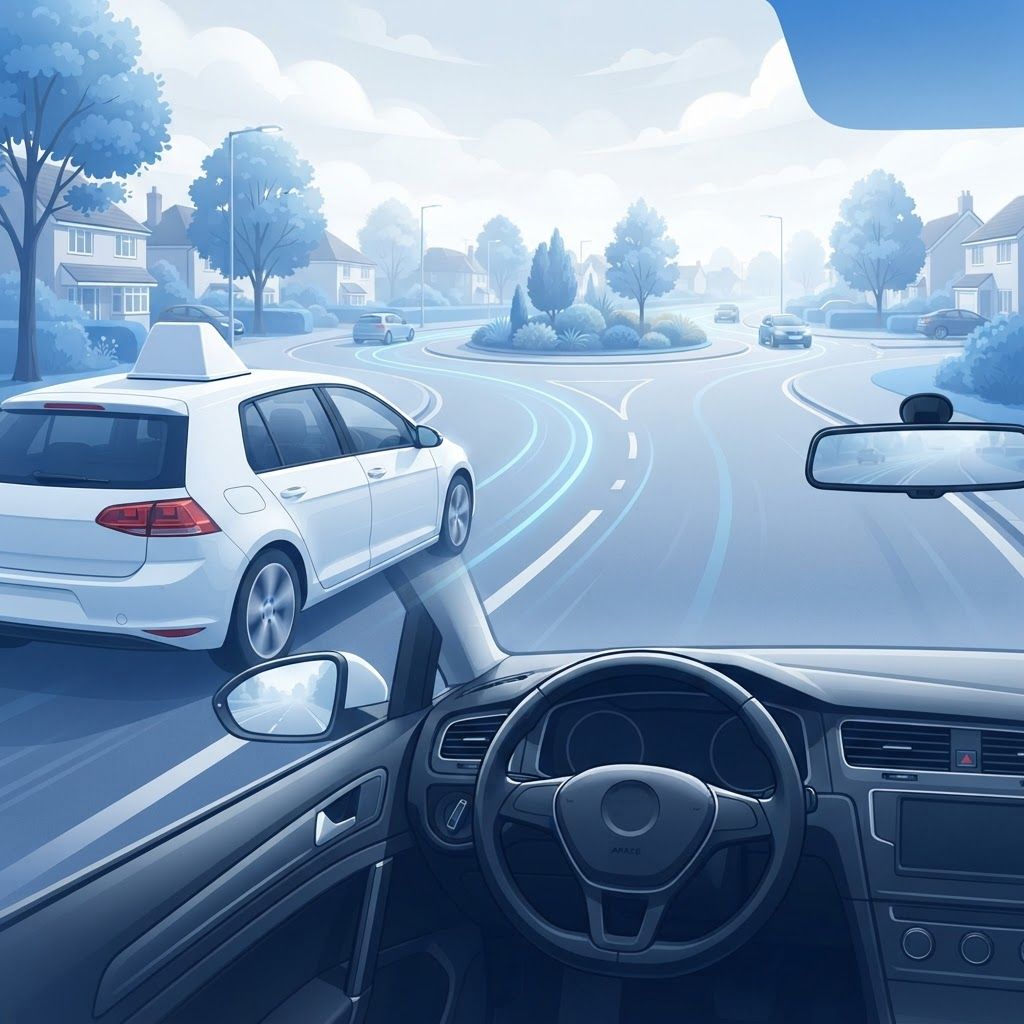
Basildon presents learners with an unusually complete training environment. The town has multi-lane roundabouts, dual carriageway slip roads on the A127, residential estates with tight parking, industrial estate junctions and rural lanes within a short drive. A learner who becomes comfortable across those conditions is genuinely prepared for independent driving rather than merely prepared for a test.
That variety also raises the value of local knowledge. Instructors who work these roads daily understand which junctions cause hesitation, where observation is most often marked down, and how to build confidence progressively rather than throwing learners into complexity too early.
What Makes a Driving School Effective
Qualification is the baseline: instructors should hold a full green ADI badge rather than a pink trainee licence, unless you are knowingly choosing a trainee at a lower rate. Beyond that, look for structured lesson plans, honest progress tracking against the driving test syllabus, and clear feedback at the end of each session. Good schools also manage expectations about readiness, resisting pressure to book a test before a learner is genuinely prepared.
The Top 10 Driving Schools in Basildon
1. Basildon Driving Academy
A well-established school with a strong reputation for patient, structured teaching. Lessons follow a documented progress plan, and their instructors are known for calm handling of nervous learners, including mature students returning to driving after years away.
2. Essex Learner Drivers Basildon
Offers flexible scheduling including evenings and weekends, which suits shift workers and students. Manual and automatic tuition is available, and mock tests on realistic routes are built into the later stages of training.
3. Pitsea School of Motoring
Locally focused with excellent knowledge of test routes around the area. Their instructors emphasise independent driving and satellite navigation practice, which reflects the modern test format closely.
4. Laindon Automatic Driving School
Specialists in automatic tuition, increasingly popular as electric and hybrid vehicles become mainstream. Removing clutch control from the learning curve often allows faster progress on observation, planning and road positioning.
5. Cranes Farm Intensive Courses
Provides semi-intensive and intensive courses for learners working to a deadline. Their approach includes pre-course assessment to confirm that an intensive route is realistic, which avoids wasted money on unsuitable bookings.
6. Vange Female Instructor Driving School
Offers female instructors for learners who prefer them, with a supportive teaching style. Strong emphasis on confidence-building makes them a popular choice for anxious learners and those who have had poor experiences elsewhere.
7. Nevendon Advanced Driver Training
Focused on post-test development, including motorway tuition, refresher lessons and advanced driving qualifications. Useful for new drivers who passed but still avoid certain roads, and for those seeking insurance-recognised training.
8. Fryerns Pass First Time Tuition
Known for detailed manoeuvre coaching, including parallel parking, bay parking and pulling up on the right. Structured repetition and clear reference points help learners retain technique under test pressure.
9. Basildon Theory & Hazard Perception Support
Combines practical lessons with dedicated theory and hazard perception coaching. Integrating both elements tends to improve real-world awareness, not just exam performance.
10. Billericay Road Driver Training
Serving the northern edge of Basildon with a mix of local and rural route training. Their inclusion of country lane driving, national speed limit roads and overtaking judgement produces well-rounded drivers.
Manual or Automatic?
Automatic licences restrict you to automatic vehicles, but that limitation matters less each year as manufacturers move towards electrification. Automatic tuition typically requires fewer hours and reduces cognitive load, which benefits nervous learners. A manual licence remains more flexible for hire vehicles, older cars and certain trades. Consider what you realistically expect to drive over the next decade.
How Many Lessons Will You Need?
National averages suggest around forty hours of professional tuition alongside private practice, but the honest answer varies widely. Younger learners with frequent lessons often progress faster; those with only fortnightly sessions tend to spend more overall because each lesson begins with revision. Consistency of two lessons per week is usually the most cost-effective pattern.
Questions to Ask Before Booking
Confirm instructor qualification, hourly rate, cancellation policy and whether lesson time includes pick-up travel. Ask how progress is recorded and how the school decides when you are test-ready. Enquire about vehicle type, dual controls and insurance. Finally, ask whether the school offers a shorter introductory lesson so you can assess teaching style before committing to a block booking.
Final Thoughts
The quality of instruction has a lasting effect on driving habits, not just on test results. Basildon's driving schools cover every requirement, from complete beginners and intensive courses to advanced post-test training, and choosing one whose teaching style matches your temperament is the single best decision a learner can make.
Local Test Routes and Conditions
Learning in Basildon has real advantages, because the borough contains almost every hazard an examiner might want to see. Multi lane roundabouts, dual carriageway slip roads, busy retail park junctions, narrow residential estates with parked cars, and rural lanes on the borough fringe all sit within a short drive of one another. Candidates who train locally arrive at test day already comfortable with fast merging traffic and complex lane discipline, which are two of the most common reasons for serious faults elsewhere.
Good instructors build lessons around this variety deliberately. Early sessions focus on quiet estates for control and observation, mid course lessons introduce heavier town traffic and independent driving with satellite navigation, and later lessons rehearse manoeuvres and higher speed roads until responses become automatic rather than memorised.
How Many Lessons Will You Really Need?
National data suggests most learners require somewhere between forty and forty five hours of professional instruction plus around twenty hours of private practice. Younger learners with regular family practice often need fewer paid hours, while adults returning after a long gap may need more time to unlearn old habits. Intensive courses can work well for confident learners with existing road awareness, but they are rarely the cheapest route for a complete beginner.
Value is best judged on pass rate, lesson length, car condition and whether theory support is included, rather than hourly price alone. A slightly more expensive instructor who prepares you in fewer hours usually costs less overall.
Final Thoughts
The driving schools highlighted here have built their reputations in Basildon through patient teaching, structured lesson plans and consistently strong first time pass rates. Book an assessment lesson with two of them, compare how clearly each explains a mistake, and choose the instructor whose approach genuinely suits how you learn.
Want your brand featured in front of decision-makers? Publish a guest post or get a link insertion in our guides through AAMAX's guest post and link insertion service.
Helpful Links
 SponsoredAAMAX — Full-Service Digital Agency
Write for Us
Share your expertise with our readers. We welcome guest contributions from industry specialists.
Pitch your idea