Why Diagnostics Matter Locally
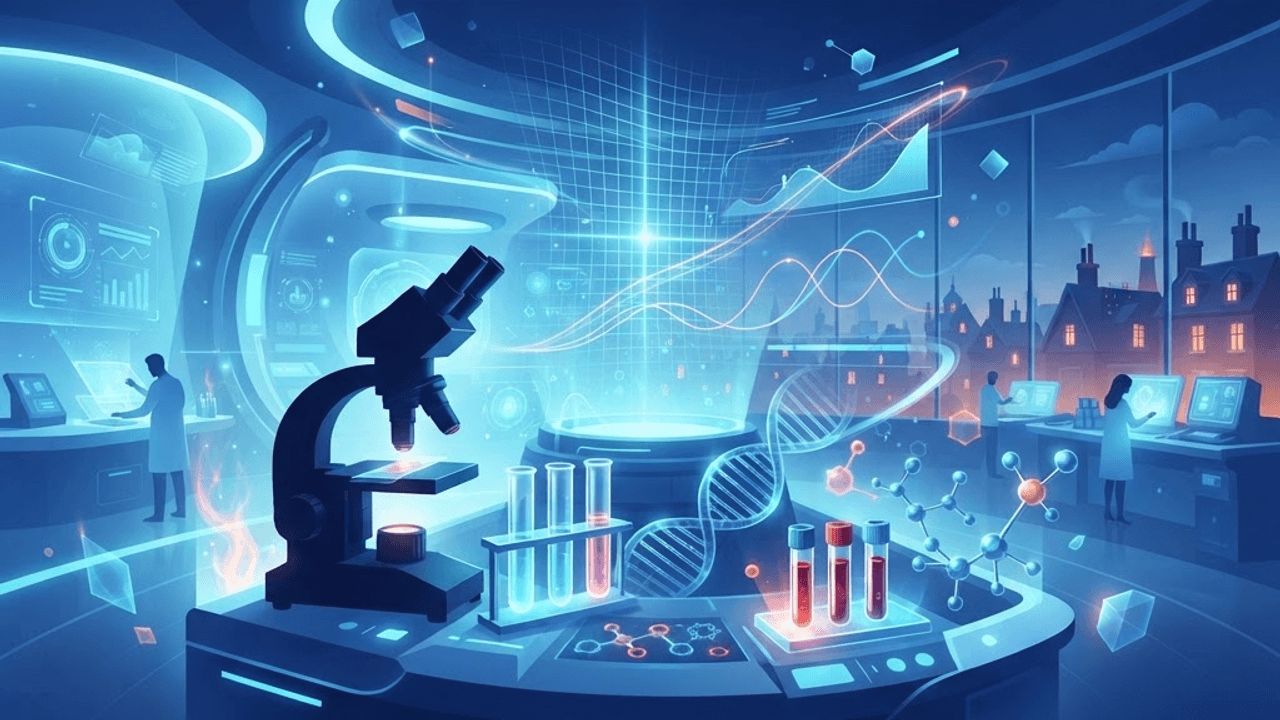
Diagnostic services are the invisible infrastructure of healthcare. A GP consultation in Newark, a consultant appointment in Southwell or an emergency presentation at a minor injuries unit all depend on blood sciences, imaging, histopathology and microbiology operating reliably in the background. In Newark and Sherwood, that infrastructure is delivered through a combination of hospital-based laboratories, regional pathology networks, community phlebotomy sites and a growing private sector.
Turnaround time is the metric that patients feel most directly. A blood test taken in a village surgery must be transported, processed, validated and reported back, often within twenty four hours. Achieving that consistently across a large rural district requires well-managed logistics as much as laboratory science.
How Diagnostic Provision Is Structured
NHS pathology in Nottinghamshire operates through consolidated networks, where high-volume automated testing is centralised in large laboratories while urgent and time-critical work is retained on hospital sites. Imaging follows a different model, with equipment necessarily located where patients are, supported by digital reporting that allows radiologists to report scans from anywhere. Understanding this structure helps explain why some results return within hours and others take several days.
Leading Diagnostic Providers
Newark Hospital Pathology and Imaging, operating within Sherwood Forest Hospitals NHS Foundation Trust, is the primary diagnostic hub for the district. The site provides plain film X-ray, ultrasound, CT and a phlebotomy service, allowing a large volume of testing to be completed without travelling out of the district. For Newark residents this is the single most important diagnostic asset in the area.
King Mill Hospital Diagnostics in Sutton-in-Ashfield serves as the larger acute centre within the same trust, handling more complex imaging including MRI, nuclear medicine and advanced cross-sectional work. Patients from the western parts of the district around Ollerton, Rainworth and Blidworth are frequently referred here.
Nottingham University Hospitals Pathology Services provides the specialist tier for the wider region, covering complex histopathology, immunology, genetics and specialist microbiology. Samples that require subspecialist interpretation are typically routed through this service.
Community phlebotomy services hosted across GP practices and health centres in Newark, Balderton, Southwell and Ollerton form the collection layer of the system. The quality of these services, in terms of appointment availability and sample handling, has a direct effect on how quickly patients receive results.
Community Diagnostic Centre provision in Nottinghamshire represents one of the most significant developments in recent years. These centres bring imaging, cardiorespiratory testing and blood sciences together in non-acute settings, specifically to reduce waiting times and separate planned diagnostics from emergency pressures.
InHealth operates diagnostic services across the UK on behalf of NHS organisations, with particular strength in mobile and community-based MRI, CT and ultrasound. Mobile imaging units are especially relevant in a district like Newark and Sherwood where fixed capacity is limited.
Alliance Medical is another established independent provider of imaging services, frequently contracted to expand NHS scanning capacity. Its focus on MRI and PET-CT makes it an important part of cancer pathway diagnostics for regional patients.
Spire Nottingham Hospital offers private diagnostic packages including imaging, blood testing and cardiac investigation for patients choosing to self-fund or use private medical insurance. For residents seeking rapid access without NHS waiting times, it is the nearest substantial private option.
Nuffield Health Nottingham Hospital similarly provides private diagnostic imaging and pathology, often bundled with consultant review, which appeals to patients wanting a single coordinated episode rather than separate appointments.
Private laboratory and home testing providers, including national postal blood testing services, have grown rapidly. These allow residents to order tests directly, provide a sample at home or at a partner clinic, and receive results digitally. They are convenient but should be used thoughtfully, ideally with a clinician available to interpret findings.
Understanding Turnaround and Accuracy
Patients frequently ask why results take as long as they do. Routine biochemistry and haematology are largely automated and fast. Microbiology cultures require incubation time that cannot be shortened. Histopathology involves tissue processing, sectioning, staining and expert microscopic review, which is inherently slower. Imaging is often acquired quickly but waits on radiologist reporting capacity. Knowing which category a test falls into makes waiting considerably less stressful.
Accuracy depends heavily on pre-analytical factors, meaning what happens before the sample reaches the laboratory. Correct patient identification, appropriate sample tubes, adequate fill volume, correct storage temperature and prompt transport all affect reliability. Well-run collection sites are therefore as important as sophisticated analysers.
Trends in Diagnostics
Several developments are changing the field. Point-of-care testing allows certain results to be generated in the surgery within minutes, supporting same-day decisions. Artificial intelligence is increasingly used as a support tool in imaging, flagging potential abnormalities for radiologist attention and improving throughput. Genomic testing is moving from specialist centres into mainstream pathways, particularly in oncology. And digital pathology, where slides are scanned and reported on screen, is enabling workload to be shared across geographic boundaries.
Practical Advice for Patients
Attend fasting appointments correctly, as an incorrectly prepared sample may need repeating. Take a list of current medications to any test, since several drugs affect results. Ask which service will contact you and when, as this varies between providers. If using a private or direct-to-consumer test, consider in advance what you will do with an abnormal result, and be aware that some tests produce borderline findings that require professional context to interpret sensibly.
Final Thoughts
Diagnostic services rarely receive public attention until something goes wrong, yet they determine the speed and accuracy of almost every care pathway in Newark and Sherwood. The combination of a local hospital with genuine diagnostic capability, a regional pathology network, expanding community diagnostic capacity and a competitive private sector gives district residents reasonable access by rural English standards, and the direction of travel is towards faster, closer and more digitally enabled testing.
Want your brand featured in front of decision-makers? Publish a guest post or get a link insertion in our guides through AAMAX's guest post and link insertion service.
Helpful Links
 SponsoredAAMAX — Full-Service Digital Agency
Write for Us
Share your expertise with our readers. We welcome guest contributions from industry specialists.
Pitch your idea