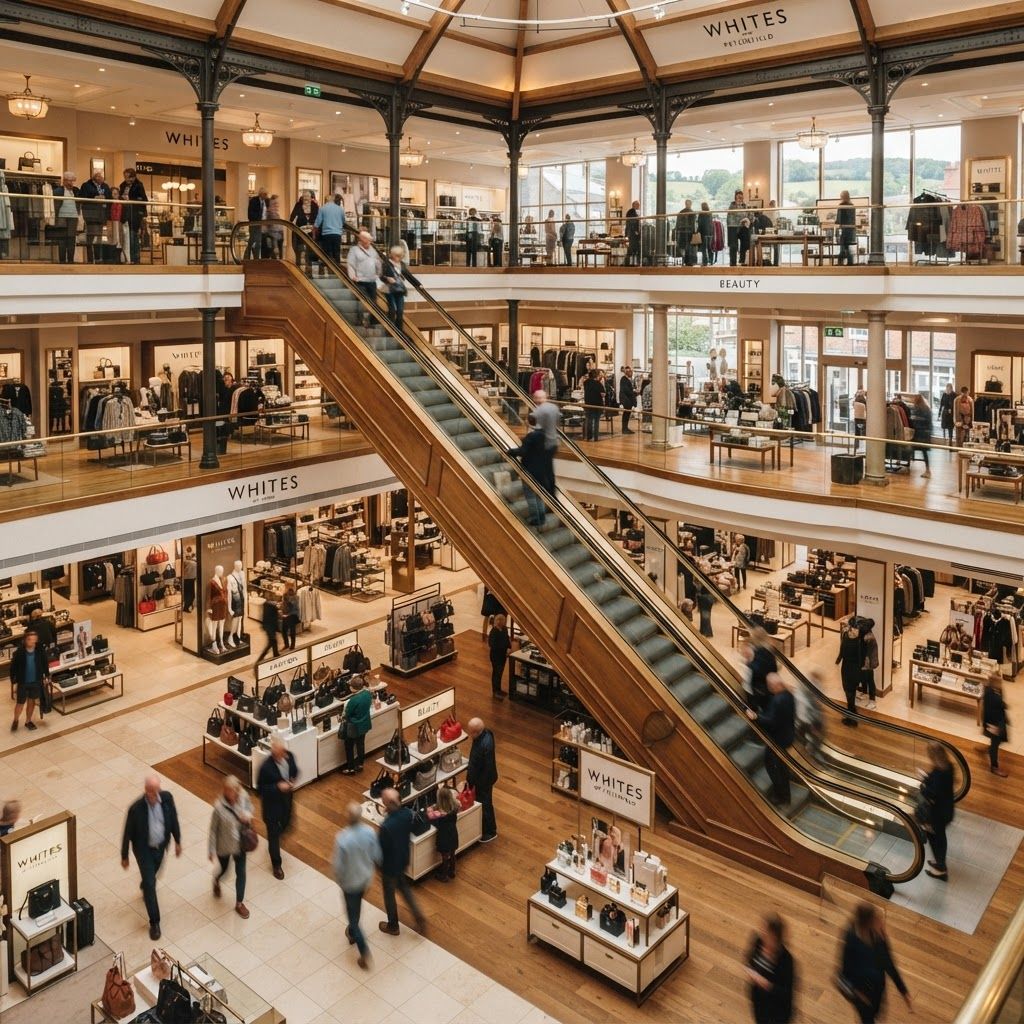
The Changing Department Store in Newcastle-under-Lyme
The traditional department store — several floors, dozens of concessions, a restaurant on the top level — has contracted dramatically across British towns. Newcastle-under-Lyme has not been immune. What has emerged instead is more interesting: a mix of multi-department independents, covered market halls, retail collectives and specialist stores that have broadened their ranges to fill the gap.
The town's market charter dates back centuries, and its indoor and outdoor markets remain central to how residents shop. Combined with the Roebuck Centre and surrounding streets, this creates a retail environment where the department store function is distributed across several destinations rather than concentrated in one building. The ten below represent that evolved landscape.
1. Castle Department Store
Castle Department Store maintains the classic multi-department model with fashion, homeware, gifts, beauty and haberdashery across several floors. Its longevity rests on service standards that larger chains struggle to sustain: alteration services, gift wrapping, personal shopping appointments and staff who know their departments properly. A café provides the social dimension that has always been part of department store appeal, particularly for older customers.
2. Newcastle Indoor Market Hall
Functionally a department store composed of independent traders, Newcastle Indoor Market Hall houses butchers, greengrocers, bakers, fabric merchants, jewellers, clothing stalls and household goods under one roof. The variety is remarkable and pricing frequently beats larger retailers. What distinguishes it is expertise — traders who cut meat to order, match fabric or repair a watch while you wait. It remains one of the town's genuine retail assets.
3. Lyme Valley Home & Living
Lyme Valley Home & Living covers the homeware department store territory: kitchenware, bedding, bathroom accessories, lighting, tableware, storage and seasonal decoration. Its buyers focus on practical quality rather than novelty, and the store is a reliable destination for wedding and housewarming gifts. A bridal registry service and free gift wrapping add convenience that online ordering cannot match.
4. Roebuck Retail Collective
Roebuck Retail Collective operates a shared-space model where multiple independent brands trade within a single managed store. Fashion, accessories, art, crafts, food products and gifts sit side by side. The format lowers entry costs for small businesses while giving shoppers considerable variety. It has become a launchpad for North Staffordshire makers who later open their own premises.
5. Wolstanton Retail Park Stores
Serving the practical end of the market, the Wolstanton Retail Park stores collectively cover electricals, homeware, clothing, DIY and groceries with generous parking and extended hours. While not a department store in the traditional sense, the cluster fulfils the same role for many households: a single trip covering multiple categories. Click-and-collect availability across these stores has become an important part of local shopping habits.
6. Clayton Family Store
Clayton Family Store focuses on everyday needs across clothing, footwear, school uniform, toys, stationery and household basics. Its proposition is value combined with genuine helpfulness, and it fills a role that has largely disappeared from many town centres. School uniform season is its busiest period, with fitting assistance provided rather than customers left to guess sizing.
7. Potteries Craft & Gift Emporium
Potteries Craft & Gift Emporium brings together ceramics, textiles, artwork, candles, jewellery and food products from regional producers. Given the area's world-famous pottery heritage, ceramics feature prominently, including work from small studios continuing the tradition. The emporium is a strong destination for distinctive gifts and has become popular with visitors seeking something genuinely local.
8. Market Square General Store
Market Square General Store stocks the broad practical range that makes a general store useful: cleaning supplies, hardware, garden sundries, pet products, small electricals, batteries and seasonal goods. Its value lies in stocking the specific item people need immediately rather than the most profitable lines. Staff will often source unusual requests, which keeps customers returning.
9. Keele Student Essentials Store
With a substantial student population nearby, Keele Student Essentials Store concentrates on what new arrivals need: bedding, kitchen equipment, storage, stationery, small appliances and basic furniture. Bundle packages simplify the September rush considerably. The store also operates an end-of-year buy-back and resale scheme, reducing the volume of barely used items discarded when tenancies end.
10. Newcastle Outlet & Clearance Centre
Newcastle Outlet & Clearance Centre sells end-of-line, ex-display and surplus stock across clothing, homeware, furniture and electricals. Stock changes constantly, which creates the treasure-hunt appeal that drives repeat visits. Items are graded honestly for condition, and the operation diverts considerable quantities of saleable goods from disposal — a commercial and environmental benefit simultaneously.
How the Department Store Model Is Evolving
Several changes are reshaping this retail category. The shift from ownership to curation has been decisive: concession and collective models let operators offer breadth without the capital risk of owning all that stock. Shared-space retail in particular has allowed small brands to reach high street customers affordably.
Experience has become central. Cafés, workshops, events, personal shopping and repair services give people reasons to visit that online retail cannot replicate. Stores that treat themselves purely as product warehouses struggle.
Omnichannel integration matters too. Click-and-collect, in-store returns for online purchases, and accurate real-time stock information have become expectations rather than advantages.
Finally, local sourcing has genuine commercial value. Customers respond positively to regional products with a story, particularly in an area with as strong a making tradition as North Staffordshire.
Making the Most of Multi-Department Shopping
Visit markets early for the best fresh produce and later for reductions. Ask about services that are not advertised, such as alterations, repairs, sourcing or delivery, since independents often provide these informally. Compare across the town rather than assuming any single destination is cheapest overall. Support collectives and market traders if you value variety, because these formats depend directly on footfall. And check opening patterns, as market days and independent hours differ from chain retail.
Final Thoughts
Newcastle-under-Lyme demonstrates that the department store function survives even where the traditional format has declined. Between multi-department independents, a thriving market hall, retail collectives and specialist stores, the town offers breadth, expertise and a strong local character that larger anonymous stores rarely deliver.
Want your brand featured in front of decision-makers? Publish a guest post or get a link insertion in our guides through AAMAX's guest post and link insertion service.
Helpful Links
 SponsoredAAMAX — Full-Service Digital Agency
Write for Us
Share your expertise with our readers. We welcome guest contributions from industry specialists.
Pitch your idea