The Department Store in a Changing Retail Landscape
The department store has been written off repeatedly over the past decade, yet the format persists because it solves a genuine problem: buying several unrelated things in one trip, with the ability to see, touch and try before committing. For Epping Forest district residents, who have both local high streets and easy access to major shopping destinations, department stores occupy a useful middle ground between convenience shopping and a full retail excursion.
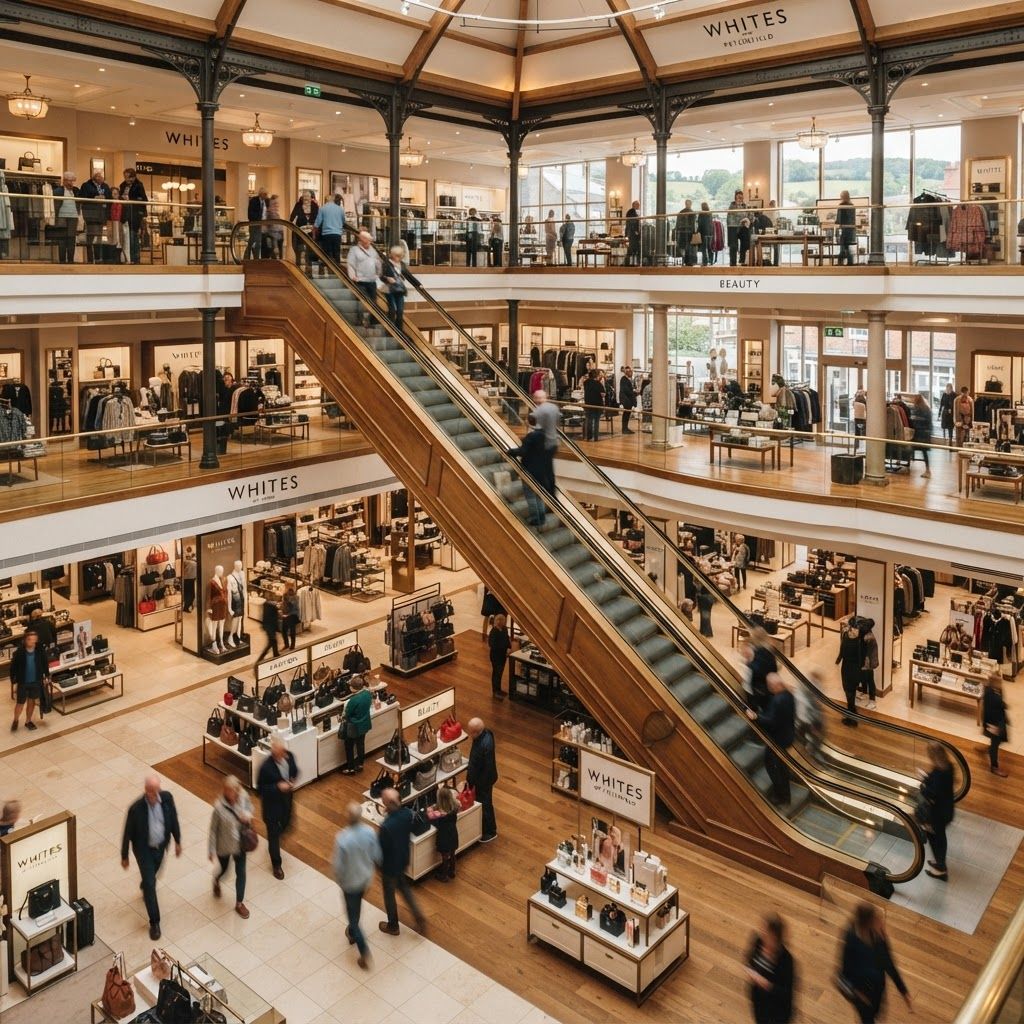
The format has evolved considerably. Successful stores have reduced pure product floorspace and added services, hospitality, experiences and personalisation. Beauty halls now offer treatments rather than only products. Homeware departments provide design consultations. Fashion floors include personal styling. The stores that have struggled are those that remained purely transactional, competing on product availability alone against online retailers who will always win that contest.
1. John Lewis
John Lewis is the benchmark department store for much of the country and serves the district through nearby branches. Its proposition rests on curation, service and confidence. Buying an appliance, a mattress or a sofa involves staff who know the products, extended guarantees on many items, and a returns culture that reduces purchase anxiety. The partnership model, where staff hold a genuine stake in the business, translates into service standards that competitors find difficult to replicate.
2. Selfridges
Within easy reach for district residents, Selfridges represents the department store as destination. Its strength is the sheer breadth of luxury and contemporary brands alongside genuinely creative merchandising, exhibitions, restaurants and services. Shopping there is an event rather than an errand, which is precisely the point. For occasion purchases, designer fashion and gifts that need to make an impression, it remains without real equal in the country.
3. Harvey Nichols
Harvey Nichols focuses tightly on fashion, beauty and food rather than attempting full-category coverage, and it curates aggressively towards designer and premium contemporary labels. The edited approach suits shoppers who find larger stores overwhelming and who value the buying team's judgement. Its food halls and restaurants extend the visit beyond shopping, and personal shopping services provide an efficient way to cover a lot of ground quickly.
4. Fenwick
Fenwick is a family-owned department store group with a distinctly personal character. Its stores combine strong fashion and beauty offerings with homeware and gifting, and they tend to reflect local market preferences rather than applying a uniform national formula. Independent ownership allows a longer-term view and a willingness to support brands and services that a purely metrics-driven operation might cut.
5. Liberty
Liberty is unlike any other department store, combining a remarkable Tudor revival building with a fiercely curated selection of fashion, beauty, homeware and its famous printed fabrics. The haberdashery and fabric departments attract makers from across the region, and the beauty hall has a reputation for stocking niche fragrance and skincare brands before they reach wider distribution. For gift buying, it offers items that will not be found elsewhere.
6. Marks and Spencer
While not a department store in the classical sense, larger Marks and Spencer stores fulfil much the same function, combining clothing, homeware, beauty and food. Its accessibility across the district makes it the default for practical purchases: school uniform, underwear, bedding, kitchenware and the food hall. Recent range improvements and brand collaborations have broadened its fashion appeal considerably, and its lingerie fitting service remains among the best available.
7. Debenhams and Digital Department Stores
The department store model has migrated online, with established names now operating as digital marketplaces aggregating thousands of brands. This preserves the core department store benefit of breadth while abandoning the physical experience. For buyers who know what they want, the format works efficiently. The trade-offs are the inability to assess quality before purchase and returns processes that vary by supplier within the same order.
8. Local Independent Department Stores
Independent department stores in Essex and the surrounding region persist by serving their communities closely. They stock what local customers actually buy, offer alteration and delivery services, and maintain relationships across generations. Many combine retail with a café that functions as a genuine community space. Their survival depends on being genuinely useful rather than trying to match national chains on range or price.
9. Outlet and Discount Department Retailers
Outlet shopping and discount department retailers provide branded goods at reduced prices, appealing strongly to value-focused shoppers. The model works by taking end-of-season stock, overproduction and outlet-specific lines. Shoppers should understand the distinction, as some outlet merchandise is manufactured specifically for the channel at lower specification. For homeware, kitchenware and basics, the savings can be substantial with no meaningful quality difference.
10. Garden Centres and Lifestyle Department Formats
An interesting development across the district and wider Essex has been the expansion of garden centres into broad lifestyle retailers. Many now combine plants and gardening with homeware, furniture, food halls, clothing, gifts and substantial restaurants. For families and older shoppers in particular, they offer free parking, level access and a relaxed environment that town centre shopping cannot match, which has made them genuine competitors to conventional department stores.
How the Format Has Changed
Several shifts define the modern department store. Beauty has grown in importance because it resists online substitution: customers want to try fragrance, match foundation shade and receive treatments. Many beauty halls now offer facials, brow services and makeup application, turning product sales into appointments.
Food and hospitality have expanded from an afterthought into a core attraction. Restaurants, cafés and food halls extend dwell time substantially, and a customer who stops for lunch spends considerably more than one who does not. Some stores have effectively become destinations for eating with shopping attached rather than the reverse.
Concession models have grown, with brands operating their own space within the store and managing their own stock and staff. This reduces the retailer's inventory risk and brings brand expertise onto the floor, though it can fragment the customer experience if service standards vary between concessions.
Services have multiplied: personal styling, bra fitting, interior design consultation, gift wrapping, alterations, click and collect, and returns handling for online orders. These draw customers into stores and create reasons to visit that a website cannot replicate.
Shopping Department Stores Effectively
A few approaches improve the experience considerably. Visiting on weekday mornings means quieter floors and more staff attention, which matters enormously when trying on clothing or discussing a furniture purchase. Booking services in advance, whether personal styling, fitting appointments or beauty treatments, guarantees time with someone knowledgeable rather than hoping for availability.
Using the store's expertise is the whole point of the format. Staff in furniture, beds, appliances and beauty departments typically know their products in depth, and asking specific questions produces better outcomes than browsing silently. For significant purchases, that conversation is worth more than a modest online discount.
Loyalty schemes are worth joining where the store is used regularly, particularly those offering early sale access, birthday benefits or free delivery thresholds. Sale timing is predictable, with major reductions clustering at known points in the year, so non-urgent purchases can often be deferred profitably.
The Local Retail Context
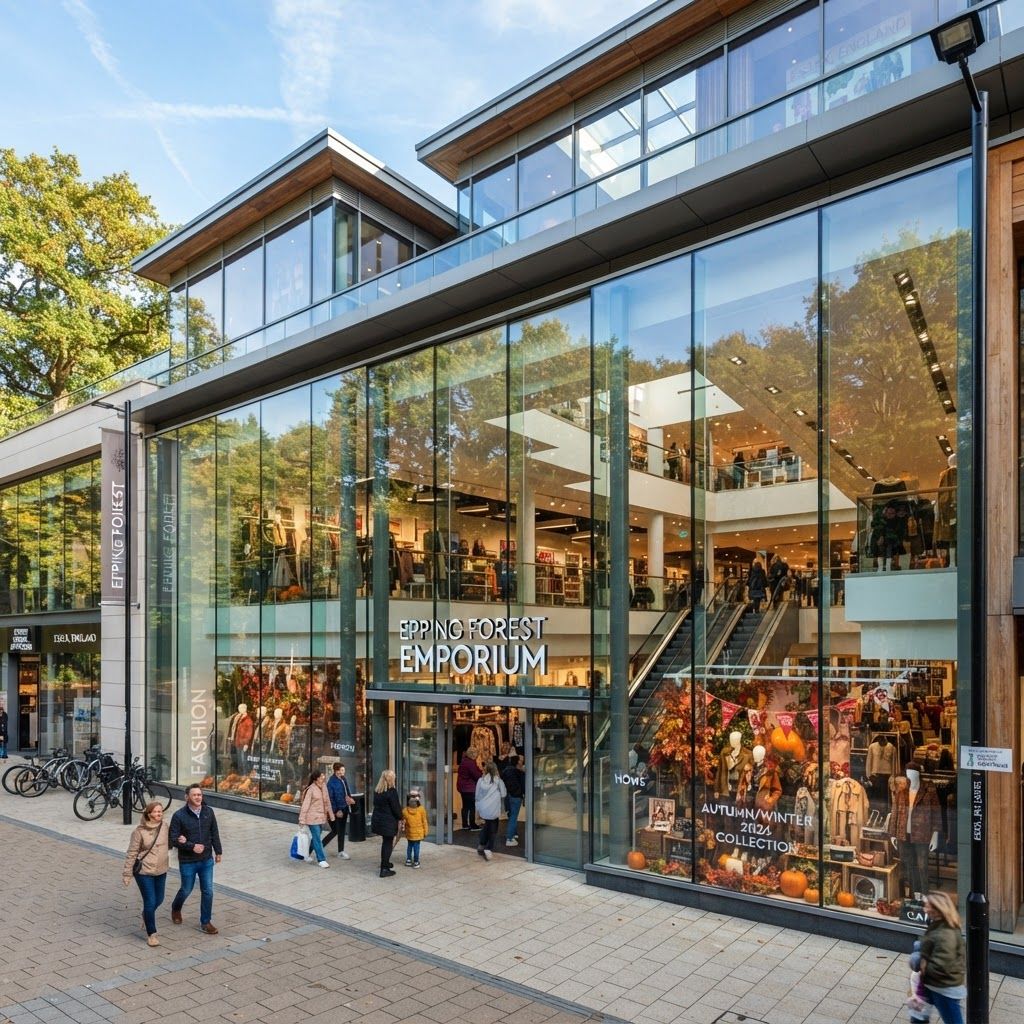
For the Epping Forest district, department stores sit within a broader retail ecosystem that includes strong local high streets in Loughton, Epping, Buckhurst Hill and Chigwell, nearby major shopping centres, and straightforward access to central London. The sensible approach uses each for what it does best: independents for distinctive pieces and personal service, department stores for range and considered purchases with expert advice, online for commodity items, and larger destinations for occasional major shopping trips.
Supporting local high streets alongside larger stores matters practically, not just sentimentally. A high street with a mix of independents, services and places to eat remains viable; one hollowed out by purely online purchasing does not. The department store, in its modern form, works best as part of that mix rather than as a replacement for it.
Want your brand featured in front of decision-makers? Publish a guest post or get a link insertion in our guides through AAMAX's guest post and link insertion service.
Helpful Links
 SponsoredAAMAX — Full-Service Digital Agency
Write for Us
Share your expertise with our readers. We welcome guest contributions from industry specialists.
Pitch your idea