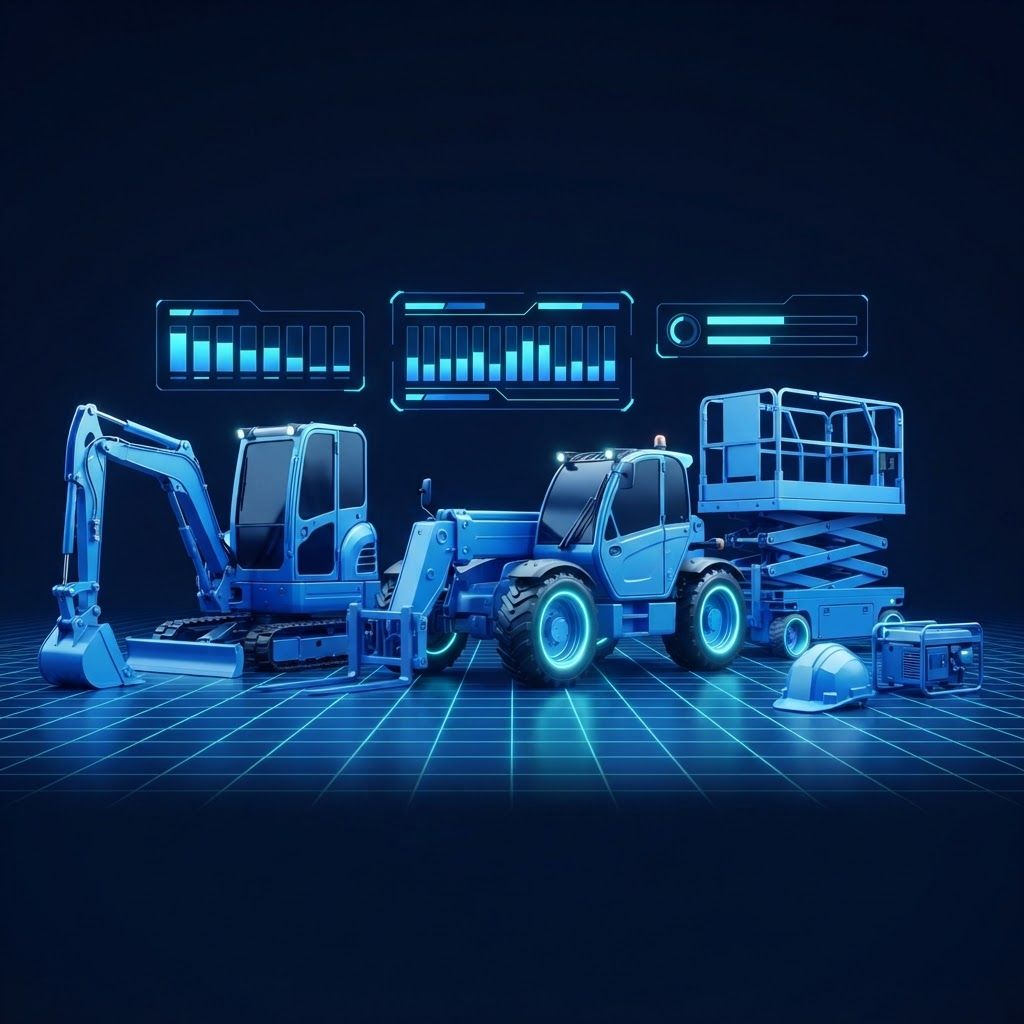
The Role of Plant Hire in Local Construction
Very few contractors own the full range of equipment a modern project requires, and for good reason. Plant is expensive to buy, depreciates, needs storage, insurance, servicing and statutory inspection, and sits idle between uses. Renting converts a capital problem into a predictable operating cost and gives access to newer, better-maintained and more efficient machines than most firms could justify purchasing.
In St Albans this matters even more than average because of site constraints. Many projects sit on narrow urban plots with restricted access, shared driveways, overhead cables and neighbours within metres. A contractor may need a 0.8-tonne micro excavator that fits through a garden gate one week and a fifteen-metre spider lift the next. Rental makes that flexibility possible.
What Equipment Is Typically Hired
Earthmoving equipment is the largest category: micro, mini and midi excavators from under a tonne to eight tonnes and beyond, skid steers and compact tracked loaders, dumpers from one to six tonnes, and compaction plant including vibrating plates, trench rammers and rollers. For urban St Albans projects, compact tail-swing machines that can operate close to boundaries are especially valuable.
Powered access covers scissor lifts, boom lifts, spider lifts for restricted access and tracked platforms for soft ground, plus mast climbers on larger facades. Traditional access equipment includes scaffold towers, podium steps and edge protection systems.
Lifting equipment ranges from telehandlers and rough terrain forklifts to hoists, gantries, chain blocks and material lifts. Concrete and groundworks equipment includes mixers, poker vibrators, power floats, floor saws, breakers and core drills. Site support equipment covers generators, lighting towers, dust extraction, heaters, dehumidifiers, welfare units, toilets, secure stores and fencing.
Increasingly, tool hire also includes battery-powered alternatives to petrol equipment, which matter for indoor work, noise-sensitive locations and the growing number of low-emission requirements on urban sites.
What to Check Before Hiring
Certification is essential. Lifting equipment must have current thorough examination records under LOLER, and powered access and excavators should come with documented maintenance and pre-delivery inspection. Reputable hirers supply these without being asked, and refusing to provide them is a serious warning sign.
Operator competence is a legal responsibility for the hirer. Plant such as excavators, telehandlers, dumpers and powered access requires appropriate training and cards, whether CPCS, NPORS or IPAF for access platforms. Many local hire companies offer operated hire, supplying a trained operator with the machine, which is often the better route for occasional users and homeowners.
Practical checks make the difference between a productive day and a wasted one. Confirm machine dimensions against your narrowest access point, check ground bearing capacity and whether mats are needed, verify delivery and collection windows, understand fuel or charging arrangements, and clarify whether attachments such as breakers, augers, grading buckets and quick hitches are included or extra. Confirm insurance requirements, since most hire agreements make the hirer liable for loss and damage, and check whether the company offers damage waiver cover.
Ten Strong Plant and Equipment Hire Options for St Albans
1. National plant hire depots serving Hertfordshire. Large hire companies with extensive fleets, next-day availability, well-maintained modern machines and full certification documentation. The dependable choice for most contractors.
2. Local independent plant hire firms. Family-run operations based in and around St Albans offering competitive rates, flexible terms and genuinely local delivery, often with operated hire available at short notice.
3. Mini and micro excavator specialists. Companies focused on compact machines suited to garden access, basement digs and confined urban plots, frequently supplied with a range of buckets and breakers.
4. Powered access specialists. Firms with scissor lifts, boom lifts and spider lifts plus IPAF-trained operators, essential for roofing, cladding, glazing and tree work at height.
5. Tool hire and small plant outlets. Counters supplying breakers, mixers, floor saws, sanders, dehumidifiers and hand tools on daily or weekly terms, ideal for renovation projects and capable DIY users.
6. Site accommodation and welfare providers. Suppliers of cabins, canteens, drying rooms, toilets and secure containers, meeting CDM welfare obligations on longer projects.
7. Groundworks and drainage equipment hirers. Firms supplying trench shoring, pumps, CCTV drainage cameras, jetting units and compaction plant for below-ground work.
8. Telehandler and lifting equipment specialists. Companies providing rough terrain handlers, hoists and lifting accessories with current LOLER certification and trained operators.
9. Eco and battery-powered plant hire providers. Increasingly important suppliers offering electric excavators, battery tools, solar-hybrid generators and low-noise equipment for noise and emission sensitive sites.
10. Traffic management and temporary works suppliers. Firms providing barriers, pedestrian walkways, signage, road plates and temporary fencing, necessary when working on or near St Albans highways and footpaths.
Trends in Plant Hire
Electrification is transforming the sector. Battery-powered excavators, dumpers and tools eliminate exhaust emissions and dramatically reduce noise, making them ideal for city-centre work, indoor demolition and projects with restricted working hours. Hybrid and solar-assisted generators and lighting towers cut fuel consumption significantly.
Telematics is the second major shift. Modern fleets report location, hours, idling and fault codes, which improves maintenance, reduces theft and helps contractors bill accurately. Plant theft remains a real issue across Hertfordshire, so tracking and immobilisers have become standard on higher-value machines.
Digital hire platforms have also matured, allowing contractors to check live availability, book, extend and off-hire online, with electronic proof of delivery and consolidated invoicing.
Getting the Best Value from Hire
Plan hire durations realistically, since weekly rates are usually far better value than daily and returning a machine early rarely earns a refund. Off-hire promptly and obtain a collection reference, because charges continue until the machine is formally off-hired. Group deliveries where possible to reduce transport costs. Refuel or recharge before return to avoid premium charges, and clean machines to avoid cleaning fees.
Above all, match the machine to the task and the access. Over-sized plant damages surfaces and cannot manoeuvre, while undersized plant wastes days. A good hire desk will advise honestly on this, and in a constrained city like St Albans that advice is often worth more than the discount on the rate.
Want your brand featured in front of decision-makers? Publish a guest post or get a link insertion in our guides through AAMAX's guest post and link insertion service.
Helpful Links
 SponsoredAAMAX — Full-Service Digital Agency
Write for Us
Share your expertise with our readers. We welcome guest contributions from industry specialists.
Pitch your idea