

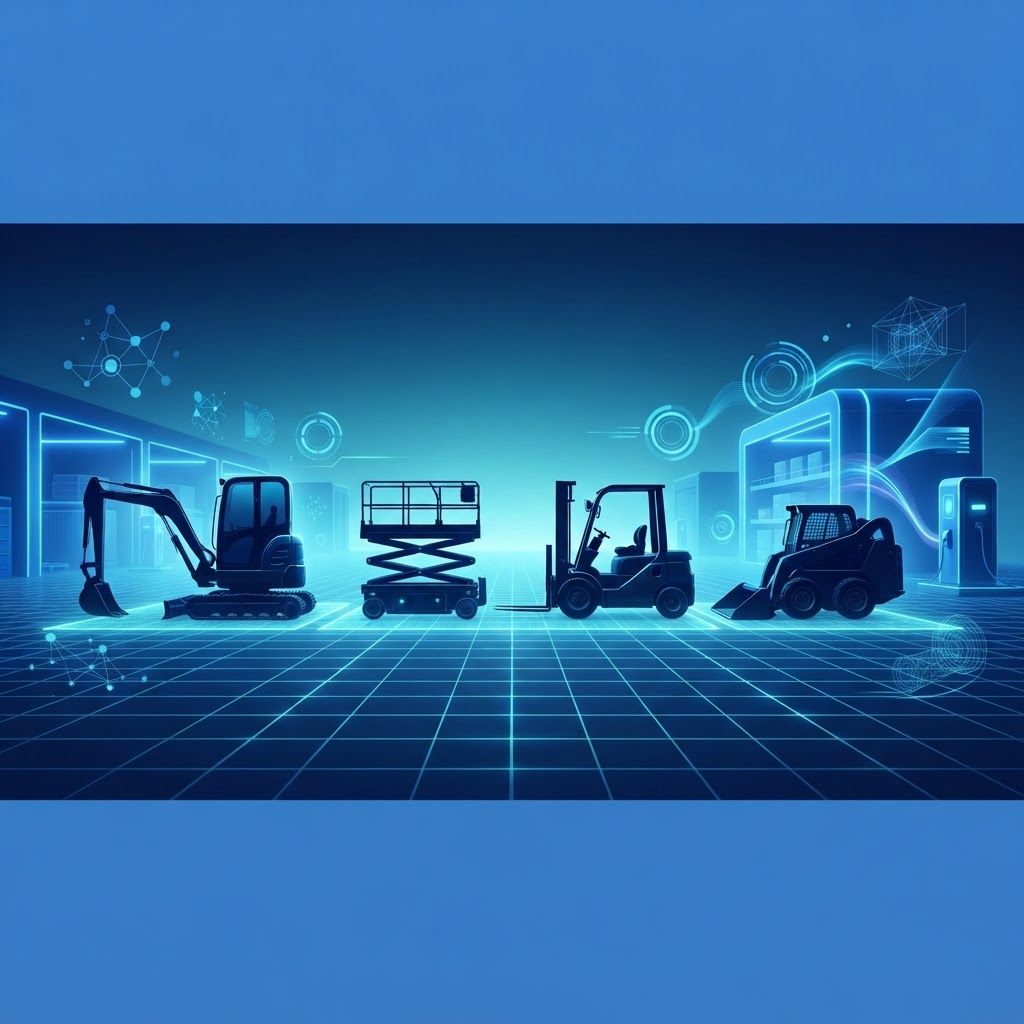
Why Equipment Rental Dominates Modern Construction
Very few construction businesses own the full range of machinery their projects require. Purchasing an excavator, a telehandler and a fleet of powered access platforms ties up capital, incurs depreciation, demands storage space and creates ongoing maintenance and inspection obligations. Renting converts that fixed cost into a variable one aligned with actual project need.
In Lancaster, the rental market serves a broad customer base: main contractors on commercial sites, groundworks specialists, small builders, landscapers, event organisers, facilities teams and increasingly homeowners tackling ambitious projects. The district's mix of urban infill sites, rural agricultural work and industrial development near the motorway corridor means hire fleets must be unusually varied.
Categories of Equipment Available
Earthmoving plant. Mini excavators from around one tonne through to larger tracked machines, skid steer loaders, dumpers and compaction equipment. Micro excavators are particularly popular for Lancaster's terraced properties where rear garden access is through a narrow passage.
Powered access. Scissor lifts, boom lifts, cherry pickers and mast climbers for working safely at height. These have largely replaced ladder work on commercial projects and are increasingly used domestically for roofing and gutter work.
Material handling. Telehandlers, forklifts, hoists and cranes for moving materials around site efficiently.
Power tools and small plant. Breakers, disc cutters, floor saws, concrete mixers, plate compactors, generators, lighting towers and pressure washers.
Site accommodation and welfare. Portable offices, drying rooms, toilets, canteens and secure storage containers, which are legally required welfare provisions on most sites.
Specialist and seasonal equipment. Dehumidifiers and drying equipment for flood response, heaters for winter working, pumps for dewatering and traffic management equipment.
How Rental Pricing Works
Hire is typically charged daily, weekly or monthly, with rates decreasing significantly for longer periods. A week often costs little more than three days, and monthly rates can approach a third of the equivalent weekly cost.
Additional charges commonly include delivery and collection, fuel, damage waiver or insurance, attachments such as breakers and augers, and operator supply where the machine requires certified operation. Reputable Lancaster hire companies present these clearly rather than surprising customers on the final invoice.
Customers should also understand the difference between operated and self-drive hire. Operated hire supplies a trained, certified operator with the machine, which suits customers without qualified staff and shifts operational responsibility to the supplier. Self-drive hire is cheaper but requires the hirer to hold appropriate competence cards and insurance.
Safety, Certification and Legal Duties
Construction plant is dangerous when misused, and the regulatory framework reflects that. Equipment must be maintained and, where lifting is involved, thoroughly examined at statutory intervals. Hire companies are responsible for supplying machinery in safe condition with valid inspection records.
The hirer carries responsibilities too. Operators must be trained and, for most plant, hold recognised competence certification. Risk assessments and method statements should be in place. Underground services must be located before excavation begins, an especially important point in Lancaster's older streets where service records can be incomplete.
Good hire companies support customers here, providing operator manuals, inspection certificates, familiarisation on delivery and, in many cases, accredited training courses.
Choosing the Right Machine for the Job
Undersizing equipment wastes time; oversizing wastes money and can be impossible to manoeuvre. Key considerations include access width and height, ground bearing capacity, working reach and lift height required, and the duration of the task.
Access is the recurring constraint in Lancaster. Historic streets, back alleys and hillside plots frequently rule out larger machines. Experienced hire desks ask about access dimensions, gradients and ground conditions before recommending equipment, and the best will visit site for anything complex. Tracked machines with retractable undercarriages, low-profile dumpers and compact telehandlers exist precisely for these situations.
Electric and Low Emission Plant
Emissions regulation and client sustainability commitments are reshaping hire fleets. Battery-electric mini excavators, electric scissor lifts, hybrid generators, solar-powered lighting towers and low-emission engines are increasingly available.
Beyond environmental benefit, electric plant offers practical advantages: near-silent operation suitable for noise-sensitive locations such as hospitals, schools and residential streets, and zero exhaust emissions allowing indoor use without ventilation concerns. For city centre work in Lancaster, where restricted hours and neighbour relations matter, these attributes have real value.
Availability, Logistics and Reliability
The practical measure of a hire company is whether the machine arrives when promised and works when it arrives. Fleet age is a useful indicator; well-run companies replace equipment on a rolling cycle rather than running machines to failure.
Breakdown response matters equally. A plant failure can idle an entire crew, so the ability to supply a replacement quickly is worth more than a marginally lower daily rate. Local depots serving the Lancaster and Morecambe area respond faster than distant regional centres.
Rental for Homeowners and Small Projects
Domestic customers increasingly hire directly for garden landscaping, driveway removal, decking installation and decorating projects. Small plant such as mini diggers, rotavators, wallpaper strippers, carpet cleaners and pressure washers is widely available on short hire.
Homeowners should be realistic about competence. A mini excavator is straightforward in principle and genuinely hazardous in inexperienced hands, particularly near buried services or on sloping ground. Many hire companies offer familiarisation, and operated hire remains the safer option for anything substantial.
Final Thoughts
The best construction equipment rental companies in Lancaster combine a modern, well-maintained and varied fleet with knowledgeable advice, transparent pricing and dependable logistics. They help customers select appropriately for constrained urban access, support compliance with safety and inspection duties, and increasingly offer low-emission alternatives. For contractors and homeowners alike, hiring the right machine transforms a laborious job into a manageable one, provided the supplier is chosen with the same care as the equipment.
Want your brand featured in front of decision-makers? Publish a guest post or get a link insertion in our guides through AAMAX's guest post and link insertion service.
Helpful Links
 SponsoredAAMAX — Full-Service Digital Agency
Write for Us
Share your expertise with our readers. We welcome guest contributions from industry specialists.
Pitch your idea

