

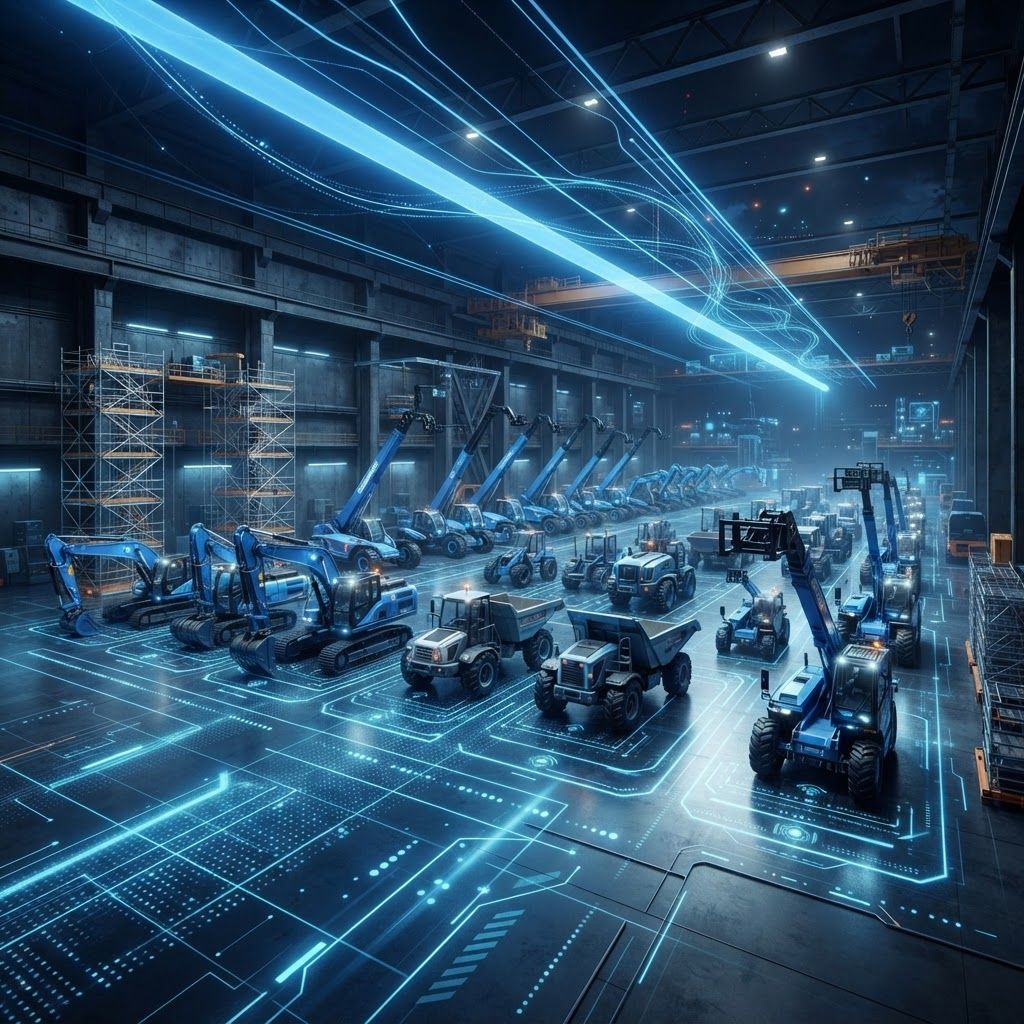
Why Hire Rather Than Buy
Construction equipment is expensive to purchase, expensive to maintain and expensive to store. A mini excavator used for three weeks a year is a poor investment; the same machine hired for those three weeks costs a fraction of the capital outlay and arrives serviced, certified and insured. This logic applies at every scale, from a homeowner needing a plate compactor for a weekend to a contractor requiring a fleet of telehandlers for a twelve-month programme.
Huntingdonshire is particularly well served. Its position on the A1 and A14 corridors places it within easy reach of major depots, while local yards around Huntingdon, St Neots and St Ives provide same-day availability for smaller tools. The district's sustained construction activity, from residential development at Alconbury Weald to agricultural and logistics work, supports a healthy and competitive rental market.
What Equipment Rental Providers Stock
Earthmoving plant. Micro, mini and midi excavators, tracked and wheeled dumpers, skid steers, backhoe loaders and compaction equipment including rollers and plate compactors.
Access equipment. Scaffold towers, podium steps, scissor lifts, cherry pickers, spider lifts for restricted access and mast climbers for taller work.
Lifting and material handling. Telehandlers, forklifts, genie lifts, engine hoists and mobile gantries.
Power and site services. Generators, lighting towers, welfare units, portable toilets, site cabins, temporary heating and dehumidifiers for drying out new construction.
Small tools and consumables. Breakers, disc cutters, mixers, sanders, wallpaper strippers, pressure washers, laser levels, dust extractors and cut-off saws.
Specialist plant. Trenchers, stump grinders, concrete floor grinders, screed pumps, core drills and vacuum lifters.
The Ten Categories of Rental Provider
1. The national plant hire group with a local depot. Enormous fleet breadth, guaranteed availability, standardised safety documentation and account facilities. Best for contractors needing certainty and volume.
2. The independent local plant hire yard. Personal service, flexible terms, competitive rates and genuine local knowledge. Often willing to accommodate short-notice or unusual requests that larger operators cannot.
3. The tool hire specialist. Focused on hand and power tools rather than heavy plant, with counter service and daily rates that suit tradespeople and DIY users alike.
4. The access and powered platform specialist. Deep fleets of scissor lifts, boom lifts and towers, along with the familiarisation training and inspection certification that working at height demands.
5. The operated plant hire provider. Supplies machine and operator together. For anything larger than a mini excavator, or for anyone without the relevant competence card, this is usually the safer and faster option.
6. The groundworks and civils plant supplier. Trench boxes, dewatering pumps, road plates, compaction plant and drainage equipment for infrastructure and utility work.
7. The site accommodation and welfare provider. Cabins, canteens, drying rooms, toilets and secure storage containers, delivered and connected. Legally required on most sites of any size.
8. The agricultural and landscaping equipment hirer. Highly relevant in rural Huntingdonshire. Chippers, stump grinders, post drivers, tractors and turf equipment for estate and land management work.
9. The event and temporary structures hirer. Barriers, fencing, marquees, temporary flooring and generators, overlapping with construction hire but serving a different market.
10. The specialist and low-carbon plant provider. Battery-electric excavators, hybrid generators, solar lighting towers and hydrogen-ready equipment. A small but rapidly growing segment driven by emissions requirements.
Hiring Efficiently
Match the machine to the access, not to the task. The most common hiring mistake is selecting a machine that cannot physically reach the work area. Measure the narrowest access point, note any gradients and check ground bearing capacity, particularly on soft fenland ground where a heavy machine will sink.
Understand the rate structure. Daily, weekly and monthly rates differ substantially, and a weekly rate is often barely more than three days. Ask about delivery and collection charges, which are frequently quoted separately and can be significant for heavier plant.
Clarify the insurance position. Hired-in plant is your responsibility while in your possession. Either arrange hired-in plant cover through your own insurer or accept the provider's damage waiver, and understand the excess in either case.
Check the operator competence requirements. Excavators, telehandlers and powered access all require appropriate training and, on most commercial sites, a recognised competence card. Reputable providers will ask; those who do not are exposing you to risk.
Inspect the machine on delivery and record its condition. Photograph any existing damage, confirm fuel level and check that the current inspection certification is present. This takes five minutes and prevents disputes on return.
Cost Control Strategies
Plan the hire period around the actual work rather than the intended schedule. Idle plant on site still accrues charges, and off-hiring promptly is the single most effective way to control rental spend.
Consolidate hires with one provider where possible. Account customers negotiate better rates, receive consistent documentation and gain priority during busy periods.
Consider long-term hire for equipment needed for six months or more, as contract hire rates fall considerably below short-term rates. Conversely, resist the temptation to purchase equipment you will use intermittently.
Trends in the Rental Sector
Electrification is advancing quickly. Battery-electric mini excavators, electric dumpers and hybrid generators are becoming available, driven by urban emissions requirements and client sustainability targets. They are quieter, produce no local emissions and are increasingly requested on sensitive sites.
Telematics is now standard on larger plant, providing location tracking, utilisation reporting and fault diagnostics. This helps both providers and hirers identify underused machines and reduce unnecessary spend.
Online booking and digital documentation have transformed the customer experience, with real-time availability, electronic off-hire and digital certification replacing phone calls and paper tickets.
Final Thoughts
Equipment rental in Huntingdonshire is a mature and competitive market, which works to the hirer's advantage. Choose a provider whose fleet genuinely matches your needs, be precise about access and ground conditions, understand the insurance and competence requirements, and off-hire the moment the work is finished. Handled well, hiring gives access to modern, well-maintained plant without any of the burdens of ownership.
Want your brand featured in front of decision-makers? Publish a guest post or get a link insertion in our guides through AAMAX's guest post and link insertion service.
Helpful Links
 SponsoredAAMAX — Full-Service Digital Agency
Write for Us
Share your expertise with our readers. We welcome guest contributions from industry specialists.
Pitch your idea

