

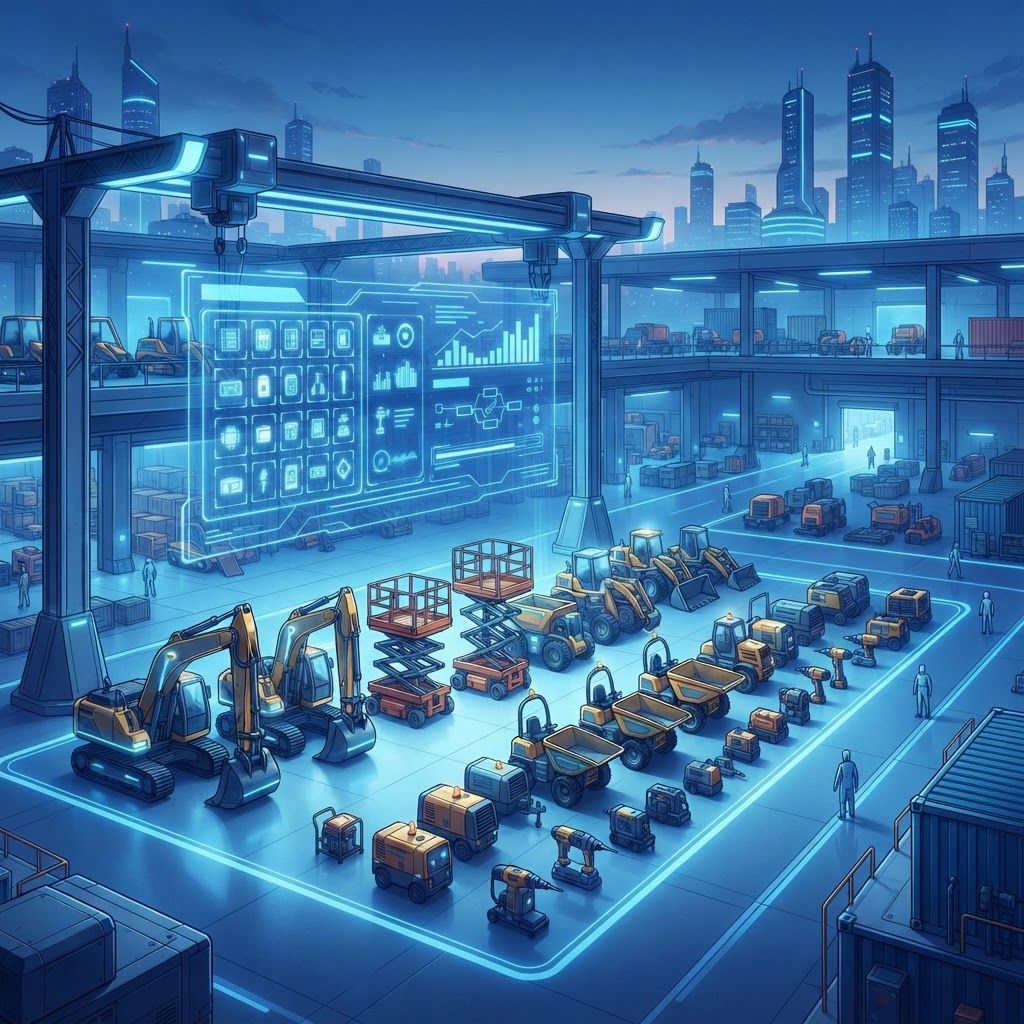
Why Hire Rather Than Buy
Construction equipment is expensive to purchase, costly to maintain, requires storage and transport, and depreciates steadily. For most contractors and virtually all homeowners, hiring is the rational choice. It converts a capital purchase into a predictable operating cost, transfers maintenance and certification responsibility to the hire company, and provides access to the right machine for each specific task rather than compromising with whatever is owned.
Bracknell Forest supports a healthy hire market. The borough's sustained construction activity, from new housing at Warfield and Amen Corner to commercial refurbishment across the business parks, generates constant professional demand. Alongside this sits a large population of homeowners undertaking extensions, landscaping and renovation projects, plus tradespeople who need occasional access to specialist equipment.
Categories of Equipment Available
Earthmoving and excavation. Mini excavators from around one tonne upward are the most frequently hired plant item, used for footings, drainage, landscaping and pool excavation. Larger tracked excavators, backhoe loaders, skid steer loaders and dumpers serve bigger sites. Compact machines are particularly relevant in Bracknell's residential estates where access through side gates is often restricted, and micro excavators under one metre wide are specifically designed for this.
Access equipment. Scaffold towers, podium steps, ladders, scissor lifts and boom lifts, also called cherry pickers. Powered access has largely replaced ladders for commercial work at height because it is substantially safer and more productive.
Compaction and groundworks. Wacker plates, trench rammers, vibrating rollers and floor saws for driveways, patios, paths and road works.
Concrete equipment. Mixers of various capacities, concrete breakers, power floats, poker vibrators and screeds.
Power tools. Breakers, core drills, diamond saws, chasing tools, planers, sanders and heavy-duty drilling equipment that few tradespeople would buy for occasional use.
Lifting equipment. Telehandlers, material hoists, engine cranes, chain blocks and genie lifts.
Site support. Generators, lighting towers, welfare units, portable toilets, site fencing and hoarding, dehumidifiers, heaters and dust extraction. Temporary site accommodation and security fencing are frequently hired for the duration of larger projects.
Landscaping and garden equipment. Turf cutters, rotavators, stump grinders, chippers, pressure washers and post hole borers, particularly popular given the borough's substantial gardens and tree cover.
Licensing, Training and Safety
This is where professional hire companies earn their value. Much plant equipment legally requires operator competence. Cards issued under recognised schemes such as CPCS and NPORS demonstrate training on specific machine categories, and most commercial sites will not permit operation without them. For powered access, IPAF training is the industry standard, and PASMA certification applies to mobile tower scaffolds.
Equipment itself must be certified. Lifting equipment requires thorough examination under LOLER at prescribed intervals, and all work equipment must be maintained under PUWER. Reputable hire companies provide current test certificates with the machine and can produce inspection records on request. If a hirer cannot provide a LOLER certificate for a lifting machine, that is a significant warning.
Hire companies also supply the safety documentation professional sites require: risk assessments, method statement templates, operating manuals and daily check sheets.
For homeowners, the key point is honesty about capability. A hire desk that asks what you intend to do, checks whether you have used similar equipment, and offers a demonstration is acting responsibly. Breakers, saws and excavators cause serious injuries every year in inexperienced hands.
Operated Versus Self-Drive Hire
Many companies offer plant with an operator. This removes the licensing burden entirely, brings experienced judgement to the task, and is often faster and therefore not much more expensive overall. For a homeowner needing a day of excavation, operated hire is frequently the better value option once the risk of damaging underground services or a neighbour's boundary is considered.
Self-drive hire suits contractors with trained staff who need the machine for extended periods.
Industry Trends
Electrification is transforming the hire fleet. Battery-powered excavators, dumpers, lighting towers and tools are now widely available, driven by urban emissions requirements, noise restrictions on residential sites and corporate carbon commitments. For work in occupied buildings or near housing, electric plant is often the only practical option.
Telematics has become standard on larger plant. GPS tracking, hour meters, fuel monitoring and remote diagnostics improve utilisation, reduce theft and allow preventative maintenance. Theft of plant is a persistent industry problem, and tracked machines are considerably more likely to be recovered.
Digital hire management has improved the customer experience substantially, with online catalogues showing live availability, digital contracts, photographic condition records at collection and return, and app-based off-hire that prevents disputes over charges continuing after equipment is returned.
Sustainability reporting is increasingly requested by commercial clients, with hire companies providing data on fuel use, emissions and the proportion of electric plant supplied.
Hiring Effectively
Plan ahead. Popular items, particularly mini excavators and powered access, book up during good weather. Reserving in advance avoids costly delays.
Measure access before ordering. The most common hire problem is a machine that cannot reach the work area. Check gate widths, path surfaces, overhead obstructions and ground conditions, and tell the hire desk the constraints honestly.
Understand the charging structure. Daily, weekly and monthly rates differ considerably, and a weekly rate is often barely more than three days. Confirm whether delivery and collection, fuel, attachments and damage waiver are included. Damage waiver reduces but rarely eliminates liability, so check the excess.
Always call before you dig. Underground services, gas, water, electricity and telecoms, cause serious incidents. Service plans and a cable avoidance tool, which hire companies also supply, should be used before any excavation.
Inspect equipment at delivery, photograph any existing damage, and confirm it in writing. Do the same at collection.
Off-hire promptly and obtain a reference number. Charges continue until equipment is formally off-hired, not when you stop using it.
Bracknell Forest's hire sector serves everyone from national contractors to weekend landscapers. Choosing a company with well-maintained modern equipment, proper certification, genuine technical advice and transparent terms consistently proves more economical than chasing the lowest daily rate.
Want your brand featured in front of decision-makers? Publish a guest post or get a link insertion in our guides through AAMAX's guest post and link insertion service.
Helpful Links
 SponsoredAAMAX — Full-Service Digital Agency
Write for Us
Share your expertise with our readers. We welcome guest contributions from industry specialists.
Pitch your idea

