

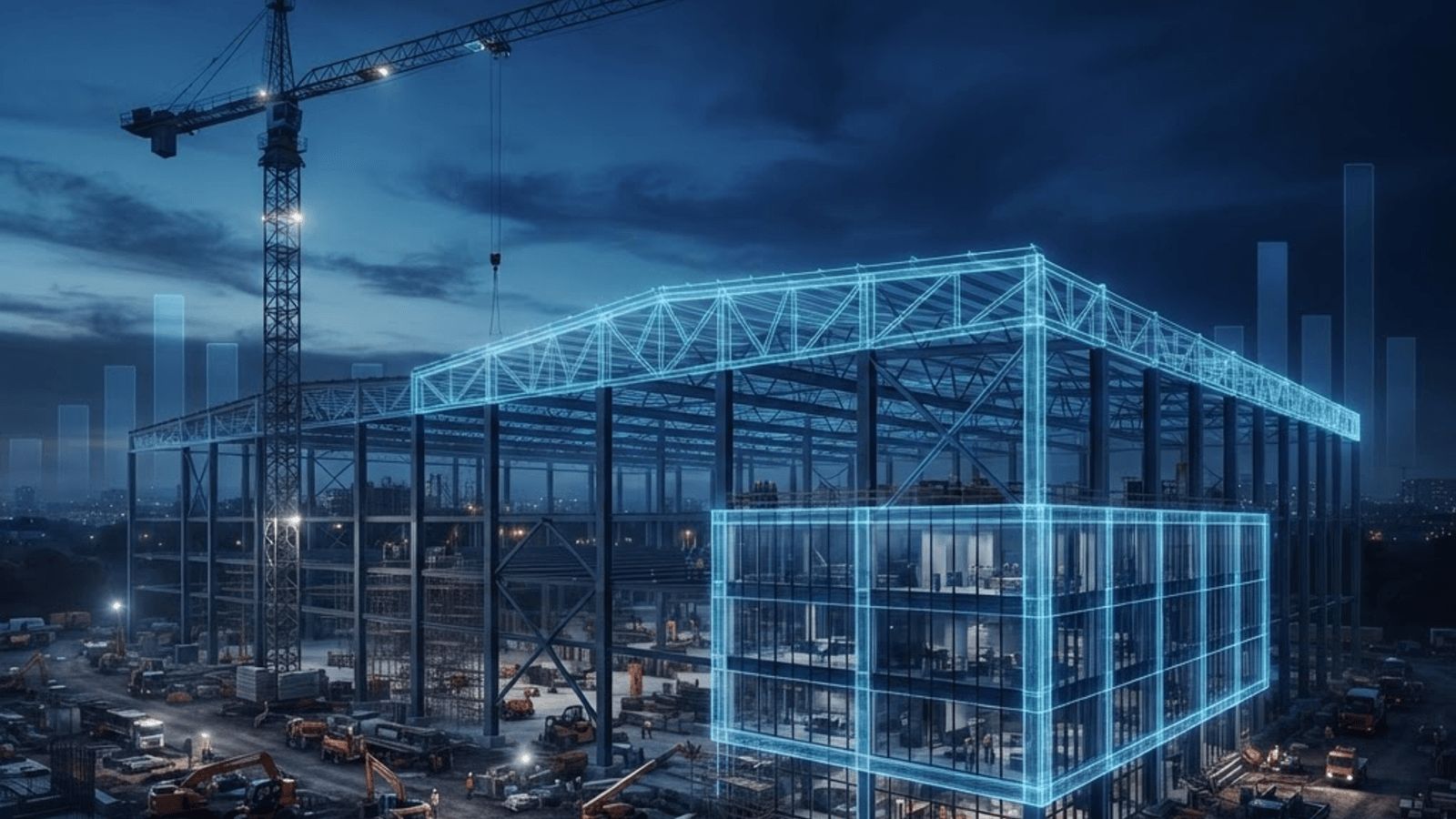
Luton as a Commercial Construction Market
Luton occupies a strategically valuable position. It sits on the M1 corridor with fast rail links to London, hosts a major international airport, and supports substantial logistics, manufacturing, retail and professional services sectors. That combination creates continuous demand for warehousing, offices, trade counters, hospitality space, healthcare facilities and educational buildings.
Commercial work differs fundamentally from domestic construction. Programme certainty affects revenue directly, regulatory obligations are heavier, and projects frequently proceed while a business continues trading. Contractors operating successfully in this space must combine technical capability with genuine project management discipline and a strong safety culture.
What Commercial Clients Actually Need
Three requirements dominate. First, cost certainty: a business planning a fit-out needs a firm figure to justify capital expenditure. Second, programme reliability, because delayed handover often means paying rent on two premises simultaneously. Third, compliance, covering construction regulations, fire safety, accessibility, energy performance certification and sector-specific standards in food, healthcare or education environments.
Beyond these, commercial clients increasingly expect sustainability credentials. Energy performance ratings affect lettability and, for some property classes, the legal ability to lease at all. Contractors able to advise on building fabric, lighting efficiency, controls and low-carbon heating add measurable commercial value.
The Top 10 Commercial Construction Companies in Luton
1. Airport Way Commercial Construction
A specialist in industrial and logistics buildings, this firm delivers steel-framed units, large-span roofing, loading bays and heavy-duty floor slabs. Airport Way Commercial Construction is experienced in coordinating early groundworks with long-lead structural steel packages, which is where industrial programmes are usually won or lost.
2. Chiltern Commercial Contractors
Delivering offices, medical facilities and educational buildings, Chiltern Commercial Contractors is known for meticulous documentation and staged commissioning. Clients in regulated sectors value the completeness of its handover files and testing records.
3. Luton Retail Build Group
Focused on retail and hospitality, this company delivers shop fit-outs, restaurant conversions and unit refurbishments, frequently working overnight to avoid trading disruption. Luton Retail Build Group understands landlord consent processes and licence for alterations requirements thoroughly.
4. Bedfordshire Industrial Builders
Serving manufacturing and distribution clients, Bedfordshire Industrial Builders handles plant installation enabling works, mezzanine construction, warehouse extensions and racking-ready flooring. Its ability to phase work around production schedules is a repeated point of praise.
5. Leagrave Office Fit Out and Build
Combining base build capability with interior delivery, Leagrave Office Fit Out and Build takes offices from shell and core to fully operational workplaces. Mechanical and electrical coordination, data infrastructure and acoustic performance are handled in-house.
6. Stopsley Design and Build
Offering single-point responsibility from concept through completion, Stopsley Design and Build appeals to clients who prefer one accountable party. Early contractor involvement typically improves buildability and reduces late design changes.
7. Marsh Farm Commercial Refurbishment
Specialising in upgrading existing stock, Marsh Farm Commercial Refurbishment improves older commercial buildings through re-roofing, cladding replacement, window upgrades and services renewal. Such work often delivers stronger returns than new construction on constrained sites.
8. Dunstable Road Construction Management
Acting as construction manager rather than traditional main contractor, this firm procures trade packages directly on the client's behalf with open-book cost reporting. Dunstable Road Construction Management suits clients who want visibility and flexibility on larger programmes.
9. Vauxhall Way Sustainable Commercial
Concentrating on low-carbon delivery, Vauxhall Way Sustainable Commercial works to recognised environmental assessment standards, incorporating high-efficiency building services, solar generation and improved envelope performance. Energy modelling informs decisions rather than following them.
10. Hatters Principal Contracting
A capable general commercial contractor with strong safety performance, Hatters Principal Contracting takes on complex sites including occupied buildings and public-facing locations. Detailed logistics planning, traffic management and phased possession are core strengths.
Procurement Routes Explained
Traditional procurement separates design and construction, giving the client control over specification but placing coordination risk with the design team. Design and build transfers more risk to the contractor and typically produces earlier cost certainty, though changes after contract signature become expensive. Construction management offers transparency and flexibility but requires an informed, engaged client. Framework agreements suit organisations with recurring work and reward continuity.
Selecting the right route matters as much as selecting the contractor. A client with a fixed budget and limited internal resource is usually better served by design and build, while a client with unusual technical requirements may need traditional procurement to protect specification quality.
Trends in Commercial Construction
Retrofit now rivals new build in importance. With embodied carbon under scrutiny and existing stock underperforming, upgrading buildings rather than replacing them is often both cheaper and greener. Cladding, glazing, insulation and services renewal form the bulk of this work.
Offsite manufacture continues to advance, with prefabricated services modules, precast elements and volumetric units compressing programmes. Digital delivery through building information modelling improves clash detection and asset information for facilities teams. Meanwhile, electrification of heating and the rise of electric vehicle charging infrastructure are changing electrical capacity planning on nearly every commercial project.
Reducing Risk on Your Project
Define the brief precisely, including operational requirements and future flexibility. Undertake surveys early, particularly asbestos, structural and drainage investigations, because unknown existing conditions cause most commercial cost overruns. Confirm insurance levels appropriate to project value, and agree liquidated damages and extension of time mechanisms transparently rather than adversarially.
Finally, engage the eventual building operator during design. Facilities teams routinely identify maintenance and access issues that designers overlook, and fixing those on paper costs almost nothing.
Final Thoughts
Luton's commercial construction sector is experienced, well resourced and used to demanding programmes. The strongest results come from clear briefs, appropriate procurement routes and contractors chosen for relevant sector experience rather than headline price. Handled properly, a commercial build becomes a strategic asset rather than an operational headache.
Want your brand featured in front of decision-makers? Publish a guest post or get a link insertion in our guides through AAMAX's guest post and link insertion service.
Helpful Links
 SponsoredAAMAX — Full-Service Digital Agency
Write for Us
Share your expertise with our readers. We welcome guest contributions from industry specialists.
Pitch your idea

