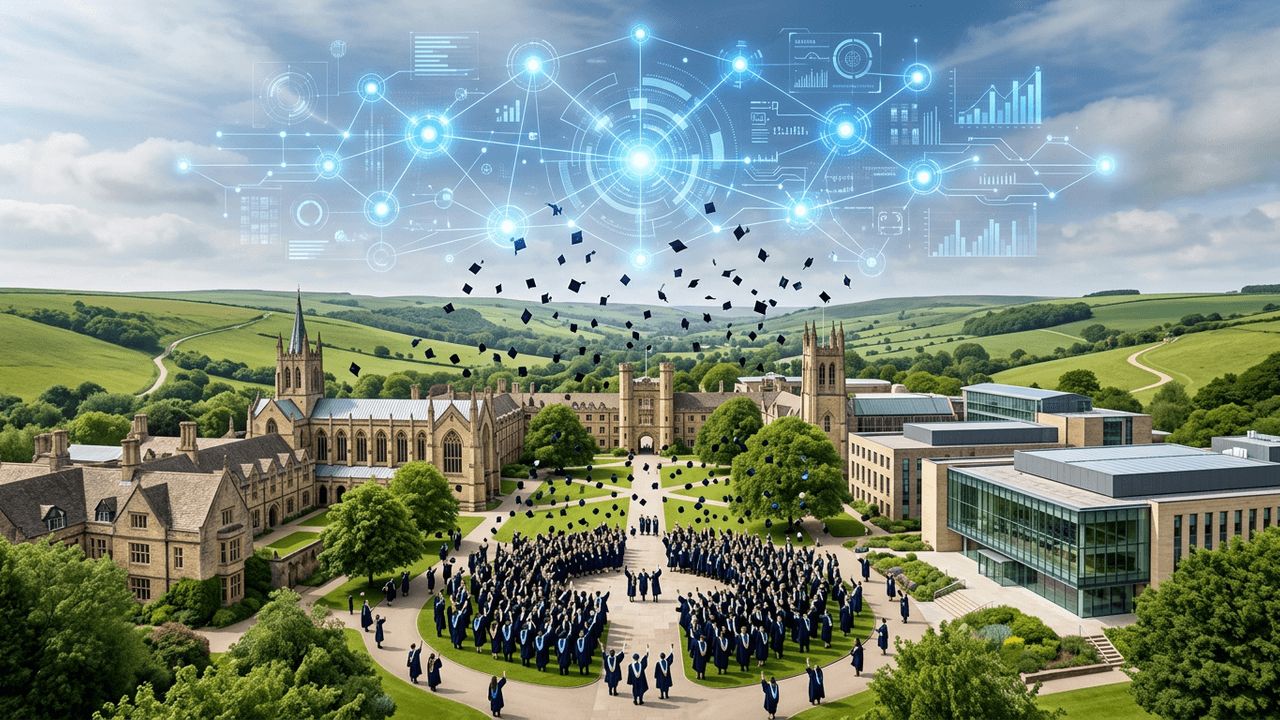
Higher Education Within Reach of South Norfolk
South Norfolk's location gives residents an unusual advantage in higher education access. Within a short drive lie community college campuses, public and private four-year institutions, maritime and technical training centers, military education programs and health science schools. For students balancing work, family or military service, that density means genuine flexibility: evening classes, online coursework, stackable credentials and transfer agreements that reduce the cost of a bachelor's degree substantially.
The term college covers more ground than many people assume. It includes two-year associate degree institutions, technical and trade colleges awarding certificates and diplomas, specialized professional schools, and the undergraduate colleges within larger universities. Each serves a different purpose, and choosing well depends on clarity about your intended outcome.
Why Community and Technical Colleges Matter More Than Ever
Tuition at Virginia's community colleges is a fraction of four-year rates, and guaranteed admission agreements allow students who complete an associate degree with a qualifying grade point average to transfer into many state universities with junior standing. That pathway can cut the total cost of a bachelor's degree dramatically while preserving the same final credential. Simultaneously, employer demand for skilled technicians in maritime trades, healthcare, HVAC, welding, information technology and advanced manufacturing has pushed starting wages for credential holders higher than many assume.
1. Tidewater Community College
Tidewater Community College is the anchor institution for two-year education in Hampton Roads and the most directly relevant college option for South Norfolk residents. With multiple campuses across Chesapeake, Norfolk, Portsmouth and Virginia Beach, TCC offers associate degrees in arts and sciences, business administration, engineering, information technology, nursing and allied health, along with dozens of career studies certificates. Its reputation rests on affordability, transfer strength, flexible scheduling and deep workforce partnerships with regional employers. Advising support for transfer planning is a particular strength.
2. Paul D. Camp Community College
Serving the western portion of the region, Paul D. Camp Community College provides small-class instruction and a strong workforce development mission. Programs span general education transfer tracks, business, early childhood education, industrial technology and healthcare support. Its scale is an advantage for students who want faculty who know them by name and advising that does not require waiting in line. Truck driving, welding and industrial maintenance credentials connect directly to regional employment demand.
3. Norfolk State University's Undergraduate Colleges
As a historically Black university with a strong regional presence, Norfolk State University offers undergraduate colleges in liberal arts, science and technology, business and health sciences. Its programs in social work, computer science, engineering technology and mass communications have long track records. For South Norfolk students, the combination of proximity, scholarship availability and a supportive campus community makes it a compelling four-year destination reachable without relocating.
4. Old Dominion University's Undergraduate Programs
Old Dominion University's undergraduate colleges cover engineering and technology, health sciences, business, education, arts and letters, and sciences. ODU is notable for its longstanding distance learning infrastructure and its strong articulation agreements with Virginia community colleges, which make transfer from an associate degree unusually smooth. Programs in modeling and simulation, cybersecurity, maritime engineering and nursing align closely with the regional economy.
5. Tidewater Tech and Regional Technical Colleges
Technical colleges concentrate on hands-on trades with short program lengths and direct job placement support. Typical offerings include HVAC and refrigeration, electrical technology, automotive service, welding, plumbing and building trades. Programs are often completed in under a year, with instruction delivered in shop environments using current industry equipment. For students who want to earn quickly and avoid substantial debt, these institutions deliver strong returns, particularly in a market with heavy construction and ship repair activity.
6. Centura College
Centura College focuses on career-oriented diploma and associate programs designed around employment outcomes. Program areas commonly include business administration, medical assisting, criminal justice, HVAC, electrical and welding technology. Its model emphasizes accelerated schedules, evening and weekend availability, externship placement and career services support. Students who need a credential on a compressed timeline while working full time are the core audience.
7. ECPI University's College Programs
ECPI University delivers year-round accelerated undergraduate programs in technology, health science, business and criminal justice. Its cohort model allows students to complete a bachelor's degree in a shorter calendar span than a traditional academic year permits. Programs in cybersecurity, network security, software development and electronics engineering technology are well aligned with the defense and technology employers concentrated across Hampton Roads.
8. Maritime and Shipyard Training Colleges
The Hampton Roads maritime cluster supports specialized training institutions producing marine electricians, pipefitters, shipfitters, welders, machinists, riggers and coatings specialists. Many programs are developed jointly with shipyards and maritime employers, and some include paid apprenticeship components where students earn wages while completing coursework. Credentials from these programs carry immediate weight with regional employers, and career progression into supervision and planning roles is well established.
9. Health Science and Nursing Colleges
Healthcare is among the region's largest employment sectors, and dedicated nursing and allied health colleges train registered nurses, practical nurses, surgical technologists, radiologic technologists, medical laboratory technicians, respiratory therapists and dental hygienists. Clinical rotation partnerships with regional hospital systems provide real patient-care experience. Applicants should verify programmatic accreditation and review recent licensure examination pass rates, which are the clearest indicators of program quality.
10. Military and Continuing Education Colleges
With one of the largest concentrations of military personnel in the world nearby, colleges serving service members, veterans and dependents are a significant part of the landscape. These institutions specialize in credit for military training and occupational experience, flexible enrollment around deployment cycles, tuition assistance and GI Bill processing, and online delivery. For active-duty members stationed in Hampton Roads, they offer a way to make steady degree progress despite unpredictable schedules.
How to Choose the Right College
Start from the outcome. If the goal is a bachelor's degree, prioritize institutions with documented transfer agreements and ask advisors to map exactly which credits transfer to your target university. If the goal is employment within eighteen months, prioritize programs with published job placement rates and employer advisory boards.
Verify accreditation carefully. Institutional accreditation determines federal financial aid eligibility and credit transferability, while programmatic accreditation governs licensure in fields such as nursing, engineering technology and education. Ask for the actual accrediting body name and confirm it independently.
Examine total cost rather than sticker tuition. Include fees, tools, uniforms, textbooks, certification examination fees and transportation. Compare that figure against realistic entry-level earnings in the field, and be cautious of any program that cannot provide outcome data.
Trends Reshaping Regional Higher Education
Stackable credentials are becoming standard, allowing a student to earn a short-term certificate, then apply it toward a diploma and eventually an associate degree without repeating coursework. Dual enrollment continues to expand, letting high school students accumulate college credit at little or no cost. Apprenticeship models that combine paid work with classroom instruction are growing quickly in maritime and construction trades. And hybrid delivery, blending online theory with in-person labs, has become the default in technical programs.
Final Thoughts
South Norfolk residents can access affordable community college transfer pathways, respected four-year undergraduate colleges, accelerated career programs, maritime training tied directly to regional employers and military-friendly institutions built for flexibility. Define your target outcome first, verify accreditation and outcome data second, and calculate true total cost third. Approached that way, the region's higher education density becomes one of the strongest assets available to local families.
Want your brand featured in front of decision-makers? Publish a guest post or get a link insertion in our guides through AAMAX's guest post and link insertion service.
Helpful Links
 SponsoredAAMAX — Full-Service Digital Agency
Write for Us
Share your expertise with our readers. We welcome guest contributions from industry specialists.
Pitch your idea