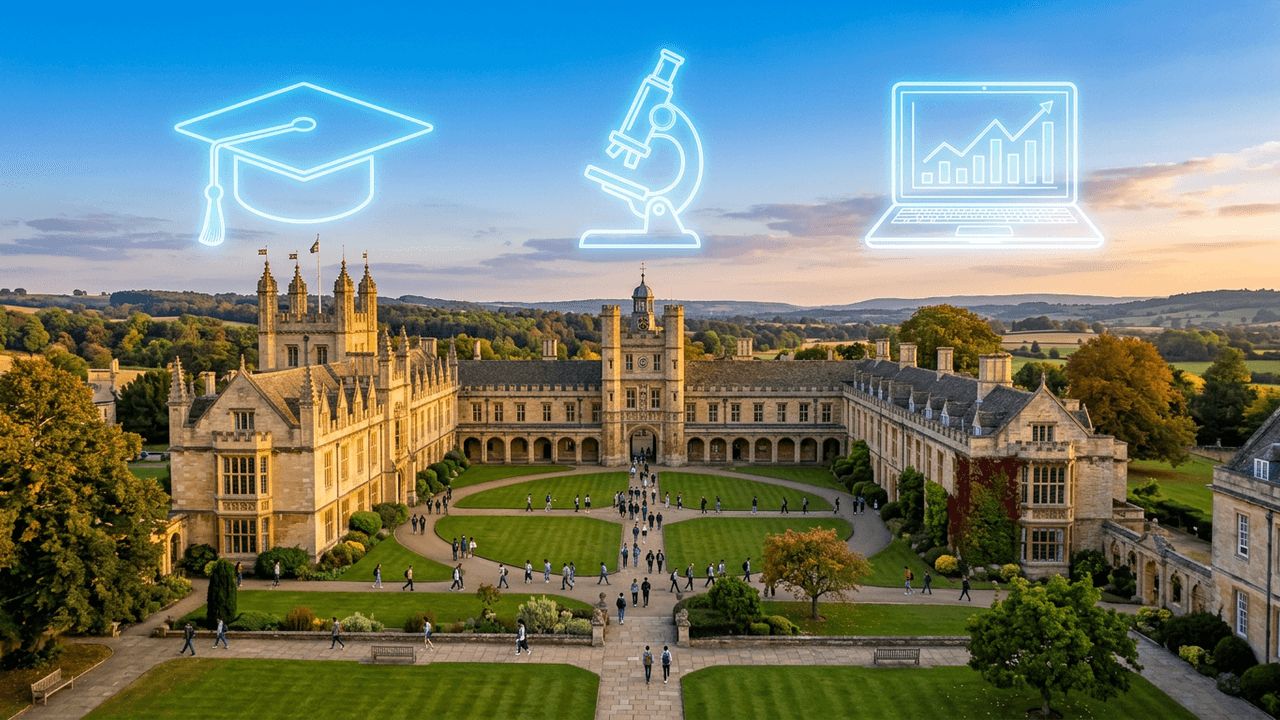
Peterborough's Position in Ontario's College System
Peterborough punches above its weight in post-secondary education. Alongside a full university, the city hosts one of Ontario's most distinctive colleges, a cluster of private career colleges, union and industry training centres, and Indigenous-led educational institutions. Together they serve secondary school graduates, career changers, apprentices, internationally trained professionals and adults returning to learning.
The defining characteristic of college education, as distinct from university study, is applied focus. Programs are typically two to three years, built around employer-validated curriculum, and heavy on labs, workshops, simulation and placement. Graduates enter the workforce with demonstrable competencies rather than primarily theoretical knowledge. In a region with strong manufacturing, health care, natural resources and construction sectors, that applied orientation aligns closely with local hiring demand.
The Top 10 Colleges and College-Level Institutions in Peterborough
1. Fleming College — Sutherland Campus
Fleming's Sutherland Campus is the anchor of college education in Peterborough and the largest of the college's campuses. Its program breadth spans business, health sciences, community services, technology, trades, computing and general arts. Notable strengths include a well-regarded School of Health and Wellness with nursing and paramedic programs, strong business and accounting pathways, and applied computing and cyber security offerings. The campus is known for modern labs and simulation facilities, extensive student services, and articulation agreements that let graduates transfer credit toward university degrees. Fleming's employer relationships across the Kawarthas produce placement opportunities that translate directly into local employment.
2. Fleming College — School of Environmental and Natural Resource Sciences
Located at the Frost Campus in nearby Lindsay and closely connected to the Peterborough region, this school is genuinely nationally significant. Its programs in ecosystem management, forestry, fish and wildlife, environmental technology, geographic information systems and urban forestry are among the most respected applied environmental credentials in Canada. Field-based instruction on extensive natural land holdings is the differentiator, and graduates work across conservation authorities, municipalities, consulting firms and provincial agencies.
3. Fleming College — Haliburton School of Art and Design
Another Fleming division with an outsized reputation, the Haliburton School of Art and Design offers intensive studio-based certificates and diplomas in visual arts, ceramics, glassblowing, jewellery, digital media and artisan crafts. Its immersive, workshop-driven model and its faculty of practising artists make it unique in the Ontario college system, and it draws students from across the country.
4. Trent University Durham and Trent Continuing Education Bridge Programs
While Trent is a university, its continuing education, foundation and college-to-university bridging programs function as a critical part of the region's college-level ecosystem. These pathways allow college graduates and mature learners to convert applied credentials into degree progress, and they provide part-time and evening options for working adults. The differentiator is credit transfer: strong articulation reduces duplicated study and time to degree.
5. Private Career Colleges in Business and Office Administration
Registered private career colleges operating in Peterborough offer accelerated diploma programs in business administration, medical office administration, accounting and payroll, and paralegal studies. Their appeal is speed and scheduling: programs are often under a year, with continuous intake rather than September-only entry. For career changers who need a credential quickly, these institutions fill a genuine gap. Prospective students should verify registration under provincial private career college legislation and ask for documented graduate employment rates.
6. Health Care and Personal Support Worker Training Colleges
Demand for personal support workers, developmental service workers and health care aides across the Kawarthas has driven a robust market for accredited PSW and allied health training. These programs combine classroom instruction with clinical placement in long-term care, retirement residences and home care settings. Their differentiator is near-guaranteed placement demand, with many students receiving employment offers directly from placement hosts.
7. Skilled Trades and Apprenticeship Training Centres
Union training centres and industry-sponsored facilities serving the Peterborough area deliver apprenticeship in-school training and journeyperson upgrading for electricians, plumbers, carpenters, millwrights, welders and heavy equipment operators. Their strength is direct employer and union linkage: training is paired with employment, apprentices earn while learning, and completion leads to a nationally portable Certificate of Qualification.
8. First Peoples House of Learning and Indigenous Post-Secondary Programs
Indigenous-led and Indigenous-focused post-secondary programming in Peterborough provides culturally grounded education, academic support, language instruction and community-based learning. Institutions and centres in this space emphasize wraparound student support, Elders' involvement and curriculum that reflects Indigenous knowledge systems. Their impact on access and completion rates for Indigenous learners is substantial and well documented.
9. Continuing Education and Part-Time Studies Divisions
Fleming's continuing education division and comparable part-time studies operations deliver evening, weekend and online courses in everything from computer applications and project management to horticulture and small business planning. The value is flexibility: working adults can accumulate certificates or complete a full diploma part-time without leaving employment. Micro-credentials — short, stackable, competency-specific credentials — have become a major growth area here.
10. Language and Academic Upgrading Colleges
Academic upgrading, adult secondary credit and English language training programs serve newcomers and adults who need prerequisite qualifications before entering diploma study. Providers in this category are the essential first rung of the post-secondary ladder, offering literacy and basic skills programming, general educational development preparation and college entrance preparation. Their differentiator is patient, individualized instruction for learners with interrupted educational histories.
How to Choose the Right College Program
Start with the labour market, not the brochure. Identify the specific job title you want, then examine what credential employers in that field actually list in postings. Applied programs are only valuable when they match hiring requirements, and some fields require specific regulatory certification that only certain programs deliver.
Interrogate placement quality. Ask how many placement hours the program includes, whether the college secures placements or students must find their own, and which employers regularly host students. A strong placement network is often the single biggest determinant of post-graduation employment.
Verify transferability if further education is possible. Articulation agreements between colleges and universities vary dramatically by program. Confirm in writing how many credits transfer and toward which degrees before enrolling, since assumptions here cost students years.
Compare true cost. Tuition is only part of it. Factor in tools and equipment, uniforms, textbooks, placement travel, certification exam fees and lost income during study. Then weigh available financial aid, provincial assistance, bursaries and employer sponsorship.
Trends Shaping College Education Locally
Micro-credentials have moved from experiment to mainstream, giving workers short targeted upskilling options. Hybrid delivery has become permanent, blending online theory with in-person labs, which particularly benefits students commuting from rural townships. Skilled trades enrolment has strengthened as construction and manufacturing labour shortages persist. And applied research partnerships between colleges and regional businesses have expanded, giving students paid work on real industry problems.
Final Thoughts
Peterborough's college market combines a strong public college with genuinely distinctive specialist schools, credible private career options, robust trades training and Indigenous-led programming. The right choice depends on the destination: for environmental careers and studio arts, the region hosts nationally respected programs; for health care and trades, local demand is deep and placement pathways are proven. Research employment outcomes, visit the labs, talk to recent graduates, and choose the program whose graduates are doing the work you want to do.
Want your brand featured in front of decision-makers? Publish a guest post or get a link insertion in our guides through AAMAX's guest post and link insertion service.
Helpful Links
 SponsoredAAMAX — Full-Service Digital Agency
Write for Us
Share your expertise with our readers. We welcome guest contributions from industry specialists.
Pitch your idea