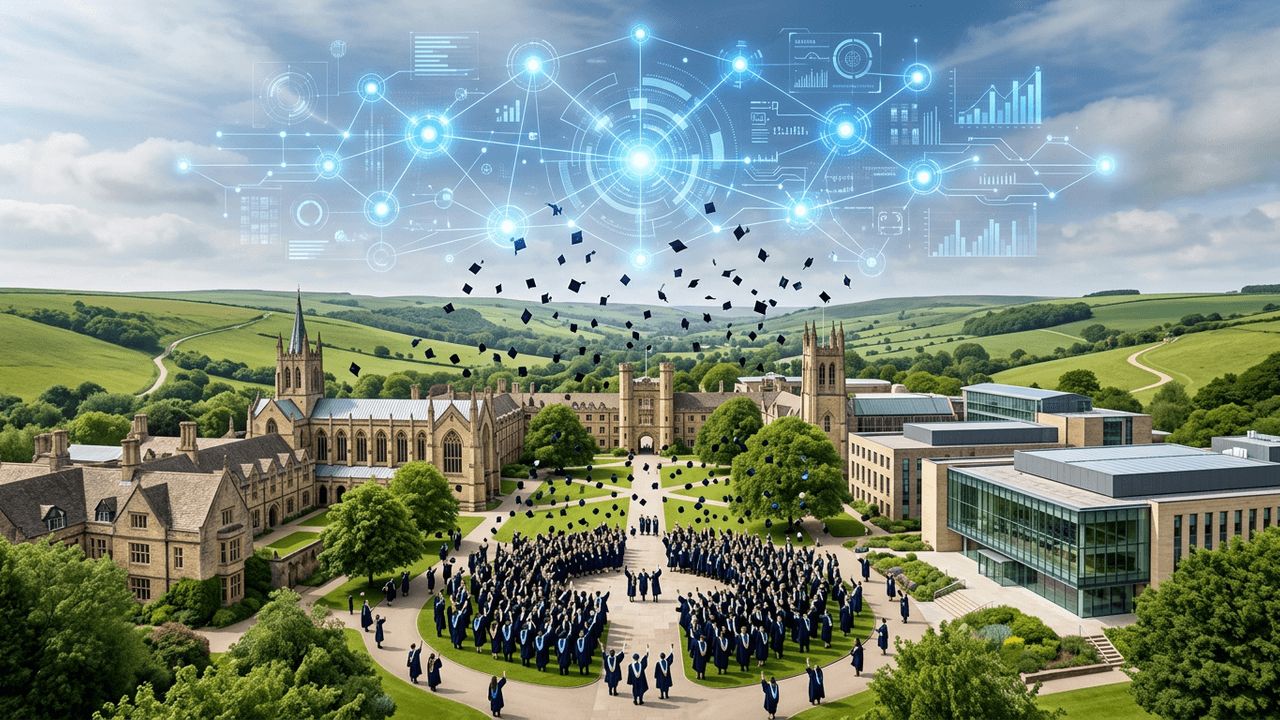
Post-Sixteen Education in Hammersmith and Fulham
The years after compulsory schooling shape careers more directly than any earlier stage of education, and Hammersmith and Fulham is well placed to serve them. The borough and its immediate surroundings contain further education colleges, sixth form colleges, specialist creative institutions and independent tutorial colleges, giving learners genuine choice between academic, vocational and hybrid routes.
Excellent transport links widen that choice considerably. With six Underground lines and the Overground running through the borough, students living in Fulham or Shepherd's Bush can realistically attend colleges across west and central London, which means the practical option set is much larger than the borough boundary suggests.
Understanding the Post-Sixteen Options
A Levels remain the traditional academic route and the standard preparation for competitive university courses. T Levels, introduced more recently, offer two-year technical qualifications built around substantial industry placements and are designed to carry equivalent weight for employment and some degree entry. BTEC and other vocational diplomas provide coursework-heavy, practically assessed programmes in areas such as business, health, engineering and media.
Apprenticeships combine paid employment with structured study, allowing learners to gain qualifications without tuition debt. Access to Higher Education diplomas support adults returning to study, and English and mathematics resit programmes provide essential second chances for those who need them. Foundation courses in art and design remain the standard bridge into competitive creative degrees.
The Top 10 Colleges Serving Hammersmith and Fulham
1. West London College. With a campus in Hammersmith, West London College is the borough's principal further education provider. It offers a broad portfolio spanning business, computing, construction, health and social care, hospitality, creative media and access programmes, alongside extensive apprenticeship provision and adult education. Its industry links and employability focus are central to its identity.
2. Ealing, Hammersmith and West London College. Operating across multiple west London sites, this group provides vocational qualifications, A Levels, English language courses and higher technical programmes. Its scale allows unusually wide subject choice and progression routes from entry level through to higher education.
3. Fulham Cross Academy Sixth Form. Serving students in the south of the borough, this sixth form offers academic and applied courses with small class sizes and close tutorial support. It suits learners who prefer continuity with a familiar school environment while stepping up to advanced study.
4. Kensington and Chelsea College. Located close to the borough boundary, this college is particularly known for adult and community learning, creative arts, fashion, and professional short courses. It is a strong option for career changers and part-time learners balancing study with work.
5. Richmond upon Thames College. A modern, well-equipped college a short journey from Hammersmith, offering A Levels, T Levels, vocational diplomas and apprenticeships. Its purpose-built facilities in engineering, digital media and construction are among the best in west London.
6. Chelsea College of Arts. Part of the University of the Arts London, Chelsea offers foundation, undergraduate and postgraduate study in fine art, graphic design, interior and spatial design and textiles. For borough students aiming at creative careers, its foundation diploma is a highly regarded entry point.
7. London College of Fashion. Another University of the Arts London institution, this college specialises in fashion design, business, media and technology. Its industry connections and professional-standard studios attract students from across London and internationally.
8. Westminster Kingsway College. Nationally recognised for its culinary and hospitality school, Westminster Kingsway also delivers business, science, health and computing programmes. Students from the borough travel easily to its central sites, and its professional kitchens and restaurants provide genuine workplace experience.
9. Ashbourne Independent Sixth Form College. An independent college in west London offering A Levels and GCSE retakes in very small classes with intensive university application support. It appeals to families seeking a more personalised, tutorial-style alternative to large institutions.
10. David Game College. An independent college providing A Levels, GCSEs, foundation programmes and university pathway courses with a strong international student community. Its flexible entry points and one-year intensive options suit students needing an accelerated or non-standard route.
Trends in Further Education
Technical education has gained credibility and investment. T Levels, higher technical qualifications and degree apprenticeships have created respected routes into skilled employment that do not require a conventional three-year residential degree, and employers in engineering, digital and health sectors increasingly recruit through them.
Digital and green skills dominate new curriculum development. Cyber security, data analysis, artificial intelligence fundamentals, retrofit and building services, and electric vehicle maintenance are all growing programme areas, reflecting genuine labour market demand across London.
Support for wellbeing and additional needs has strengthened considerably. Colleges now commonly provide counselling, mentoring, study skills support and specialist provision for learners with special educational needs and disabilities, recognising that attainment depends on more than teaching quality alone.
Choosing the Right College
Start from the destination rather than the course title. If a specific degree or profession is the aim, check its entry requirements first and work backwards, because some university courses require particular A Level subjects that vocational qualifications cannot substitute.
Attend open events and speak to current students about teaching quality, timetable structure and how much independent study is expected. Ask each college for progression data showing where students went after completing the programme, whether to university, apprenticeship or employment.
Consider the practical realities of travel, timetable gaps and financial support. Bursaries, free travel schemes and hardship funds exist but must usually be applied for, and knowing what is available before enrolment prevents avoidable difficulty later.
Final Thoughts
Learners in Hammersmith and Fulham have access to an unusually rich post-sixteen landscape, from a substantial local further education college to world-renowned creative institutions a short train ride away. Academic, technical and creative routes all lead to strong outcomes when matched properly to the individual. The decisive factor is clarity of purpose: choose the programme that opens the doors you actually want to walk through.
Want your brand featured in front of decision-makers? Publish a guest post or get a link insertion in our guides through AAMAX's guest post and link insertion service.
Helpful Links
 SponsoredAAMAX — Full-Service Digital Agency
Write for Us
Share your expertise with our readers. We welcome guest contributions from industry specialists.
Pitch your idea