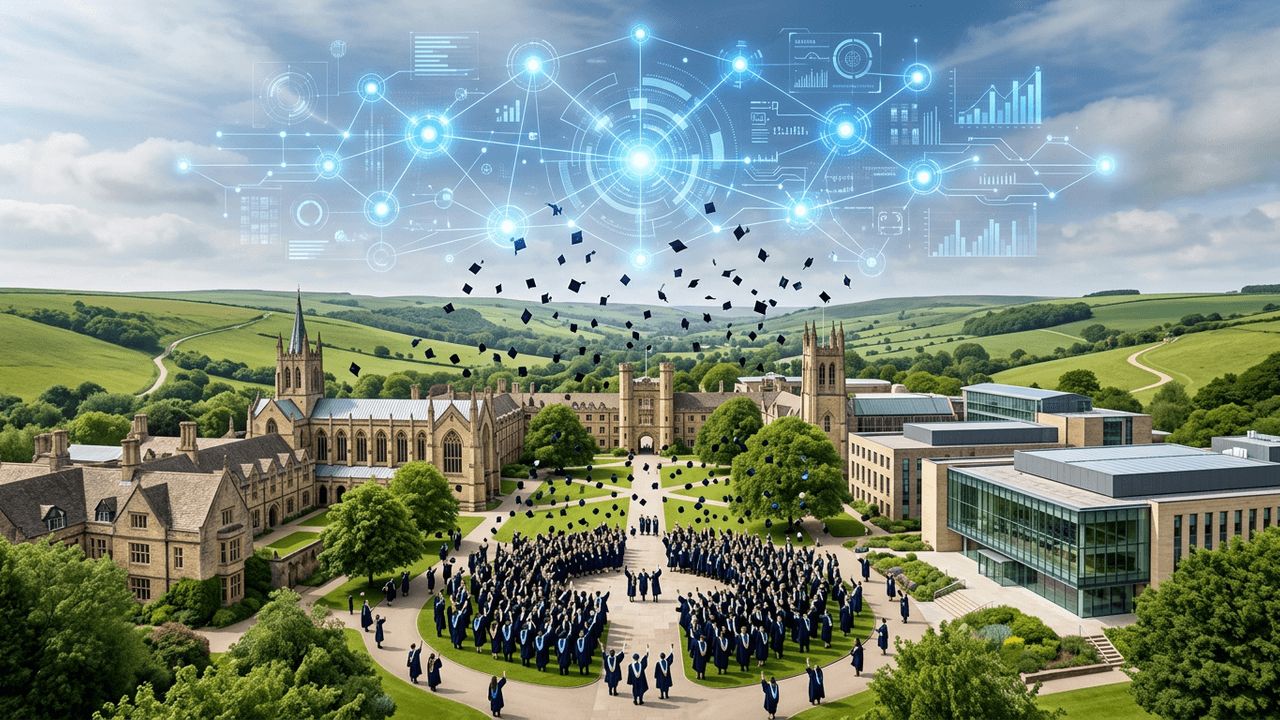
The Role of Further Education in Ards and North Down
Further education colleges occupy a distinctive and increasingly important place in the education landscape of Ards and North Down. They serve school leavers who want a practical route into a trade or profession, adults retraining mid-career, employers upskilling existing staff, and students building the qualifications needed to progress to a degree.
The borough's economy shapes what colleges deliver locally. Engineering and advanced manufacturing employers in Newtownards need machinists, welders, technicians and CAD-capable designers. The substantial hospitality and tourism sector along the coast needs professional chefs, front-of-house managers and event staff. Health and social care providers need qualified support workers. Construction firms need electricians, joiners and plumbers. Colleges translate these needs into structured qualifications.
Top 10 College Options Serving the Borough
1. South Eastern Regional College, Bangor Campus — SERC's Bangor campus is the principal further education provider for the northern part of the borough. It offers a wide portfolio spanning engineering, computing, business, health and social care, creative industries and access courses, along with strong higher education provision delivered locally.
2. South Eastern Regional College, Newtownards Campus — The Newtownards campus focuses heavily on practical and technical training, with well-equipped workshops supporting construction trades, motor vehicle, engineering and manufacturing programmes. Its close relationships with local employers feed directly into apprenticeship placements.
3. South Eastern Regional College, Lisburn Campus — Within commuting distance for many borough residents, the Lisburn campus adds specialist facilities and course options not available at every site, including advanced manufacturing and STEM provision.
4. Belfast Metropolitan College — Belfast Met is easily reachable by rail from Bangor and Holywood and offers one of the largest course catalogues in Northern Ireland. Its strengths include hospitality and culinary arts, digital and creative media, and professional accountancy qualifications.
5. Bangor Academy Sixth Form College — For students who prefer to continue post-16 study within a school setting, the sixth form college provision at Bangor Academy offers an unusually wide mix of A-levels and applied qualifications with established progression routes.
6. Northern Regional College — Accessible for residents in the north of the borough, Northern Regional College provides technical and professional programmes with particular depth in engineering, agriculture-related subjects and healthcare.
7. Open University in Ireland — For adults balancing work and family, the Open University delivers supported distance learning with no requirement to relocate or attend daily. Its modular structure allows study to be paced around life commitments, which is why it has such a strong following among mature learners.
8. Ulster University Access and Foundation Provision — Foundation and access programmes create a route into degree study for students without traditional entry qualifications. For borough residents returning to education after time away, these programmes provide the academic grounding and confidence needed to succeed.
9. Independent Training Providers — A network of private and sector-specific training organisations delivers focused qualifications in areas such as health and safety, food hygiene, first aid, forklift operation and digital skills. These short, employer-driven courses complement longer college programmes.
10. Adult and Community Learning Providers — Community education programmes across Bangor, Newtownards, Comber and the peninsula offer accessible part-time courses in essential skills, English, mathematics, digital literacy and creative subjects. They are often the first step back into learning for adults who left school early.
Choosing the Right College Course
Start from the destination rather than the course title. If you want to become a qualified electrician, the pathway is an apprenticeship combined with technical certificates. If you want to work in software development, a computing foundation degree or higher-level apprenticeship may be more efficient than a traditional route. If you plan to progress to university, check that your chosen qualification is accepted for the degrees you have in mind.
Facilities matter more in further education than in academic study, because so much learning is practical. Visit the workshops, kitchens, salons or laboratories you would actually use. Ask how much time is spent on hands-on work versus classroom theory, and what industry-standard equipment is available.
Apprenticeships and Employer Links
Apprenticeships have become one of the strongest options available through colleges in the borough. They combine paid employment with structured off-the-job training, meaning learners earn while gaining recognised qualifications and avoid student debt. Higher-level apprenticeships now extend to foundation degree level and beyond in fields such as engineering, accountancy and digital technology.
Ask colleges directly about their employer partnerships, placement rates and completion rates. A programme with strong local employer engagement typically leads to better job outcomes than one taught in isolation from industry.
Support for Learners
Further education colleges generally offer substantial learner support, including careers guidance, learning support for students with additional needs, financial support funds, childcare assistance and mental health services. Adults returning to education after a long gap should ask specifically about study skills support, since academic writing and examination technique often need refreshing.
Flexible delivery is another consideration. Evening, part-time, blended and block-release options make study possible alongside employment, and availability varies by course and campus.
Trends in Further Education
Several shifts are reshaping college provision. Green skills training is expanding rapidly, covering heat pumps, electric vehicle maintenance, retrofit insulation and renewable installation. Digital skills are being embedded across all subject areas rather than treated as a separate discipline. Micro-credentials and short modular courses are gaining popularity with employers who need specific capabilities quickly. And higher education delivered in further education settings continues to grow, allowing students to earn degree-level qualifications without leaving the borough.
Final Thoughts
Colleges serving Ards and North Down offer genuinely practical routes into skilled, well-paid work as well as credible pathways to higher study. The key is to be clear about your destination, verify that your chosen qualification is respected by the employers or universities you are targeting, and take full advantage of the support services available. For many residents, further education proves to be the most direct and cost-effective route to a career they actually want.
Want your brand featured in front of decision-makers? Publish a guest post or get a link insertion in our guides through AAMAX's guest post and link insertion service.
Helpful Links
 SponsoredAAMAX — Full-Service Digital Agency
Write for Us
Share your expertise with our readers. We welcome guest contributions from industry specialists.
Pitch your idea