

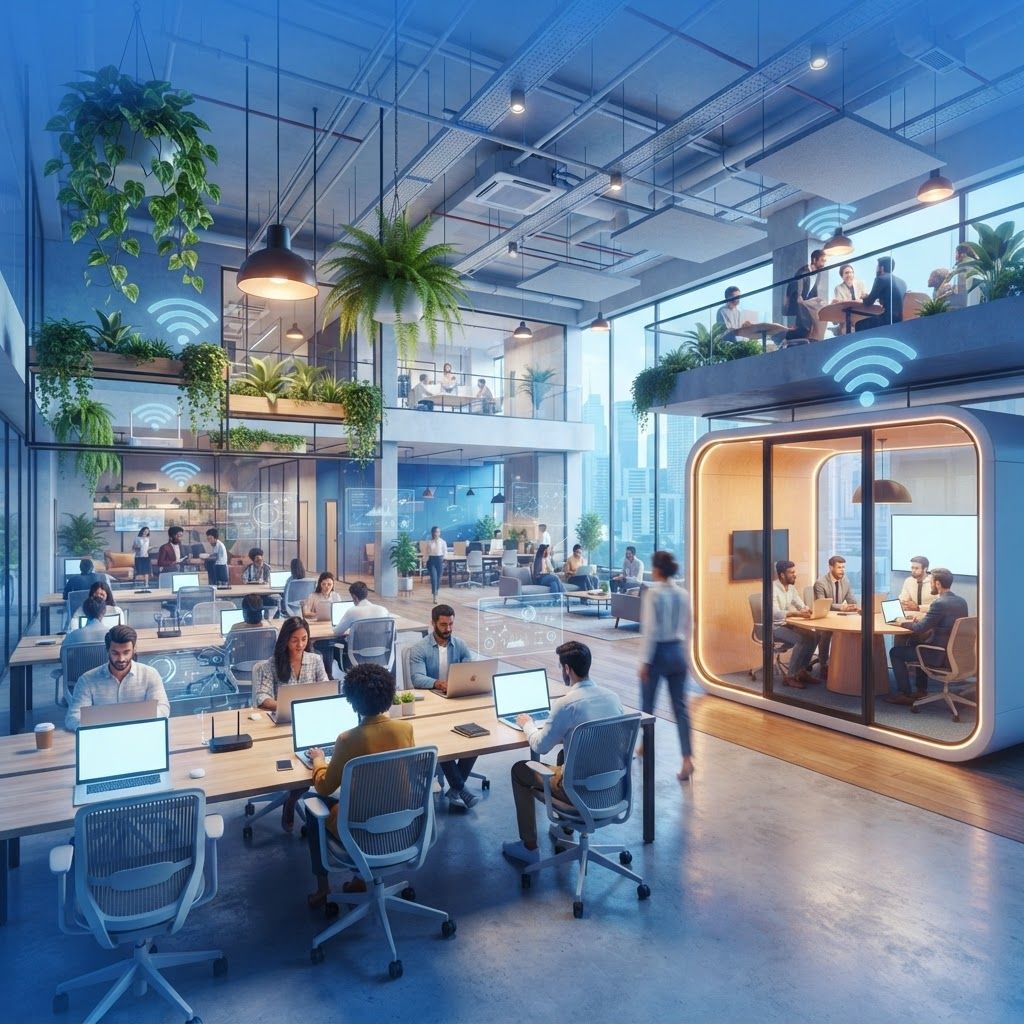
The Rise of Flexible Workspace in Winchester
Winchester has quietly become one of the strongest flexible workspace markets in the south. The reasons are structural. A large population of professionals who previously commuted to London now work from home two or three days a week, and many of them want somewhere to work that is not their kitchen table. The city also has a dense population of consultants, solicitors, designers, accountants and technology freelancers who need a professional base without the commitment of a conventional lease.
What makes the local market distinctive is the building stock. Winchester's flexible workspaces often occupy converted Georgian townhouses, former warehouses and repurposed institutional buildings rather than the glass-and-steel towers typical of city centre co-working. The result is workspace with genuine character, though it also means variation in acoustics, natural light and layout that is worth assessing carefully.
What to Look For in a Workspace
Connectivity is non-negotiable. Ask about actual measured speeds, whether the connection is leased line or standard broadband, and whether there is failover. Anyone running video calls all day will notice the difference immediately.
Acoustics matter more than most people anticipate. Open-plan areas with hard surfaces and no soft furnishing become unworkable when several people take calls simultaneously. Look for dedicated phone booths, properly separated meeting rooms and zoning that separates quiet focus areas from collaborative space.
Then consider practicalities: parking or station proximity, opening hours and whether twenty-four hour access is available, meeting room allocation included in membership, print and scan facilities, kitchen provision, secure storage, and whether you can use the address for business registration and post.
Finally, consider community. The best co-working spaces generate genuine professional value through introductions, informal advice and collaboration. Ask about the member mix and whether the operator hosts events.
Ten Co-working Spaces Serving Winchester
1. Cathedral Quarter Workspace
Occupying a restored period building close to the historic centre, Cathedral Quarter Workspace combines original features with contemporary fit-out. The space offers hot desks, fixed desks and a small number of private offices, with a members' lounge and two meeting rooms. Its member base skews towards professional services and consultancy, which creates a calm, focused atmosphere and useful cross-referral opportunities.
2. The Itchen Works
Set in a converted industrial building, The Itchen Works has the high ceilings, exposed brick and large windows that characterise the best warehouse conversions. The layout deliberately separates a silent study floor from a more social ground floor, which suits members whose working patterns vary through the day. Creative and technology businesses form the core membership.
3. Winnall Business Studios
Located in the commercial quarter with straightforward parking, Winnall Business Studios focuses on private studio offices for teams of two to fifteen. Its offer suits growing businesses that have outgrown home working but are not ready for a conventional lease. Terms are flexible, with all-inclusive monthly pricing covering utilities, cleaning, broadband and business rates.
4. Southgate Coworking
A boutique space in a Georgian townhouse, Southgate Coworking caps membership numbers to preserve atmosphere and desk availability. Facilities include a well-equipped kitchen, a garden courtyard used heavily in summer, and two meeting rooms. It appeals particularly to solicitors, financial advisers and consultants who occasionally meet clients and need an environment that reflects well on them.
5. Station Hub Winchester
Positioned for maximum convenience relative to rail travel, Station Hub Winchester is built around drop-in flexibility. Day passes, ten-day bundles and part-time memberships suit hybrid workers who need workspace unpredictably. Phone booths are plentiful and the meeting rooms are bookable by the hour, making it practical for those meeting colleagues travelling in from elsewhere.
6. Chalkhill Creative Studios
Aimed at designers, photographers, makers and creative freelancers, Chalkhill Creative Studios provides larger desks, good natural light, and shared resources including large-format printing and a small photography setup. The community element is strong, with regular critique sessions and skill-sharing evenings.
7. Hyde Innovation Centre
Supporting early-stage technology and science businesses, Hyde Innovation Centre combines workspace with business support including mentoring, investor introductions and access to grant advice. Facilities scale from single desks to laboratory-adjacent units, allowing companies to grow without relocating.
8. Kings Barton Work Lounge
Serving the newer residential communities to the north, Kings Barton Work Lounge is designed for people who want to work close to home without working at home. Its offer emphasises comfort and short commutes, with a relaxed lounge layout, quiet pods and family-friendly opening hours that align with school runs.
9. Abbey Gate Offices
A serviced office provider rather than a conventional co-working operator, Abbey Gate Offices offers fully fitted private suites with reception services, telephone answering and meeting room access. It suits established small businesses and professional practices that require privacy, confidentiality and a permanent business address.
10. Downland Remote Work Club
Operating on the city's rural fringe, Downland Remote Work Club offers a quieter alternative with generous parking and countryside views. Membership includes access to outdoor working areas in warmer months and an unusually strong focus on wellbeing, with walking meeting routes and on-site cycle storage and showers.
Trends in Flexible Workspace
Hybrid working has permanently altered demand patterns. Tuesday to Thursday occupancy far exceeds Monday and Friday, and operators have responded with part-time memberships and dynamic pricing rather than insisting on full-time commitment.
Meeting space is now a primary draw rather than an add-on. Distributed teams that rarely share an office need somewhere to convene, and well-equipped rooms with reliable video conferencing hardware are booked heavily.
Wellbeing has moved to the centre of the proposition. Natural light, plants, air quality, standing desks, quiet rooms and shower facilities are increasingly expected rather than exceptional. Sustainability credentials also feature more prominently, with operators highlighting energy performance and waste reduction.
Choosing the Right Space
Take a trial day before committing. Work a full day, take a video call, use the kitchen at lunchtime and observe how the space behaves at its busiest. Check the contract terms carefully, particularly notice periods, what happens if you need to scale up or down, and whether meeting room hours roll over.
Consider your actual pattern honestly. If you will attend twice a week, a part-time membership is better value than an unused full-time desk. And weigh the community factor seriously, because for many independent professionals the informal network a good workspace provides ends up being worth more than the desk itself.
Want your brand featured in front of decision-makers? Publish a guest post or get a link insertion in our guides through AAMAX's guest post and link insertion service.
Helpful Links
 SponsoredAAMAX — Full-Service Digital Agency
Write for Us
Share your expertise with our readers. We welcome guest contributions from industry specialists.
Pitch your idea

