

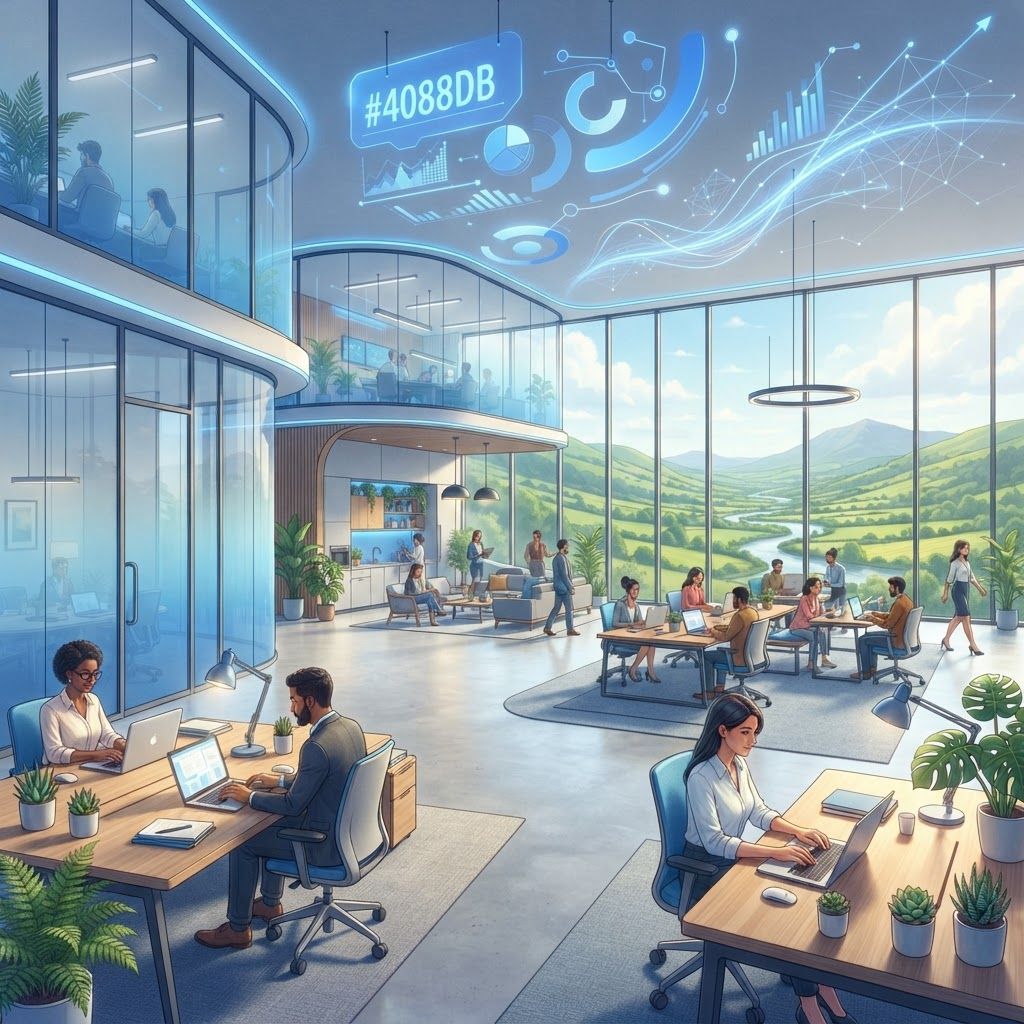
Why Co-working Has Taken Root in Powys
Powys is the largest county in Wales by area and one of the least densely populated in the United Kingdom. For decades that geography shaped a working culture built around agriculture, tourism, public services and small family firms. The shift toward distributed work has changed that picture considerably. People who once commuted to Birmingham, Cardiff, Shrewsbury or Bristol now spend most of their week within a few miles of home, and a kitchen table is rarely a sustainable long-term office.
Co-working spaces have filled that gap. Across Newtown, Welshpool, Brecon, Llandrindod Wells, Machynlleth, Builth Wells and Ystradgynlais, a network of business centres, innovation hubs, converted chapels and community-run enterprise buildings now offers desks by the day, week or month. What makes the Powys scene distinctive is that these spaces are rarely purely commercial. Many are operated by development trusts, social enterprises or the local authority's regeneration programmes, which means they combine affordable desk rates with genuine business support.
What to Look for in a Powys Workspace
Connectivity is the first consideration. Rural broadband in mid Wales has improved dramatically thanks to sustained fibre investment, but coverage remains uneven between valleys and market towns. The best workspaces advertise leased-line or full-fibre connections with backup, which matters enormously if your income depends on video calls, cloud software or large file transfers.
Distance is the second. In a county this size, a twenty-mile drive is normal, so proximity to a trunk road such as the A470, A483, A438 or A44 often matters more than proximity to a town centre. Parking is usually free and plentiful, which is a genuine advantage over urban alternatives.
Third is the community. Smaller towns produce tight-knit member groups where a shared kitchen conversation routinely turns into a referral or a collaboration. If you want an anonymous desk, that may feel intense; if you want a professional network, it is the single biggest benefit on offer.
The Ten Leading Co-working Spaces
1. Ladywell House, Newtown. A large multi-occupancy building in the heart of Newtown that houses public sector teams, charities and private tenants. Its scale means it supports everything from single hot desks to fully serviced suites, with meeting rooms, reception handling and lift access. For anyone who wants a conventional office environment without a conventional lease, it is the county's most established option.
2. The Mid Wales Business Park Hubs, Newtown. Clustered around the town's industrial and enterprise zone, these units mix light industrial space with modern office accommodation. They suit growing firms that need a desk today and a workshop or storage bay next year, and the on-site mix of engineering, food production and creative businesses makes for an unusually varied tenant community.
3. Brecon Beacons Business Centre, Brecon. Serving the southern half of the county, this centre offers flexible offices and shared working areas within easy reach of the national park. Members frequently cite the setting as a recruitment advantage, and the building's meeting facilities are widely used by tourism operators, consultants and outdoor education providers.
4. The Welshpool Enterprise Centre. Positioned close to the English border and the A483, this is the natural choice for anyone splitting their week between Powys and Shropshire. Offices are compact and affordable, with straightforward monthly terms and good road access for client visits.
5. The Gwalia Buildings, Llandrindod Wells. The county town's Victorian architecture has been repurposed into modern working accommodation, offering character alongside practicality. Its central location suits public sector contractors and professional services firms who need to be near county administration.
6. Y Dref Werdd and community hubs, Machynlleth. Machynlleth's long association with sustainability, crafts and independent enterprise has produced a cluster of small shared-working venues in converted buildings. These spaces attract designers, writers, environmental consultants and technologists, and the town's alternative-economy culture gives them an atmosphere unlike anywhere else in Wales.
7. The Strand Hall Business Space, Builth Wells. Builth's position at the crossing of the Wye makes it a genuine mid-county meeting point, and workspace here is used heavily by people travelling in from surrounding villages for a day of focused work or team sessions.
8. Ystradgynlais Workspace, southern Powys. Serving the industrial south of the county near the Swansea Valley, this workspace supports trades, technical services and administrative teams. Rates are among the most competitive in Powys and the commute from Neath Port Talbot and Swansea is manageable.
9. Presteigne and Norton community workspaces. On the eastern edge of the county, Presteigne's arts-rich small-town economy supports informal shared studios and desk-sharing arrangements that work well for freelancers in media, publishing and design.
10. Library and cultural venue work zones countywide. Powys County Council's library service and several arts venues provide bookable quiet working areas with reliable Wi-Fi. These are not full co-working spaces, but for occasional users, travelling professionals and early-stage founders watching every pound, they are an indispensable part of the county's infrastructure.
Costs and Commitment
Desk rates in Powys remain markedly lower than in Cardiff, Bristol or Manchester. Day rates typically sit in the low single figures to mid teens, monthly hot-desking in the low hundreds, and small private offices well below urban equivalents. Most providers offer rolling monthly agreements rather than long leases, and many include utilities, cleaning, refuse and broadband in a single figure, which removes a significant administrative burden for sole traders.
Business Support Built In
One genuine differentiator of the Powys workspace market is the support wrapped around it. Business Wales advisers, Mid Wales Manufacturing Group members, Powys Association of Voluntary Organisations and various rural development programmes regularly run clinics, funding surgeries and training sessions inside these buildings. A member can realistically access grant guidance, export advice, digital skills training and peer mentoring without leaving the premises.
Trends Shaping the Next Few Years
Three trends are reshaping the sector locally. Full-fibre rollout continues to erode the historical connectivity disadvantage, making rural desks viable for data-heavy work. Hybrid corporate policies are pushing employers to fund satellite desks for staff who live in the county but are contracted to distant offices. And sustainability credentials are increasingly decisive, with buildings offering heat pumps, solar generation and EV charging winning tenants from older stock.
Choosing the Right Space
Start with a trial day rather than a contract. Visit at the time you actually work, test the connection with a real video call, check mobile signal in the car park, and talk to two or three existing members about how responsive the operator is. In a county where your nearest alternative might be thirty minutes away, reliability and goodwill matter more than décor. Powys will not give you a skyline view from a glass tower, but it offers something increasingly rare: affordable, well-connected, human-scale workspace surrounded by some of the finest landscape in Britain.
Want your brand featured in front of decision-makers? Publish a guest post or get a link insertion in our guides through AAMAX's guest post and link insertion service.
Helpful Links
 SponsoredAAMAX — Full-Service Digital Agency
Write for Us
Share your expertise with our readers. We welcome guest contributions from industry specialists.
Pitch your idea

