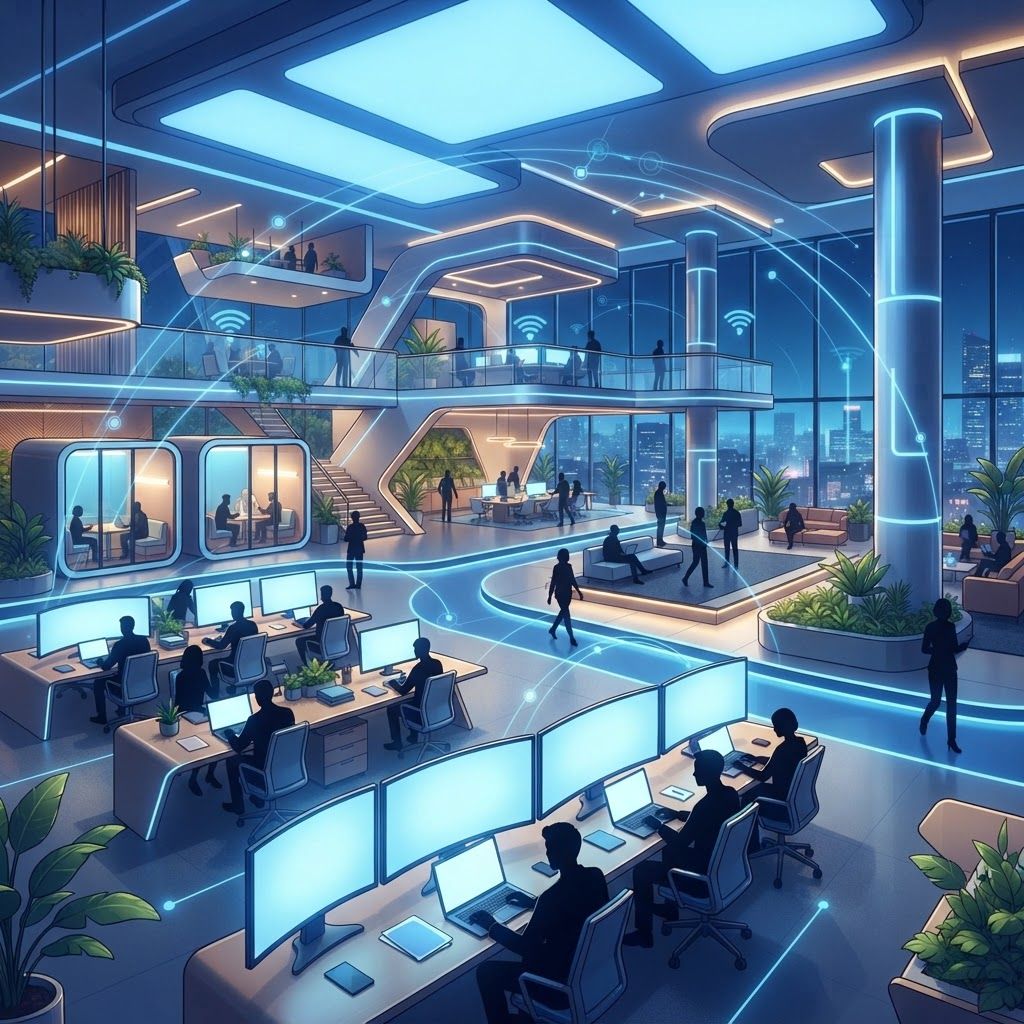
Why Co-working Took Hold in Rural Northern Ireland
The rise of remote working transformed the economics of living in a rural district. Professionals who once had to live within commuting distance of Belfast, Derry or Dublin discovered they could work from anywhere with a reliable connection, and many chose Fermanagh and Omagh for its space, scenery, housing affordability and quality of life. What they quickly found, however, is that working permanently from a kitchen table is neither productive nor sustainable.
Co-working spaces answered that need. They provide the infrastructure of an office without the commitment of a lease: fast broadband, proper desks and chairs, meeting rooms, printing, coffee and, crucially, other people. For freelancers, remote employees, small businesses and start-ups across the district, they have become an important piece of economic infrastructure.
The district's spaces reflect local character. Several occupy restored buildings in town centres, contributing to regeneration. Others sit within enterprise centres supported by economic development bodies, combining desks with business advice, training and networking. A few are small, independent operations run by local entrepreneurs who identified demand in their own town.
What to Look For in a Workspace
Connectivity is the non-negotiable starting point. Ask about actual measured speeds rather than advertised packages, whether there is a backup connection, and how many people share the bandwidth. In a district where fibre coverage varies considerably by location, a space with genuine business-grade connectivity is delivering its single most valuable service.
Meeting and call facilities matter more than they once did. Video calls are now central to most remote roles, and a workspace without acoustically separated call booths or bookable meeting rooms will frustrate anyone whose day involves regular calls. Soundproofing quality is worth testing during a trial day.
Consider the practical details: parking availability, opening hours and whether out-of-hours access is offered, kitchen facilities, natural light, ergonomic seating, secure storage, printing and postal address services. For members joining from rural areas, parking and accessible location often outweigh trendy design.
Finally, assess the community. The best co-working spaces generate introductions, collaborations and referrals. Ask who else works there, whether there are organised events, and whether the operator actively fosters connection or simply rents desks.
The Ten Leading Co-working Spaces
1. Erne Innovation Hub in Enniskillen combines hot desks, fixed desks and private studios with a substantial event space. It is particularly strong on connectivity and has built an active community of technology, creative and professional services members who genuinely collaborate.
2. Omagh Enterprise Workspace pairs flexible desk space with business support, offering mentoring, funding guidance and training alongside accommodation. It suits early-stage businesses that need advice as much as they need a desk.
3. Lakeland Remote Work Centre occupies a converted building with lake views and markets itself to remote employees of larger organisations. Dedicated call booths, high-specification meeting rooms and reliable redundant broadband address the specific needs of corporate remote workers.
4. Sperrin Digital Hub serves the rural communities of west Tyrone, deliberately located to reduce travel for people who would otherwise drive long distances. Its impact on reducing rural isolation among home-based workers is frequently mentioned by members.
5. Drumragh Creative Studios caters to designers, photographers, videographers and craftspeople with studio space, a small photography setup and shared equipment. The mix of creative disciplines under one roof generates a notable amount of collaborative work.
6. Strule Business Centre offers serviced private offices alongside co-working desks, allowing growing businesses to scale from one desk to a team room without relocating. Reception services, meeting rooms and a professional business address are included.
7. Clogher Valley Work Hub is a smaller community-run space serving the southern part of the district. Its affordability and informal atmosphere suit sole traders, part-time users and people who need a quiet desk two or three days a week.
8. Fermanagh Coworking Collective operates a membership model with access to multiple locations across the county, useful for members who split their time between towns or travel regularly for client work.
9. Tyrone Tech Campus focuses on technology businesses, providing higher specification infrastructure, secure server provision, development-friendly environments and links to skills programmes. It has become a focal point for the district's software and engineering community.
10. Enniskillen Professional Suites targets consultants, accountants, solicitors and therapists who need a private, confidential setting for client meetings. Bookable consulting rooms by the hour or day provide a professional alternative to meeting clients at home.
The Economic Case
For individuals, co-working is usually cheaper than any alternative that provides comparable facilities. A monthly membership typically costs less than heating and powering a dedicated home office, and it removes the need to invest in furniture, printing and meeting space. It also draws a boundary between work and home that many remote workers struggle to maintain.
For the district, the benefits are broader. Co-working spaces help retain skilled residents who might otherwise relocate, attract new residents who can work from anywhere, support business formation and keep spending within local towns. Several spaces occupy previously vacant buildings, contributing directly to town centre regeneration.
For employers, allowing staff to use local workspace is often cheaper than maintaining underused offices and improves retention among employees who value living where they do.
Trends to Watch
Hybrid membership models are becoming standard, with flexible day passes and part-time packages replacing rigid monthly contracts. Operators recognise that many members need two or three days a week rather than five.
Wellbeing features are increasingly common: better natural light, standing desks, outdoor working areas, bike storage and organised walking or fitness activity. In a district with exceptional surroundings, several spaces actively use the landscape as part of their appeal.
Sustainability is also rising in importance, with operators investing in efficient heating, solar generation and reduced-waste operations, partly to control costs and partly because members increasingly ask.
Choosing Your Space
Trial before committing. Most operators offer a free or low-cost day pass, and a full working day reveals far more than a tour. Test the broadband under real conditions, take a video call, use the kitchen at lunchtime and see whether the atmosphere suits how you work.
Check contract flexibility, notice periods and what happens if your needs change. Confirm insurance arrangements for your equipment and understand data security if you handle confidential client information in a shared environment.
Most importantly, consider whether the community is right for you. The infrastructure can be replicated anywhere, but the people you sit beside are what turns a desk into a genuinely valuable professional base.
Want your brand featured in front of decision-makers? Publish a guest post or get a link insertion in our guides through AAMAX's guest post and link insertion service.
Helpful Links
 SponsoredAAMAX — Full-Service Digital Agency
Write for Us
Share your expertise with our readers. We welcome guest contributions from industry specialists.
Pitch your idea