

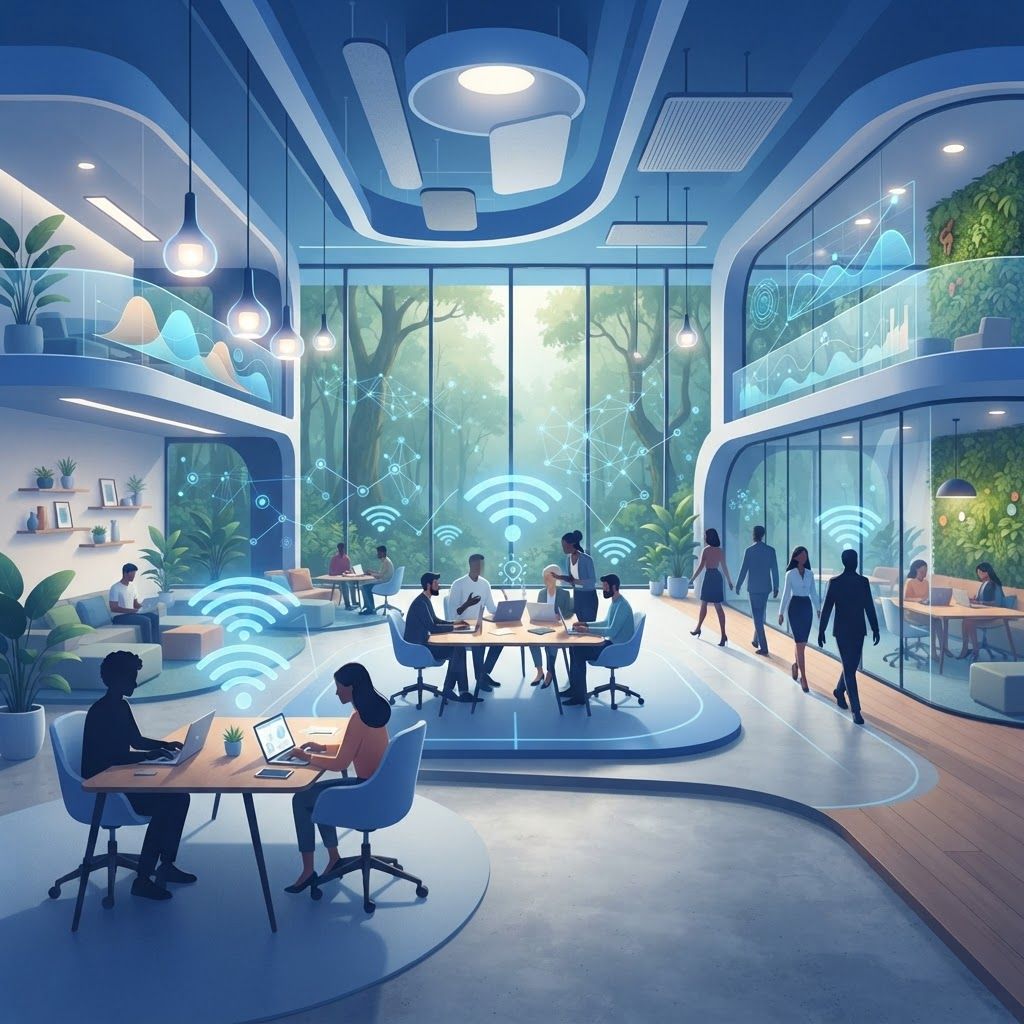
Why Co-working Took Hold in Epping Forest
The shift to hybrid working changed the geography of office demand permanently. Professionals who once commuted five days a week into the City now travel two or three, and on the remaining days they want somewhere better than a kitchen table. That created a genuine market for flexible workspace in commuter towns, and Epping Forest, sitting at the end of the Central Line with a highly professional resident population, was an obvious beneficiary.
The district also has a strong small business base. Consultants, creative freelancers, tradespeople needing an office presence, and small companies that never wanted a conventional lease all find co-working a better fit than either home working or a traditional office.
What makes the local offer distinctive is setting. A workspace with forest views, easy parking and a fifteen minute journey from home competes very effectively with a desk in Shoreditch that requires an hour each way.
Types of Flexible Workspace Available
Hot desking gives access to shared open-plan desks on a flexible basis, usually with day passes or monthly memberships. It is the cheapest option and suits people who work variable days.
Dedicated desks provide a permanently allocated space within a shared area, allowing you to leave equipment and monitors in place. This suits regular users who need consistency.
Private offices within a co-working building offer a lockable room with shared amenities, ideal for small teams who need confidentiality but not a whole building.
Meeting room hire on demand serves people who mostly work from home but occasionally need a professional space to see clients.
Virtual office services provide a business address and mail handling without physical space, useful for home-based businesses wanting a commercial registered address.
Ten Co-working Spaces Serving the District
1. Forest Works is a purpose-designed co-working building with hot desks, dedicated desks and private studios, plus high-speed connectivity, phone booths and a café. Its proximity to woodland and outdoor working terraces is a genuine draw.
2. Epping Business Hub sits close to the station and town centre, offering flexible desk memberships and meeting rooms with a professional, quieter atmosphere suited to consultants and financial services workers.
3. Loughton Collective takes a community-driven approach with regular networking events, skills sessions and member introductions alongside the workspace itself, which appeals strongly to freelancers.
4. Chigwell Executive Suites operates at the premium end with serviced private offices, reception services and boardroom facilities, targeting small professional firms rather than individual freelancers.
5. Roding Valley Studios caters to creative businesses with studio units suited to photography, design and light making, alongside conventional desk space.
6. Waltham Abbey Workspace provides affordable flexible space in converted commercial premises, popular with trades businesses and start-ups needing an office plus some storage.
7. North Weald Flexible Offices offers easy road access and generous parking, which matters for members who drive and for businesses receiving deliveries.
8. Theydon Remote Hub is a smaller village-scale space designed for local residents who want a short walk to work, with a quiet, library-like working culture.
9. Ongar Enterprise Centre supports small business growth in the rural north with subsidised space for early-stage ventures and access to business advice.
10. Buckhurst Hill Coworking combines desk space with a public-facing café, creating an informal environment that works well for client meetings and less formal working.
What to Assess Before Committing
Connectivity is fundamental. Ask about the internet provision specifically: the connection type, the contended bandwidth, and whether there is a backup line. A workspace that cannot sustain video calls at peak times is not fit for purpose.
Acoustics matter more than most people anticipate. Open-plan spaces with hard surfaces become unbearable when several members are on calls simultaneously. Look for phone booths, soft furnishings, acoustic panelling and zoned quiet areas.
Check the contract terms. Genuine flexibility means monthly rolling arrangements with short notice. Some operators market themselves as flexible while requiring twelve month commitments, which is simply a short lease with better furniture.
Consider access hours. If you occasionally work early or late, twenty-four hour access with a fob or app is valuable. Many smaller spaces operate standard business hours only.
Visit at a busy time. A space that feels calm and spacious on a Monday morning may be very different on a Wednesday afternoon when occupancy peaks.
Trends in Flexible Workspace
Suburban and market town locations have taken share from central city workspace as hybrid patterns settled. Operators report that Tuesday to Thursday are consistently the busiest days, mirroring corporate office attendance patterns.
Corporate membership schemes have grown, with larger employers buying blocks of access for staff to use near home rather than maintaining excess central office space. This is a meaningful revenue stream for suburban operators.
Wellbeing features have become differentiators rather than extras. Natural light, biophilic design, outdoor working areas, cycle storage and showers now influence member choice significantly.
Sustainability is rising up the agenda, with operators investing in efficient heating, renewable energy and reduced waste, partly in response to corporate members with their own reporting obligations.
Making Co-working Work for You
Trial before committing. Most operators offer day passes or short trial periods. Use them, and use them on different days of the week.
Think about what you actually need. Paying for a dedicated desk you use twice a week is often worse value than a flexible membership plus occasional meeting room hire.
Engage with the community. The productivity benefit of co-working is real, but the network benefit is frequently larger. Members who attend events and talk to people consistently report more value than those who arrive, put headphones on and leave.
Conclusion
Epping Forest offers a surprisingly complete range of flexible workspace, from premium serviced offices to village hubs and creative studios. The district's combination of professional population, London connectivity and attractive setting makes it well suited to the hybrid era. For anyone tired of working from a spare room, there is almost certainly an option within a short journey that will improve both focus and professional life.
Want your brand featured in front of decision-makers? Publish a guest post or get a link insertion in our guides through AAMAX's guest post and link insertion service.
Helpful Links
 SponsoredAAMAX — Full-Service Digital Agency
Write for Us
Share your expertise with our readers. We welcome guest contributions from industry specialists.
Pitch your idea

