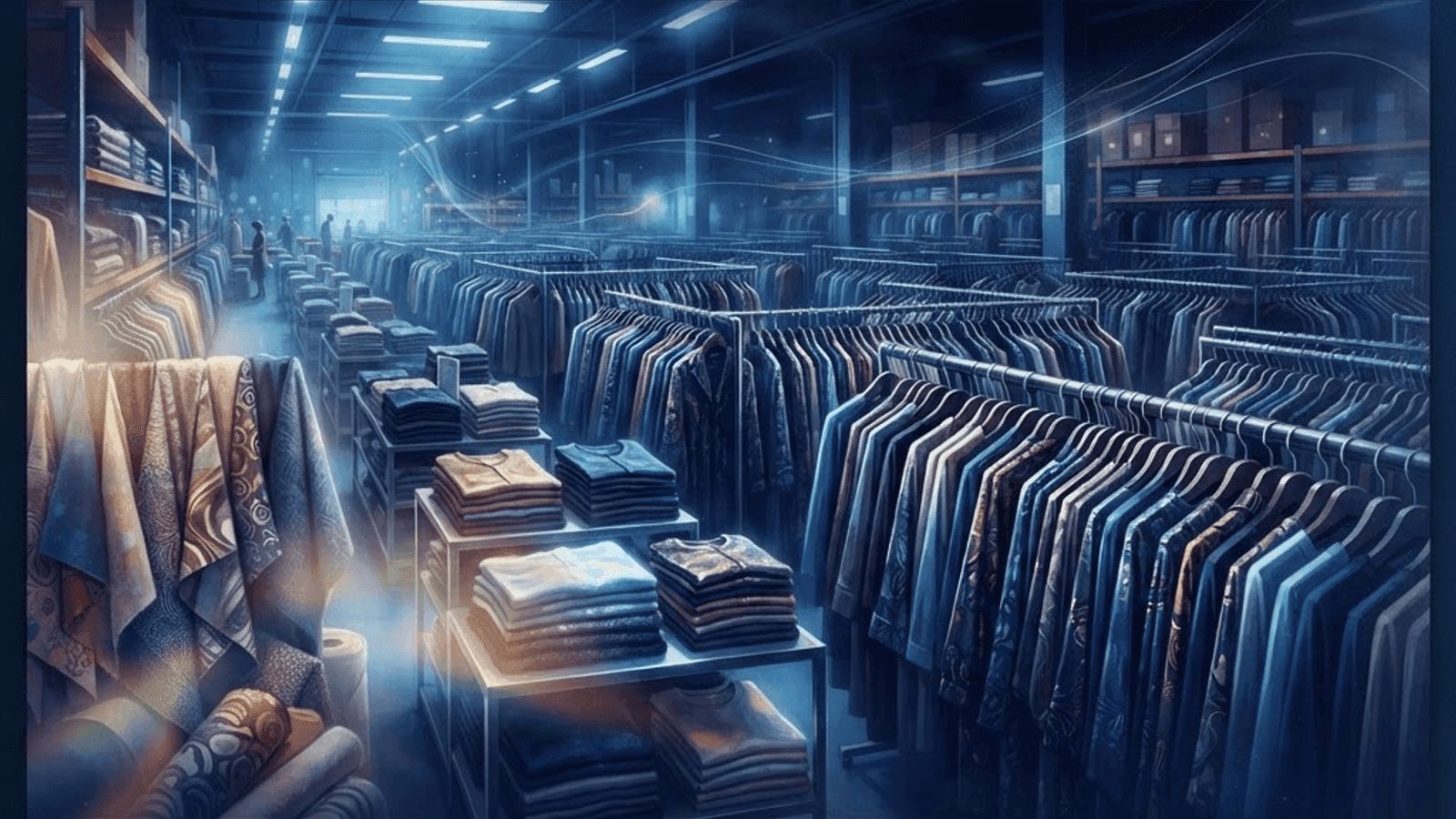
Wholesale Clothing in a Changing Retail Landscape
Clothing retail has been reshaped repeatedly over the past decade, yet wholesale distribution remains essential. Independent boutiques in Ormskirk, market traders, online sellers, uniform suppliers and sports clubs all depend on wholesalers to provide range, hold stock and allow buying in commercially sensible quantities.
West Lancashire's position helps. Warehousing here is more affordable than in Manchester or Liverpool while remaining within easy reach of both, and the region's textile heritage means there is a deep local understanding of garment construction, sizing and quality. For buyers, this translates into wholesalers who can talk knowledgeably about fabric weight, stitch quality and fit rather than simply listing products.
Understanding the Wholesale Clothing Market
The sector divides into distinct segments. Fashion wholesalers carry seasonal ranges for boutiques and online retailers, typically working several months ahead. Blanks distributors supply plain garments for printing and embroidery, serving promotional and branded clothing businesses. Workwear wholesalers focus on durability and protective standards. Sportswear specialists serve clubs and schools. Each operates with different lead times, minimums and margin structures.
Quality assessment is the buyer's responsibility. Fabric composition and weight, seam construction, colourfastness, shrinkage and consistent sizing across a range all determine return rates and customer satisfaction. Ordering samples before committing to bulk is not optional for any buyer intending to build a repeat customer base.
The Top 10 Clothing Wholesalers in West Lancashire
1. West Lancs Clothing Wholesale
A general wholesaler carrying broad ranges across menswear, womenswear and childrenswear, with mixed-pack ordering that lets small retailers test lines without heavy commitment.
2. Skelmersdale Workwear Supplies
Specialising in workwear, protective clothing and safety footwear for industrial, construction and agricultural customers, with embroidery and logo application available.
3. Ormskirk Fashion Distribution
Supplying independent boutiques with contemporary womenswear collections, offering seasonal buying appointments and flexible reorder quantities on best sellers.
4. Burscough Blanks and Basics
Focused on plain garments for the print and embroidery trade, including t-shirts, hoodies, polos and caps in consistent colours and reliable sizing.
5. Douglas Valley Sportswear
Providing team kit, training wear and club apparel to sports clubs and schools, with customisation and repeat-order matching for squad additions.
6. Pimbo Uniform Solutions
Serving schools, hospitality and healthcare with uniform programmes, managed ordering portals and consistent stock availability year-round.
7. Lathom Outdoor Clothing
Distributing waterproofs, insulated layers and technical outdoor apparel suited to the North West climate, popular with rural retailers and equestrian outlets.
8. Rufford Childrenswear Wholesale
Concentrating on childrenswear and babywear with careful attention to safety requirements, fabric softness and durable construction.
9. Up Holland Footwear Distribution
Supplying casual, formal and occupational footwear to independent retailers, with size run packs and seasonal range planning support.
10. Halsall Sustainable Apparel
Focused on organic cotton, recycled fibre and certified supply chain garments for brands and retailers with environmental commitments.
Trends in Clothing Wholesale
Smaller, more frequent ordering has become the norm. Retailers carrying less stock want wholesalers who hold inventory and replenish quickly rather than requiring large seasonal commitments. Wholesalers who can support this model with deep stock and fast despatch have gained share.
Sustainability credentials now influence buying decisions across all segments, with certified organic and recycled materials moving from niche to expected in many ranges. Inclusive sizing has expanded significantly, with buyers demanding consistent fit across a wider size span. Direct-to-consumer dropshipping arrangements have grown, allowing online sellers to list stock without holding it. Finally, digital catalogues with accurate photography and detailed specifications have largely replaced physical showrooms for routine reordering.
How to Choose a Clothing Wholesaler
Always order samples first and wash-test them. A garment that shrinks, fades or loses shape after three washes will generate returns and damage your reputation regardless of purchase price. Check sizing consistency across the range, as inconsistent fit is one of the biggest causes of online returns.
Understand minimum order quantities, pack structures and whether mixed sizes are available. Clarify reorder lead times on core lines, since the ability to restock a best seller quickly often matters more than initial price. Review return policies for faulty goods carefully. For branded or sustainable claims, ask for supporting documentation rather than accepting marketing language. Finally, assess how the wholesaler communicates, because responsive support during a busy trading period is genuinely valuable.
Managing Margin, Stock and Seasonality
Profitability in clothing retail depends as much on stock management as on buying price. Capital tied up in slow-moving sizes and colours cannot be spent on best sellers, and end-of-season markdowns erode margin quickly. Experienced buyers therefore commit cautiously on new lines and reserve budget for reordering whatever sells.
Size curves deserve careful thought. Ordering an even spread across every size almost always leaves residual stock at the extremes, whereas weighting quantities toward the middle of the range and reordering outliers as needed improves sell-through considerably. Colour selection follows similar logic, with core neutrals carrying steady volume while fashion colours generate interest but higher risk.
Seasonality in the North West is pronounced. Outerwear, knitwear and waterproofs sell strongly for much of the year, while lightweight summer ranges have a short window. Wholesalers who hold stock locally rather than requiring long-lead seasonal commitments allow retailers to respond to actual weather and demand, which is a genuine commercial advantage in a region where the forecast changes the shop floor.
Final Thoughts
Clothing wholesalers in West Lancashire serve a broad customer base, from boutiques and market traders to uniform buyers and sports clubs. The borough's textile heritage continues to show in the quality knowledge many distributors bring to their work. For retailers, selecting a wholesaler on sample quality, sizing consistency, stock depth and service responsiveness produces far better commercial outcomes than chasing the lowest wholesale price.
Want your brand featured in front of decision-makers? Publish a guest post or get a link insertion in our guides through AAMAX's guest post and link insertion service.
Helpful Links
 SponsoredAAMAX — Full-Service Digital Agency
Write for Us
Share your expertise with our readers. We welcome guest contributions from industry specialists.
Pitch your idea