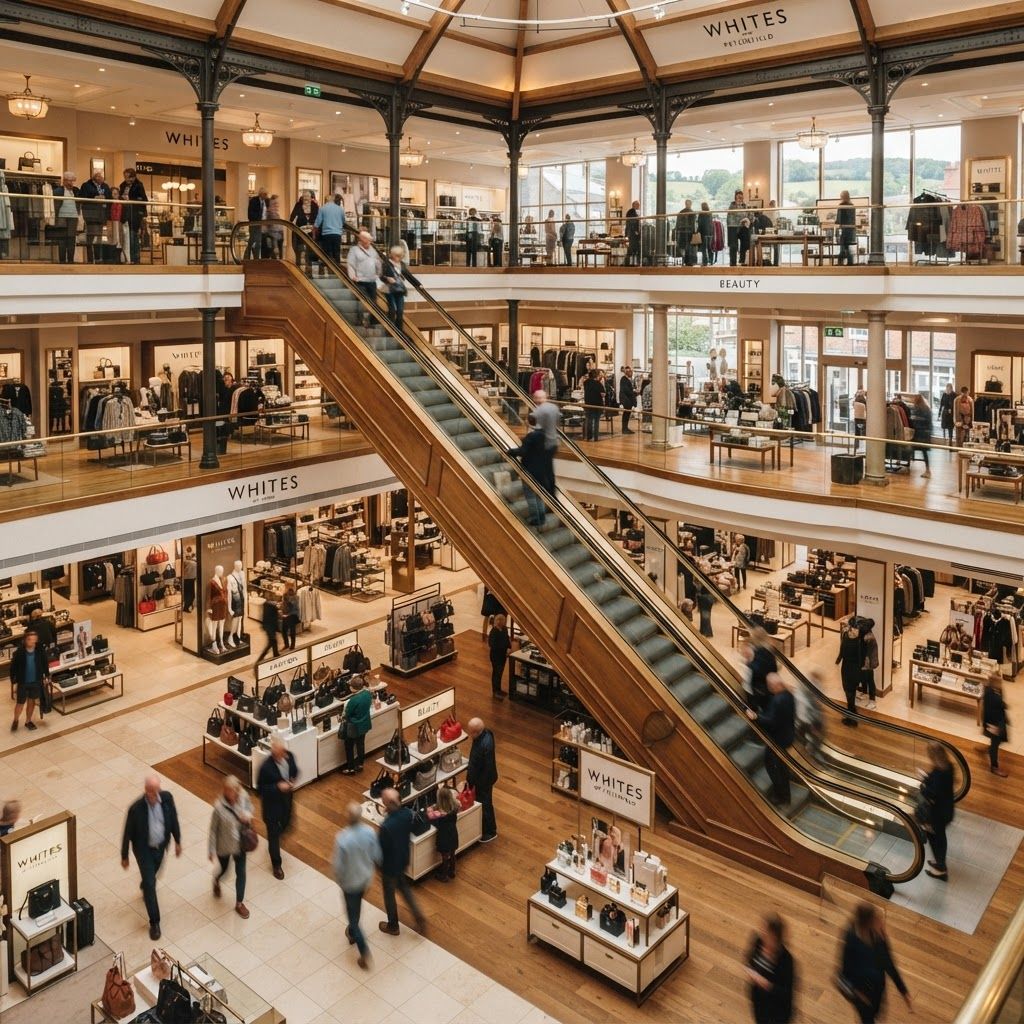
Understanding the Clothing Wholesale Market in Broadland
Clothing wholesale in Broadland serves a broader customer base than most people imagine. Independent fashion boutiques in the market towns and villages are only part of the picture. The bigger volumes flow into workwear and uniform supply for agriculture, construction, healthcare and hospitality; schoolwear for the district's primary and secondary schools; teamwear for the many sports clubs; and stock for the growing number of online resellers operating from home-based and small industrial premises.
The district's location matters commercially. Broadland businesses can serve Norwich, the Broads tourism economy, the coastal towns and the agricultural interior from one base, with reasonable access to national carrier hubs. That combination supports wholesalers who need both trade counter footfall and a functioning e-commerce despatch operation.
The Ten Main Categories of Clothing Wholesaler
Workwear and personal protective equipment wholesalers are the largest segment by volume. They supply hi-visibility garments, flame-retardant clothing, safety footwear, waterproofs and thermal layers, almost always with the option of embroidery or heat-transfer branding. Compliance with the relevant standards for visibility, cut resistance and chemical protection is central to the offer.
Uniform and corporate wear suppliers form a closely related but distinct category, focused on hospitality, retail, healthcare and professional services. Here the priorities are consistent colour matching across reorders, durability through industrial laundering, and the ability to hold garments in stock for several years so that a business can dress new starters without redesigning its whole look.
Fashion and boutique wholesalers serve independent retailers with seasonal ranges. They typically operate on a forward-order model with showroom appointments, though many now hold immediate stock to let retailers respond quickly to trends. Norfolk boutiques tend to favour suppliers offering smaller pack sizes and size-curve flexibility.
Schoolwear suppliers represent a fourth category, handling badged blazers, jumpers, polo shirts and PE kit. This business is intensely seasonal, with demand concentrated in a few summer weeks, and the best operators manage it through early ordering campaigns and online school-specific shops.
Sportswear and teamwear wholesalers supply clubs across football, rugby, cricket, running and watersports, with sublimated printing and personalisation being the main technical capability. Other categories include blank garment suppliers serving the print and embroidery trade, outdoor and country clothing wholesalers reflecting Norfolk's rural and shooting markets, childrenswear specialists, accessories and hosiery distributors, and sustainable or organic clothing wholesalers.
Sourcing Standards and Ethical Supply
Buyers are far more attentive to supply chain conduct than they were a decade ago, and the better wholesalers have responded. Membership of recognised ethical trading initiatives, published factory audit programmes and transparency about manufacturing locations have moved from marketing differentiators to purchasing requirements, particularly for public sector and education buyers who must demonstrate due diligence under modern slavery legislation.
Material certification is equally important. Global Organic Textile Standard certification for organic cotton, OEKO-TEX certification confirming freedom from harmful substances, and recycled content standards for polyester all provide verifiable claims. Wholesalers who cannot evidence these claims should be treated with caution, because unsubstantiated environmental marketing now carries regulatory risk for the retailer as well as the supplier.
Decoration, Personalisation and Value-Added Services
A large share of clothing wholesale in Broadland involves decoration. Embroidery remains the standard for corporate and workwear because of its durability and perceived quality. Screen printing suits high volumes of simple designs. Direct-to-film and direct-to-garment printing have opened up short-run, full-colour personalisation, making single-item orders commercially viable for the first time.
Wholesalers offering in-house decoration control quality and lead time far better than those subcontracting it. For buyers, the practical benefits are faster turnaround, easier reorders from stored artwork, and a single point of accountability when a logo colour drifts between batches.
Other value-added services worth seeking include stock holding against a call-off agreement, individual employee name labelling, size sampling sets so staff can be fitted accurately before bulk ordering, and managed online ordering portals that let multiple sites order within a controlled budget and approved range.
Sustainability in Textile Wholesale
Textiles carry a heavy environmental footprint, and the wholesale tier is where much of the practical improvement happens. Reducing overproduction through better demand forecasting is the single biggest lever, since unsold garments represent wasted water, energy and fibre. Wholesalers increasingly offer smaller minimum orders and faster replenishment specifically to help retailers avoid overbuying.
Material substitution is progressing, with recycled polyester, organic and Better Cotton Initiative cotton, and responsibly sourced wool becoming standard in mainstream ranges rather than premium niches. Packaging has improved too, with polybags giving way to recycled or compostable alternatives and bulk cartons replacing individual wrapping where garments allow.
End-of-life handling is the frontier. Garment take-back schemes, workwear recycling that safely destroys branding while recovering fibre, and repair services that extend uniform life are all appearing in the Norfolk market, driven largely by corporate customers with published waste targets.
How Retail Buyers Should Choose a Wholesaler
Start with the commercial fundamentals. Check minimum order values, pack sizes, size curves and whether split sizing is permitted. A supplier insisting on full size-run packs can leave a small boutique holding unsellable extremes.
Order samples before committing. Fabric weight, stitching quality, colour fastness and fit consistency cannot be judged from photographs, and fit consistency between production batches is a particularly common source of complaint. Wash-test samples the way your customers will actually launder them.
Interrogate stock policy. For repeat lines such as workwear and uniforms, continuity is essential. Ask how long a colour or style will remain available, whether the wholesaler commits to notice periods before discontinuation, and whether run-out stock can be reserved.
Understand returns and faults handling. Clear policies on damaged goods, short deliveries and sizing errors save enormous friction. Similarly, agree decoration approval processes in writing, including digital proofs and physical pre-production samples for large orders.
Finally, assess service culture. Responsive account management, honest communication about delays and willingness to solve problems outside the strict letter of the agreement distinguish partners from mere vendors. In a regional market like Broadland, those reputations are well known within the trade.
The Outlook
Demand looks resilient. Workwear and uniform requirements are largely non-discretionary, schoolwear is structurally stable, and Norfolk's tourism and hospitality economy continues to generate corporate wear demand. The pressures are cost inflation in shipping and raw materials, and increasing compliance expectations around sustainability claims.
Wholesalers who combine reliable stock availability, credible ethical sourcing and strong in-house decoration will continue to lead. For buyers, the most valuable step is to consolidate spend with fewer, better suppliers and to plan seasonal peaks far enough ahead that quality is never sacrificed to urgency.
Want your brand featured in front of decision-makers? Publish a guest post or get a link insertion in our guides through AAMAX's guest post and link insertion service.
Helpful Links
 SponsoredAAMAX — Full-Service Digital Agency
Write for Us
Share your expertise with our readers. We welcome guest contributions from industry specialists.
Pitch your idea