Why Clinics Are the Backbone of Local Healthcare
Most healthcare in Oldham happens outside hospitals. General practices, community health centres, and specialist clinics handle the overwhelming majority of patient contacts, and the quality of that provision determines how well the whole system functions. Strong community clinics catch problems early, manage long-term conditions before they escalate, and keep people out of emergency departments. Weak provision pushes demand upstream into the most expensive and least appropriate settings.
Oldham's clinic network reflects the borough's particular health profile. Higher than average prevalence of type two diabetes, cardiovascular disease, respiratory illness, and mental health need has shaped services towards proactive long-term condition management. The borough's substantial South Asian and Eastern European communities have driven investment in interpreting services and culturally appropriate health promotion. And areas of significant deprivation mean that outreach, accessibility, and continuity of care matter more here than in more affluent districts. The move towards integrated neighbourhood working, bringing general practice, community nursing, pharmacy, mental health, and social care into coordinated teams, is particularly relevant to a borough with these characteristics.
Accessing Clinic Services Effectively
General practice remains the main entry point to the health system, and registration is straightforward, requiring no proof of address or immigration status. Most practices now operate total triage, where a request is submitted online or by telephone and assessed before an appointment type is allocated, which can mean a telephone consultation, a video call, a nurse appointment, or a same-day face to face slot. Extended access arrangements provide evening and weekend appointments through hubs shared between practices. Several services can be accessed directly without referral, including sexual health, some physiotherapy pathways, community pharmacy consultations for minor illness, and mental health talking therapies through self-referral. Knowing which services accept self-referral is one of the most practically useful pieces of health literacy a resident can have.
Ten Essential Clinic Types in Oldham
1. General Practice Surgeries
General practices across Oldham provide first-contact care for the entire population, covering acute illness, long-term condition reviews, immunisations, contraception, minor procedures, and referral into secondary care. Modern practices operate with multidisciplinary teams including practice nurses, clinical pharmacists, physician associates, first-contact physiotherapists, and social prescribing link workers, which expands what can be handled without a doctor appointment. Continuity with a named clinician measurably improves outcomes for patients with complex needs, so it is worth requesting where possible. Practices are grouped into primary care networks that share extended access and specialist roles.
2. Oldham Integrated Care Centre Services
Integrated care centre provision brings multiple community services under one roof, typically including outpatient clinics, community nursing, diagnostics such as phlebotomy and imaging, therapy services, and long-term condition management. The model reduces the need for hospital attendance for routine follow-up and makes multidisciplinary working practical. For patients with several conditions, having physiotherapy, blood tests, and a specialist nurse review available in one building on one visit is a substantial improvement over fragmented appointments across multiple sites.
3. Sexual Health and Contraception Clinics
Sexual health services in Oldham operate on an open-access basis, meaning no general practice referral is needed and confidentiality is protected. Provision includes testing and treatment for sexually transmitted infections, the full range of contraception including long-acting reversible methods, emergency contraception, HIV testing and pre-exposure prophylaxis, and psychosexual support. Online postal testing kits have significantly widened access for people reluctant to attend in person. Services are free and available regardless of age, immigration status, or where a person is registered.
4. Community Mental Health and Talking Therapy Services
Mental health provision in the borough spans self-referral talking therapy services offering cognitive behavioural therapy, counselling, and guided self-help for anxiety and depression, through to community mental health teams supporting people with severe and enduring conditions. Crisis services operate around the clock and can be reached through NHS 111. Waiting times vary considerably by intervention type, with digital and group programmes typically accessible much faster than individual therapy. Referral is not required for the primary care level services, which many residents do not realise.
5. Musculoskeletal and Physiotherapy Clinics
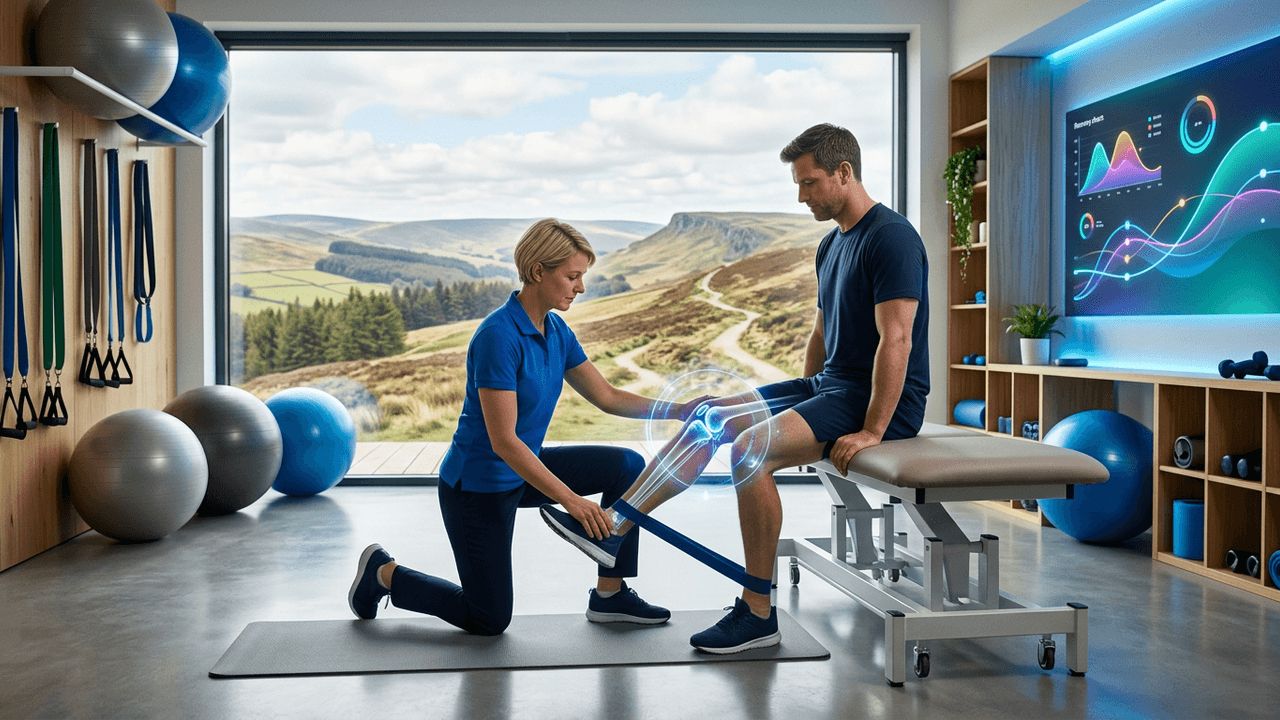
Musculoskeletal clinics assess and treat back pain, joint problems, sports injuries, and post-operative rehabilitation. Many Oldham practices now host first-contact physiotherapists, allowing patients to be seen by a musculoskeletal specialist as their first appointment rather than waiting for a general practice slot and then a referral. Treatment emphasises exercise-based rehabilitation, education, and self-management, with injection therapy and onward orthopaedic referral where clinically indicated. Independent physiotherapy is also widely available for those choosing to pay.
6. Diabetes and Long Term Condition Clinics
Given the borough's elevated diabetes prevalence, structured diabetes clinics are a significant part of local provision. Services include annual reviews with foot and retinal screening, medication optimisation, structured education programmes, dietetic input, and access to the NHS Diabetes Prevention Programme for people at high risk. Similar structured clinics operate for hypertension, chronic obstructive pulmonary disease, asthma, and chronic kidney disease. Culturally tailored education, delivered in community languages and accounting for dietary patterns, has proved considerably more effective than generic advice in Oldham's diverse population.
7. Women's Health and Maternity Clinics
Community women's health provision covers antenatal and postnatal care, cervical screening, menopause support, contraception, and gynaecological assessment. Community midwifery teams provide continuity through pregnancy and into the postnatal period, working alongside hospital maternity services. Dedicated menopause clinics have expanded considerably in recent years, reflecting long-overdue recognition of unmet need. Breast and cervical screening programmes operate on national invitation cycles, and uptake improvement work is a local priority.
8. Children and Young People's Clinics
Paediatric community services in Oldham include health visiting for the under-fives, school nursing, immunisation programmes, developmental assessment, speech and language therapy, and child and adolescent mental health services. Community paediatric clinics assess developmental concerns, neurodevelopmental conditions including autism and attention deficit hyperactivity disorder, and chronic childhood illness. Family hub arrangements co-locate health, early years, and family support services, making it easier for parents to access multiple forms of help without navigating separate systems.
9. Community Podiatry and Foot Health Clinics
Podiatry services are clinically important well beyond comfort, particularly for the borough's large diabetic population where foot complications are a leading cause of amputation. NHS podiatry prioritises high-risk patients including those with diabetes, peripheral arterial disease, or rheumatoid arthritis, providing risk assessment, ulcer management, wound care, and biomechanical assessment. Private podiatry and chiropody clinics across Oldham handle routine nail and skin care, orthotic provision, and sports-related foot problems for those who do not meet NHS eligibility thresholds.
10. Private and Independent Health Clinics
Independent clinics across Oldham and surrounding areas offer private general practice appointments, rapid diagnostics, health screening packages, specialist consultations, dermatology, allergy testing, and aesthetic treatments. The principal advantage is speed of access, with consultations often available within days. Patients should verify that clinicians are on the appropriate General Medical Council or Nursing and Midwifery Council register, that the clinic is registered with the Care Quality Commission where required, and that pricing covers follow-up and any complications rather than the initial appointment alone.
Getting Better Outcomes from Clinic Appointments
A few habits improve results substantially. Prepare a short written list of your main concerns and take it in, since consultations are time-limited and it is easy to forget the most important issue. Bring a current medication list including anything bought over the counter or online. Ask for an interpreter if you need one, as this is free and improves safety. Request test results in writing and ask what the numbers mean rather than accepting that they are fine. Use the NHS App to manage repeat prescriptions and view records. And attend structured education programmes if offered for a long-term condition, because the evidence for their benefit is strong and uptake locally remains lower than it should be.
How Community Care Is Changing
Several shifts are reshaping clinic provision in Oldham. Integrated neighbourhood teams are bringing general practice, community services, mental health, and social care into shared working, with joint caseload reviews for patients with complex needs. Community pharmacy has taken on treatment of several common conditions under the Pharmacy First arrangements, relieving pressure on general practice. Remote monitoring for blood pressure, diabetes, and respiratory conditions is expanding, allowing intervention before deterioration. Community diagnostic capacity has increased, cutting waits for scans and tests. And social prescribing is increasingly used to address the housing, financial, and isolation factors that drive much apparent medical need.
Final Thoughts
Oldham's clinic network is where most of the borough's healthcare genuinely happens, and using it well makes a real difference to outcomes. Register with a general practice, learn which services accept self-referral, attend screening and structured education when invited, and prepare for appointments so that limited consultation time is spent on what matters most. The provision available locally is considerable, and the patients who benefit most are those who understand how to navigate it.
Want your brand featured in front of decision-makers? Publish a guest post or get a link insertion in our guides through AAMAX's guest post and link insertion service.
Helpful Links
 SponsoredAAMAX — Full-Service Digital Agency
Write for Us
Share your expertise with our readers. We welcome guest contributions from industry specialists.
Pitch your idea