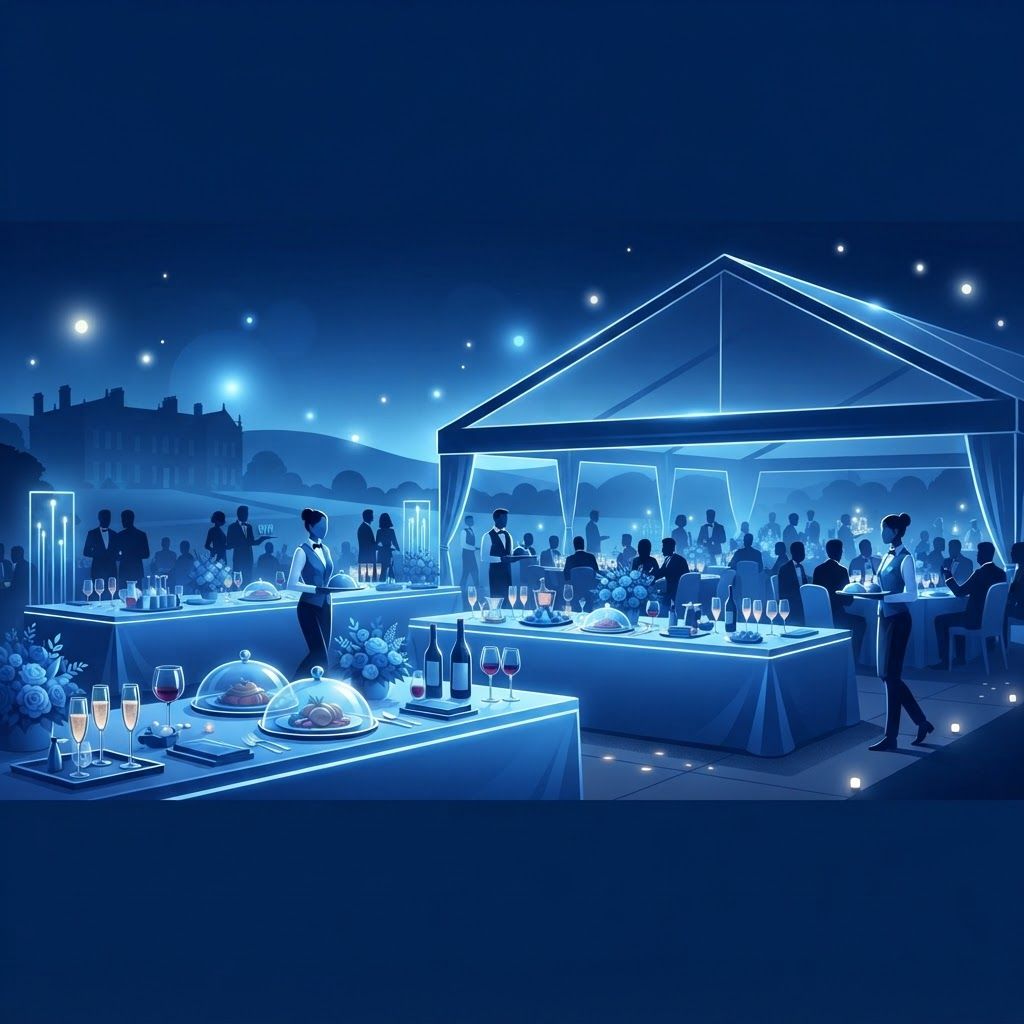
Catering in One of England's Great Event Destinations
Few districts in England host as many significant events per head of population as West Oxfordshire. Blenheim Palace, a succession of Cotswold manor houses, converted tithe barns, country hotels and working farms all operate as venues, drawing couples and corporate hosts from London and far beyond. That demand has produced a catering industry of unusual depth and sophistication.
What distinguishes local catering is the combination of high expectation and rural logistics. Many of the district's best venues are dry-hire spaces with no permanent kitchen, meaning caterers must build a professional service operation inside a barn or marquee and deliver restaurant-standard food for well over a hundred guests. The businesses that do this consistently are genuinely impressive operations.
The Leading Catering Services
1. The Oxford Catering Company. A well-established operation serving weddings and corporate events across the county. Its strength is scale without compromise, handling large guest numbers while maintaining plated service standards. Menus lean modern British with a strong emphasis on regional sourcing.
2. Kalm Kitchen. Widely used across Cotswold wedding venues, Kalm Kitchen has built a reputation for polished service and creative seasonal menus. Its planning process is notably thorough, which experienced venue managers consistently value.
3. Thyme Catering. Associated with the celebrated Southrop estate tradition of farm-to-table cooking, this style of catering has become emblematic of the Cotswolds. Kitchen garden produce, whole-animal butchery and restrained, ingredient-led plating define the approach.
4. Daylesford Organic events catering. Drawing on one of the region's best-known organic farms, this service offers exceptional provenance credentials. For hosts who want to serve food grown within a few miles of the venue, it is a natural choice.
5. Pomona Catering. A boutique caterer favoured for smaller, design-conscious events. Sharing platters, grazing tables and refined canapé menus are its signature, and it works particularly well in intimate barn and garden settings.
6. Wildfire and wood-fired street food caterers. Mobile wood-fired ovens, smokers and open-fire grills have transformed informal event catering across the district. These operators bring genuine theatre, cooking in front of guests, and suit relaxed weddings and festival-style gatherings.
7. Hog roast and whole-animal specialists. A long-standing Oxfordshire tradition, and still one of the most cost-effective ways to feed a large gathering well. The better operators source from named local farms and pair the roast with substantial salad and side selections rather than treating them as afterthoughts.
8. Corporate and workplace caterers serving Witney and Carterton. The district's manufacturers, business parks and public sector sites generate steady demand for meeting catering, working lunches and staff events. Specialists in this space compete on punctuality, dietary accommodation and consistency rather than spectacle.
9. Private chef and small-party services. An expanding category, driven by the district's many holiday cottages and self-catering estates. Chefs cook in the property's own kitchen for groups of eight to twenty, offering a restaurant experience without leaving the house.
10. Specialist dietary and plant-based caterers. Fully vegan and allergen-specialist caterers now operate across Oxfordshire, and several have become preferred suppliers at leading venues. Their emergence reflects a genuine shift in guest expectations rather than a passing trend.
Services and Formats to Consider
Plated three-course service remains the standard for formal weddings and dinners, offering the most controlled presentation but requiring the largest service team. Family-style sharing, where platters are placed on tables, has grown rapidly because it encourages conversation and typically reduces staffing costs.
Grazing and canapé formats suit standing receptions and shorter corporate events. Food stations and street food trucks work well for relaxed celebrations and allow guests to choose, which helps considerably with mixed dietary requirements.
Beyond the food itself, most caterers offer crockery, glassware, linen, staffing and bar management. Clarifying exactly what is included is the single most important step in comparing quotes accurately.
Trends Shaping Local Catering
Hyperlocal sourcing has moved from marketing claim to operational reality. The strongest caterers in the district now name their farms, butchers, bakers and growers on the menu, and guests increasingly expect that transparency.
Menus have become more vegetable-forward. Rather than offering a single vegetarian alternative, many caterers now design menus where plant-based dishes are the centrepiece and meat is one option among several.
Waste reduction has become a commercial as well as ethical priority, with accurate headcount management, reusable service ware and composting arrangements now standard at the better operations.
Finally, sustainability extends to logistics. Caterers are consolidating deliveries, using local staff to reduce travel and working with venues on energy use, all of which matters given the rural locations involved.
How to Choose and Brief a Caterer
Begin with the venue's requirements. Many West Oxfordshire venues maintain approved supplier lists, and those restrictions will shape your options immediately. Where external caterers are permitted, confirm kitchen facilities, power, water and access before approaching anyone.
Provide a clear brief: guest numbers, timings, service style, budget per head and known dietary requirements. Caterers can only quote accurately against real information, and vague briefs produce quotes that change later.
Always attend a tasting. Beyond the food, it reveals how the team communicates and whether they listen to feedback. Ask how many events they will run on your date and who will lead your service.
Check the practical credentials: food hygiene ratings, public liability insurance and allergen management procedures. These are non-negotiable and any reputable operator will supply them without hesitation.
Finally, read the contract closely, particularly cancellation terms, final numbers deadlines and what happens to surplus food. Clarity at this stage prevents almost every common dispute.
Final Thoughts
West Oxfordshire's catering industry has been shaped by demanding venues, discerning clients and outstanding local produce. Whether you are planning a formal wedding at a historic estate, a relaxed barn celebration or a corporate event in Witney, the district offers caterers capable of exceptional work. The key is early engagement, a precise brief and a partner whose style genuinely matches the occasion you have imagined.
Want your brand featured in front of decision-makers? Publish a guest post or get a link insertion in our guides through AAMAX's guest post and link insertion service.
Helpful Links
 SponsoredAAMAX — Full-Service Digital Agency
Write for Us
Share your expertise with our readers. We welcome guest contributions from industry specialists.
Pitch your idea