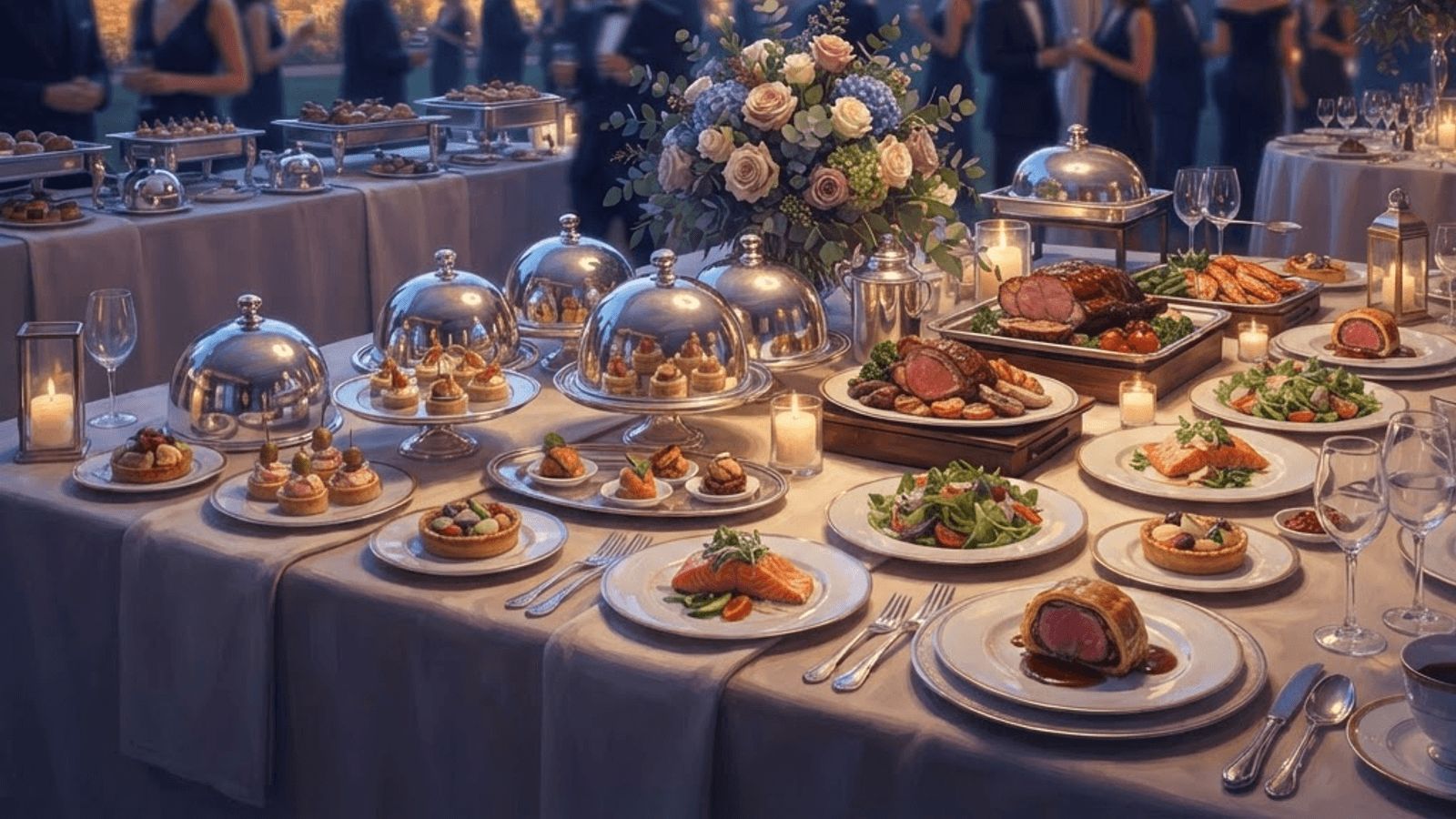
A Strong Events Economy Supports Excellent Catering
Chichester sits at the centre of an unusually busy events calendar. Goodwood hosts motorsport and racing throughout the season, the Festival Theatre draws audiences year-round, the harbour supports sailing events, and the surrounding countryside is dotted with barns, manor houses, and estate venues that have become sought-after wedding locations. This concentration of activity has produced a catering sector with real depth and the operational capability to work in challenging settings.
The practical consequence is that clients in the district have genuine choice. Whether the requirement is a formal seated dinner for two hundred in a marquee with no kitchen, a relaxed street food setup for a summer party, or refined canapés for a corporate reception, there are established operators who have done it many times before. That experience shows most clearly when something goes wrong, which at outdoor events in an English summer is a reasonable expectation.
Caterers Serving the Chichester Area
Harbour Table Catering specialises in seafood-led menus drawing on the day's landings from nearby coastal ports, popular for summer weddings and harbour-side receptions. Pallant Fine Dining focuses on formal service, delivering multi-course seated menus with front-of-house teams trained to restaurant standards.
Downland Feast Company takes a rustic, sharing-plate approach using produce from West Sussex farms and growers, well suited to barn and countryside venues. Spire Event Catering handles large-scale corporate functions and conferences, with the logistics capability to serve substantial numbers efficiently.
Goodwood Kitchen Collective works extensively in the motorsport and hospitality sphere, comfortable with hospitality suites, paddock catering, and high-turnover service. Westgate Private Chefs provides in-home dining, bespoke menus, and small private events where a personal approach matters.
Selsey Street Food Collective assembles mobile vendors for informal celebrations, offering variety and a relaxed atmosphere. Fishbourne Garden Catering concentrates on outdoor and marquee events, with strong plant-forward menu development. Priory Park Hospitality serves community events, charity functions, and civic occasions with reliable, good-value catering. Cathedral Quarter Canapés completes the list, specialising in drinks receptions, launches, and cocktail-style events with inventive small plates.
What Distinguishes Professional Catering
Food quality matters, but it is rarely the factor that separates competent caterers from excellent ones. Most established operators can cook well. The differentiators lie in planning, logistics, and service.
Menu development should begin with the venue and the guest profile rather than with the chef's preferences. A dish that plates beautifully in a fitted kitchen may be unworkable from a field kitchen serving two hundred covers within twenty minutes. Experienced caterers design menus that hold their quality under the actual conditions of the event.
Dietary management has become a core competence rather than an afterthought. Allergen handling carries legal obligations and genuine risk, and professional operations maintain documented ingredient records, separate preparation areas, and clear labelling. They also handle vegetarian, vegan, and religious dietary requirements with equal care rather than offering an obviously inferior alternative plate.
Staffing ratios determine the guest experience as much as the food. A seated dinner requires roughly one server per ten to twelve guests for smooth service; understaffing shows immediately in cold food and long gaps between courses. Ask specifically about crew numbers rather than accepting a total headcount.
Contingency planning separates the professionals. What happens if the marquee floods, the generator fails, or numbers increase late? Caterers who answer these questions readily have thought about them before.
Current Trends in Event Catering
Sustainability has moved to the centre of client expectations. Local sourcing, seasonal menus, reduced food miles, compostable service ware, and plans for surplus redistribution now feature routinely in briefs. Caterers who can document their supply chain and waste practices have a clear advantage.
Plant-forward menus have shifted from niche to mainstream. Rather than offering a single vegetarian option, many caterers now build menus where vegetable dishes are the centrepiece and meat or fish appear as one choice among several. Done well, this is neither a compromise nor a statement; it simply eats better.
Interactive and theatrical service continues to grow, with live cooking stations, carving points, and chef interaction adding entertainment value. This works particularly well at informal events and in venues where guests circulate.
Grazing tables and sharing formats have proved durable, encouraging conversation and accommodating varied appetites and dietary needs without complex individual plating.
Briefing a Caterer Effectively
Provide the practical constraints early. Venue access, kitchen facilities or the lack of them, power availability, water supply, parking, and timing restrictions all shape what is possible. A caterer who discovers on the day that there is no vehicle access to the marquee cannot deliver as planned.
Be honest about budget. Caterers can design an excellent experience within most budgets if they know the figure, but they cannot if they are guessing. A clear number produces a realistic proposal rather than an aspirational one requiring painful reduction later.
Arrange a tasting for significant events. This is standard practice for weddings and large functions, and it allows you to refine dishes, discuss presentation, and build confidence in the team.
Confirm what is included in writing. Service ware, linen, glassware, staff, travel, setup and clearance, waste removal, and corkage arrangements should all be explicit. Unexpected supplementary charges are the commonest source of dissatisfaction.
Conclusion
Chichester's catering sector benefits from a demanding and varied local events market that has pushed operators to develop genuine logistical skill alongside good cooking. For anyone planning an event in the district, the advice is to engage early, brief thoroughly, and select a caterer whose experience matches your specific format rather than simply the one with the most appealing menu on paper.
Want your brand featured in front of decision-makers? Publish a guest post or get a link insertion in our guides through AAMAX's guest post and link insertion service.
Helpful Links
 SponsoredAAMAX — Full-Service Digital Agency
Write for Us
Share your expertise with our readers. We welcome guest contributions from industry specialists.
Pitch your idea