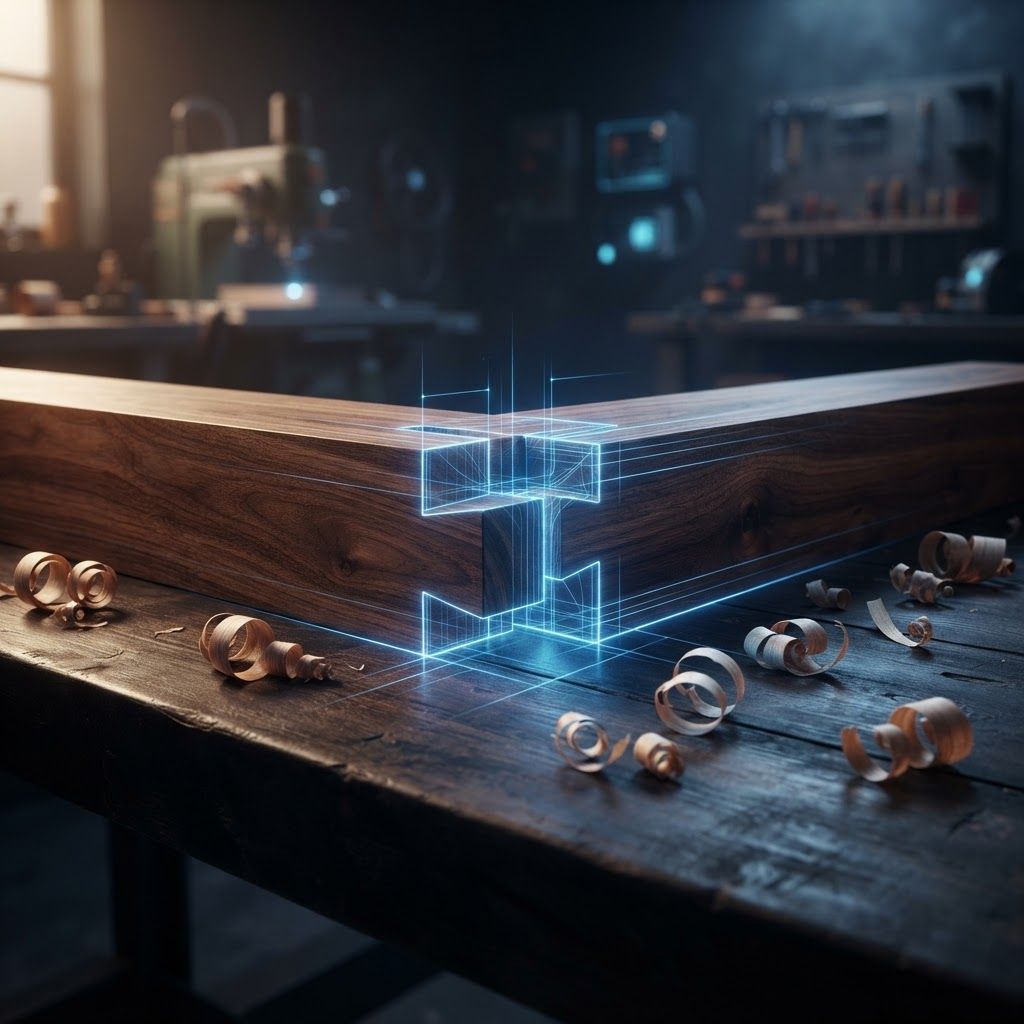
Carpentry and Joinery in Winchester
Carpentry is among the oldest building trades and remains one of the most varied. It divides broadly into two branches. First fix carpentry deals with structural and concealed work: roof timbers, floor joists, stud partitions, door linings and the framework that everything else attaches to. Second fix carpentry and joinery covers what is visible: doors, architrave, skirting, staircases, fitted furniture and decorative detail.
In Winchester, both branches carry particular demands. The city's buildings include medieval timber frames, Georgian townhouses with fine panelling and sash windows, Victorian terraces with elaborate mouldings, and contemporary construction requiring engineered timber and precise tolerances. A carpenter working across this range needs both traditional hand skills and modern technical knowledge.
Structural and First Fix Carpentry
Structural carpenters build the timber skeleton of a building. On new construction this means erecting roof structures, whether cut on site using rafters, purlins and ridges or assembled from prefabricated trusses, installing floor joists and engineered joist systems, and forming stud partitions.
On existing buildings, structural carpentry involves strengthening floors to take new loads, forming openings, installing trimmer beams around stairwells, and repairing decayed structural timber. Loft conversions in particular rely heavily on this skill, since original ceiling joists are almost never adequate to serve as floor joists without reinforcement.
Accuracy at this stage determines everything downstream. A floor that is out of level or a partition that is out of plumb creates problems for every trade that follows.
Bespoke Joinery Workshops
Joinery workshops manufacture timber components to individual specification. Output includes staircases, doors, windows, panelling, fitted furniture, bookcases, kitchens, reception desks and architectural features.
The value of bespoke joinery is most apparent in older properties, where nothing is standard. Rooms are rarely square, floors slope, ceiling heights vary and openings are non-standard sizes. Off-the-shelf products fit badly in these situations, whereas a joiner who templates carefully produces pieces that fit as though they were always there.
Good workshops combine machine precision with hand finishing, selecting timber for grain and colour, and matching profiles to existing details when working in period settings.
Kitchen Fitting Specialists
Kitchen installation is a carpentry-led discipline. It requires accurate setting out, levelling of base units across uneven floors, scribing to walls that are neither straight nor plumb, precise cutting for appliances and sinks, and hanging doors so that gaps are consistent throughout.
Bespoke kitchen makers go further, designing and building cabinetry specifically for the space rather than assembling modular units. This allows awkward alcoves, sloping ceilings and unusual proportions to be exploited rather than worked around, which in older Winchester properties often yields considerably more usable storage.
Fitted Furniture and Storage Solutions
Built-in furniture makes efficient use of space in properties where floor area is at a premium. Wardrobes built into chimney breast recesses, under-stair storage, window seats with concealed storage, home office installations and media walls all deliver function without consuming the room.
Because these pieces are built in place or templated precisely, they accommodate the irregularities of older buildings in a way that freestanding furniture cannot. Well-executed fitted furniture reads as part of the architecture rather than as an addition.
Staircase Construction and Restoration
Staircases are among the most demanding joinery items, requiring accurate calculation of rise and going to satisfy building regulations, correct headroom, compliant balustrade design and guarding, and construction robust enough for decades of use.
New staircases range from painted closed-string designs to open-tread, cantilevered and glass-balustraded contemporary pieces. Restoration work on period staircases involves repairing worn treads, replacing damaged balusters to match originals, stabilising loose newels and refinishing handrails that generations have polished by hand.
Door Hanging and Architectural Joinery
Hanging doors properly is a deceptively skilled task. It requires accurate hinge recessing, correct clearance at head, jamb and threshold, allowance for floor finishes and doors that close without binding or dropping.
Architectural joinery extends to fitting architrave, skirting, dado and picture rails, panelling and decorative mouldings. In period properties, matching existing profiles is essential, and joiners frequently have cutters ground specifically to replicate original mouldings that are no longer commercially available.
Timber Window Manufacture and Repair
Traditional timber windows, particularly box sash windows, are a defining feature of Winchester's period buildings. They are also frequently the element that owners are told must be replaced, when in fact repair is usually both possible and preferable.
Specialists repair sashes by splicing new timber into decayed sections, replace failed cords and weights, ease and adjust sashes that have been painted shut, and fit draught sealing systems that dramatically improve thermal and acoustic performance while retaining the original joinery. Slim profile double glazing can sometimes be fitted into existing sashes.
Where replacement is genuinely necessary, joinery workshops manufacture replicas to match original profiles, glazing bar dimensions and opening patterns, which is normally a requirement in conservation areas.
Heritage and Timber Frame Repair
Winchester and its surrounding villages contain historic timber-framed buildings requiring highly specialised repair. This work involves assessing structural timber for decay and beetle damage, splicing in new oak using traditional jointing rather than bolting on modern plates, and using pegged connections consistent with the original construction.
Conservation carpenters understand that these buildings move seasonally and are designed to do so. Repairs must accommodate that movement rather than restraining it. They also favour retaining as much original fabric as possible, replacing only what is structurally unsound.
Decking, Garden Structures and External Carpentry
External carpentry covers decking, pergolas, garden rooms, summerhouses, fencing, gates and cladding. The technical demands differ from internal work because the timber must resist moisture, ultraviolet degradation and insect attack.
Good external carpentry uses appropriately durable or treated species, detailed to shed water rather than trap it, with adequate ventilation beneath decks and correct fixing with corrosion-resistant fasteners. Ground contact requires particular attention, as this is where most external timber structures fail first.
Garden rooms have become a substantial part of this market as home working has grown, requiring insulation, electrical supply and weathertight construction to a genuinely habitable standard.
Flooring Installation
Timber flooring installation covers solid hardwood, engineered board, parquet and reclaimed boards. Each requires different preparation and fixing. Solid timber must acclimatise before installation and be laid with expansion provision, since it moves seasonally with humidity. Engineered board is more dimensionally stable and suits underfloor heating better.
Restoration of original floorboards is common in Winchester's period properties. This involves lifting and relaying where boards have cupped, replacing damaged boards with matching reclaimed timber, filling gaps and sanding and finishing to reveal the character beneath decades of paint and carpet adhesive.
Commercial and Shopfitting Carpentry
Commercial carpenters produce counters, display units, wall panelling, bulkheads, banquette seating and reception furniture for offices, shops and hospitality venues. The work must be durable enough for constant public use and often needs installing outside trading hours.
Shopfitting in Winchester's historic streets frequently involves working within listed buildings, where fixings must be minimally invasive and installations reversible, so that the historic fabric is not permanently altered.
Choosing a Carpenter or Joiner
Match the specialism to the work. Structural carpentry, fine joinery, heritage repair and shopfitting are genuinely different skills, and a tradesperson excellent in one may be unsuited to another. Ask to see examples of work directly comparable to your project.
For bespoke pieces, visit the workshop if possible. The condition of the workshop, the quality of the machinery and the work in progress tell you a great deal about standards.
Discuss timber specification explicitly. Species, grade, moisture content and finish all affect both cost and longevity, and a quotation that does not state them is not comparable to one that does.
Confirm lead times realistically. Bespoke joinery takes time to design, template, manufacture and finish, and rushing that process shows in the result.
Caring for Timber Work
Timber is a living material that responds to its environment. Internally, stable humidity prevents excessive shrinkage and swelling, which is why joinery installed in a newly plastered building should be given time to adjust.
Externally, regular inspection and maintenance of protective finishes prevents moisture ingress. Recoating before a finish fails entirely is far easier and cheaper than repairing decayed timber afterwards.
Final Thoughts
Carpentry in Winchester spans centuries of tradition and the precision demands of modern construction. Clients who identify the right specialism, brief clearly, specify timber properly and allow realistic time for bespoke manufacture receive work that performs structurally, looks right in its setting and lasts for generations rather than years.
Want your brand featured in front of decision-makers? Publish a guest post or get a link insertion in our guides through AAMAX's guest post and link insertion service.
Helpful Links
 SponsoredAAMAX — Full-Service Digital Agency
Write for Us
Share your expertise with our readers. We welcome guest contributions from industry specialists.
Pitch your idea