Two Trades Under One Name
Carpentry is often spoken of as a single trade, but in practice it divides into two related disciplines. First fix carpentry is structural: roof timbers, floor joists, stud partitions, door linings and window openings. It is concerned with strength, dimension and load path, and much of it is eventually hidden.
Second fix carpentry, and the closely allied trade of joinery, is about what people see and touch. Doors, skirting, architrave, staircases, fitted furniture, panelling and window units fall into this category. Here the tolerances are finer, the finishes matter, and the difference between competent and excellent work is immediately visible.
Most established carpentry businesses in West Lancashire offer both, but their real strengths usually lie in one or the other, and it is worth establishing which before appointing.
Why Timber Still Dominates
Timber remains the dominant structural material in British housebuilding, and its role is expanding rather than contracting. Engineered timber products such as glulam beams, laminated veneer lumber and cross-laminated timber allow long spans and large openings that would once have required steel. Timber frame construction, common in the region, delivers rapid weathertight enclosure and excellent insulation integration.
Sustainability considerations reinforce this. Timber sequesters carbon, is renewable when responsibly sourced and has considerably lower embodied energy than concrete or steel. Certification schemes provide assurance of sustainable forestry, and specifying certified timber has become standard on most commercial projects and increasingly on domestic ones.
The Leading Carpentry Services
1. West Lancs Carpentry and Joinery offers both structural and finishing carpentry across the borough, working with builders on new construction and directly with homeowners on renovation projects. Their consistency across both disciplines makes them a common choice for whole-project appointments.
2. Ormskirk Bespoke Joinery operates a workshop producing made-to-measure units: fitted wardrobes, alcove shelving, media walls, window seats and kitchen furniture. Manufacturing to the actual dimensions of a room, rather than adapting modular units, eliminates the filler panels that betray off-the-shelf installations.
3. Burscough Timber Frame Construction erects timber frame structures for new builds and extensions, including panel assembly, roof cassette installation and achieving weathertight enclosure quickly, which protects the internal programme from weather delay.
4. Parbold Heritage Woodwork restores historic timber in listed and period buildings. Splicing repairs to decayed beams, replication of moulding profiles, sash window overhaul and traditional jointing techniques allow original fabric to be retained rather than replaced.
5. Aughton Staircase Specialists designs and builds staircases in timber, glass and metal combinations, handling the geometry, regulation compliance on rise, going and headroom, and the fine fitting that a well-made staircase demands.
6. Skelmersdale Shopfitting Carpentry produces and installs commercial joinery, including counters, display units, reception desks and fitted storage for retail and office environments, typically working to tight overnight or weekend programmes.
7. Tarleton Garden Structures builds timber garden rooms, home offices, decking, pergolas and fencing, with attention to the ground treatment, ventilation and preservative specification that determine how long external timber survives in a wet climate.
8. Rufford Door and Window Joinery manufactures hardwood and softwood windows, external doors and gates to traditional patterns, serving conservation area properties where modern plastic units would be unacceptable.
9. Halsall Loft Conversion Carpentry handles the structural carpentry side of loft conversions, including trimming around new openings, floor strengthening, dormer construction and stair installation within tight existing geometry.
10. Douglas Valley Kitchen Fitting specialises in kitchen installation, combining carpentry with the plumbing and electrical coordination that a kitchen requires, and producing the accurate scribing to uneven walls that distinguishes a professional fit.
Craft, Technology and the Skills Gap
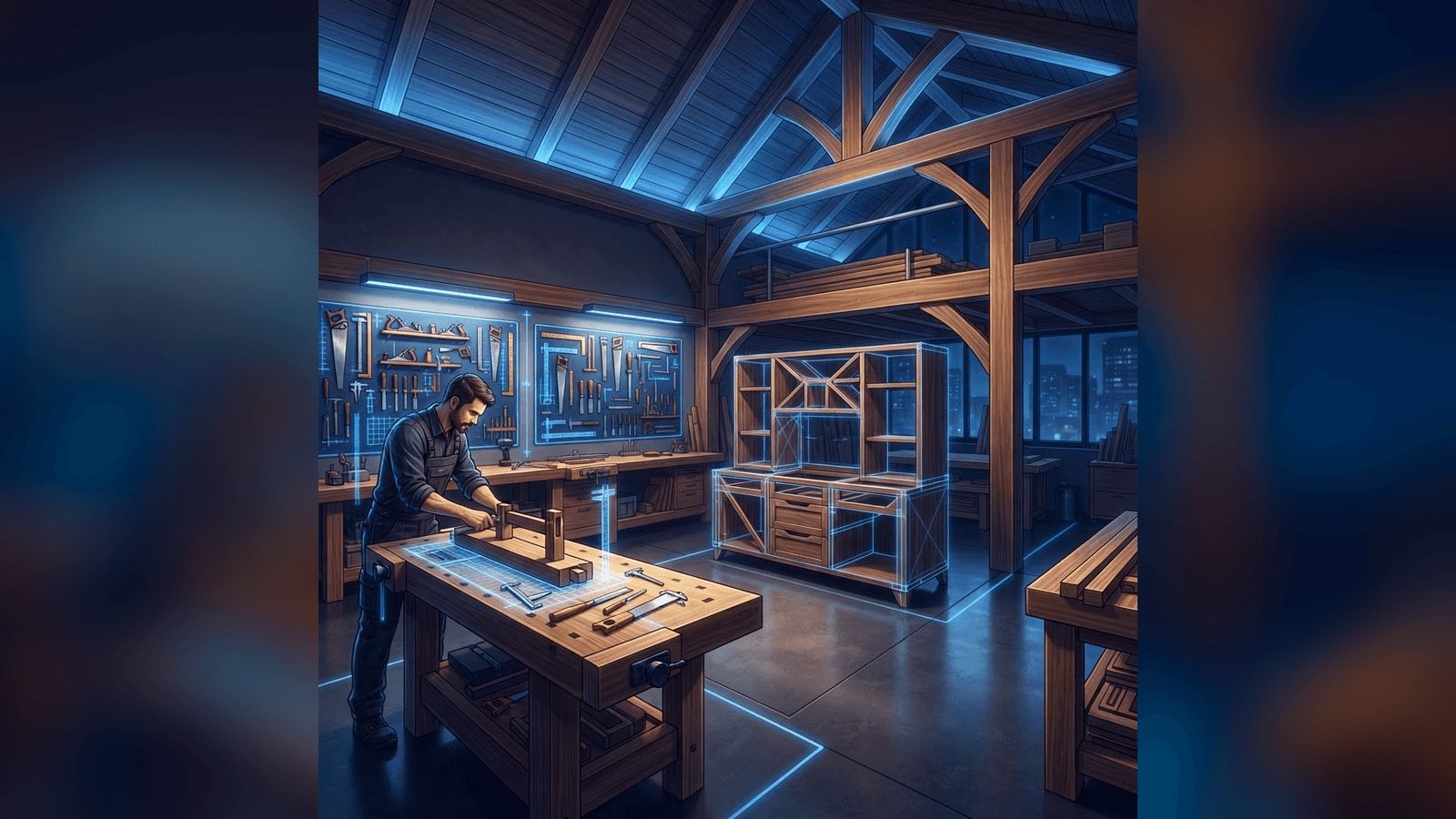
Carpentry has absorbed digital technology without losing its craft foundation. Computer numerical control machining allows repeated components to be cut with extreme accuracy, laser measuring produces precise room surveys, and three dimensional modelling lets clients see bespoke furniture before it is made. The best workshops combine this precision with hand skills for the final fitting, which no machine can replicate on an irregular wall.
The sector faces a genuine skills shortage. Experienced carpenters are in high demand across the North West, and apprenticeship completion rates have not kept pace with retirements. This affects clients in two ways: lead times for quality carpenters are longer than for many other trades, and rates reflect the scarcity. Booking well in advance is sensible, particularly for workshop-made joinery where manufacturing time adds to installation scheduling.
Specifying Carpentry Work Well
Be precise about materials. Softwood, hardwood, medium density fibreboard and veneered board all behave differently, cost differently and suit different applications. Painted finishes may be perfectly served by a stable engineered board, while a stained or oiled finish requires solid timber with matched grain.
Consider moisture. Timber moves with humidity, and fitting kiln-dried joinery into a damp newly plastered room leads to shrinkage gaps as the building dries out. Allowing a property to dry before second fix carpentry avoids this entirely.
Agree the finish responsibility. Whether joinery arrives primed, fully finished or raw affects both cost and site sequence, and unstated assumptions here are a common source of friction.
Inspect a sample or a previous installation before committing to bespoke work. Photographs cannot convey the quality of a mitre, the smoothness of a drawer runner or the consistency of a paint finish.
Conclusion
Carpentry is the trade most directly responsible for how a finished building feels. West Lancashire retains a strong base of skilled carpenters and joiners working across structural, bespoke and heritage disciplines. Define your requirement clearly, choose a specialist whose portfolio matches it, and allow enough time in the programme for work that genuinely cannot be rushed.
Want your brand featured in front of decision-makers? Publish a guest post or get a link insertion in our guides through AAMAX's guest post and link insertion service.
Helpful Links
 SponsoredAAMAX — Full-Service Digital Agency
Write for Us
Share your expertise with our readers. We welcome guest contributions from industry specialists.
Pitch your idea