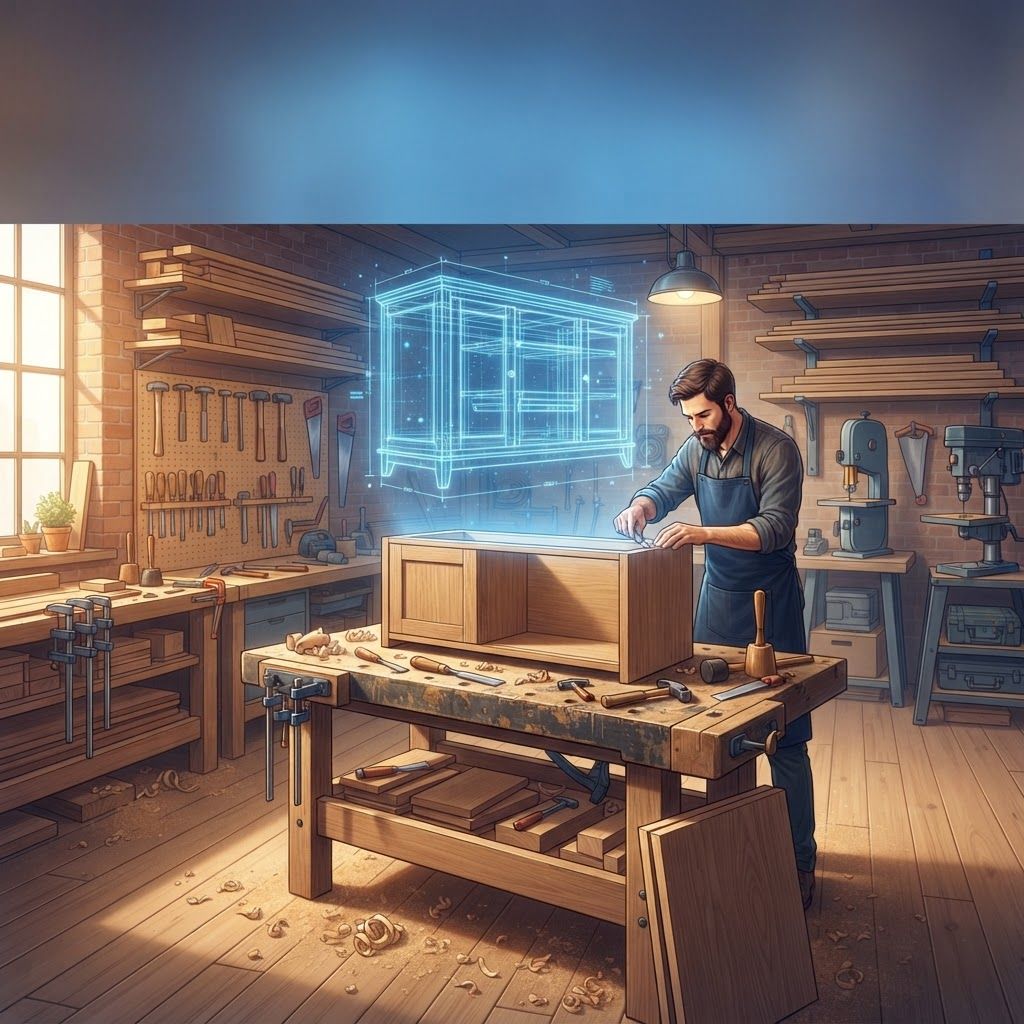
Carpentry and Joinery: Two Related but Distinct Trades
People use the words interchangeably, but the distinction is useful when hiring. Carpentry is generally site-based work: roof framing, floor joists, studwork, staircase installation, door hanging, skirting and architrave, decking and timber structures. Joinery is workshop-based manufacture: doors, windows, staircases, fitted furniture, panelling and cabinetry, produced to measure and then installed. Structural carpentry sits at the heavier end, dealing with load-bearing timber, and heritage timber-frame work is a specialism of its own, involving traditional jointing, scarf repairs and green oak.
Stratford-on-Avon is an exceptional place for this trade precisely because it needs all of it. The district's timber-framed buildings require conservation carpenters who can cut a mortise and tenon by hand and splice a decayed post without replacing the whole frame. Its Victorian and Georgian properties need joiners capable of reproducing period mouldings, sash windows and panelled doors. Its modern housing needs efficient site carpenters for roofs, floors and second-fix work. And its affluent residential market sustains a healthy demand for bespoke fitted furniture that no flat-pack alternative can match.
How to Choose a Carpenter or Joiner
Match the discipline to the task. A first-fix site carpenter and a fine cabinetmaker are both skilled, but they are not substitutes. Ask to see photographs of directly comparable work: if you want a curved handrail, look for a curved handrail in the portfolio.
Ask about materials in specific terms. Timber species, grade, moisture content and finish all determine how the work performs. Kiln-dried hardwood behaves differently from green oak, which will move and check as it dries, entirely normally but surprising if nobody explained it. For external joinery, ask about the timber species, whether the joints are engineered to shed water, and what coating system is specified, since maintenance intervals differ enormously.
For structural work, check that the design has been calculated where required, because roof and floor framing, beams and load-bearing alterations are engineered elements subject to building regulations. For fitted furniture, ask whether the work is manufactured in a workshop with proper machinery or assembled on site, and check the carcass material, edge treatment, hinge and runner quality. Finally, expect a written quotation with a clear scope, a lead time for workshop manufacture, and a warranty on both materials and workmanship.
The Ten Best Carpentry Services in Stratford-on-Avon
1. Avon Valley Carpentry & Joinery. A broad-capability business combining site carpentry with its own joinery workshop, covering roofs, floors, staircases, doors and bespoke fitted furniture. Being able to manufacture and install under one roof gives it a real advantage on projects where site conditions are irregular.
2. Shakespeare Timber Frame Restoration. Conservation carpenters specialising in historic oak frames: hand-cut joints, scarf and splice repairs to decayed posts and beams, peg fixings, and green oak extensions detailed sympathetically. This is among the most demanding and least common skill sets in the trade.
3. Stratford Bespoke Kitchens & Furniture. A cabinetmaking business producing handmade kitchens, wardrobes, media units, libraries and alcove furniture. Its work is designed around the actual dimensions of the room, which is why bespoke furniture fits older houses so much better than modular systems.
4. Warwickshire Structural Carpentry. Focused on the heavy end: roof carpentry, cut roofs and trussed roof erection, floor structures, structural openings with engineered timber, loft conversion framing and timber-frame erection. Works closely with structural engineers and building control.
5. Riverside Staircase Specialists. Designs and manufactures staircases, from traditional oak flights with turned spindles to contemporary open-tread designs with glass balustrades. Staircases involve exacting geometry and regulation compliance on rise, going, headroom and guarding, so specialist manufacture is well worth it.
6. Clopton Sash Window Restoration. A period window specialist repairing and reinstating box sash windows: splicing rotten sills and cills, replacing cords and weights, draught-proofing, and fitting slim double-glazed units where consent permits. Repairing original windows almost always outperforms replacement in both character and longevity.
7. Bridgetown Door Hanging & Second Fix. A second-fix specialist handling internal and external doors, ironmongery, fire door installation and certification, skirting, architrave, dado and picture rails, and window boards. Precise second-fix carpentry is the most visible measure of build quality in a finished house.
8. Avonside Garden Structures & Decking. Builds external timber work: decking, pergolas, oak-framed garden rooms, car ports, sheds, fencing and raised planters. Its emphasis on ground contact detailing, ventilation beneath decking and appropriate fixings is what determines whether external timber lasts five years or twenty-five.
9. Henley Street Fine Joinery. A high-end joinery workshop producing panelling, library shelving, bespoke internal doors, window seats and reproduction period mouldings matched to existing profiles. Frequently appointed on heritage and high-specification refurbishment projects.
10. Alcester Road Carpentry Services. A reliable general carpenter covering everyday needs: shelving, flooring, loft hatches and ladders, cupboard repairs, worktops, garden gates and small structural repairs. The sensible choice for the many jobs that need competence rather than craftsmanship.
Trends in Carpentry and Joinery
Timber is enjoying a resurgence on environmental grounds, since responsibly sourced wood is a low-carbon structural material that stores carbon for the life of the building. That has strengthened interest in timber frame construction, cross-laminated and engineered timber, and oak-framed extensions. Second, there is a clear preference for repair over replacement, particularly in windows, doors and floors, driven both by conservation thinking and by the recognition that original joinery was often made from slower-grown, more durable timber than modern equivalents. Third, digital design and CNC machining have improved precision and shortened lead times in workshop joinery, while hand skills remain essential for heritage repair. Fourth, fire door compliance has become a significant area of work in flats and commercial premises, requiring correctly certified doors, frames, seals and ironmongery installed by competent fitters.
Getting the Best Result From Your Carpenter
Provide clear dimensions and, where possible, drawings or reference images, and be honest about your budget so the carpenter can propose an appropriate specification rather than guessing. Understand lead times: bespoke joinery is manufactured to order, and a kitchen or staircase may take several weeks in the workshop before installation begins. Plan the sequence carefully, since joinery installation should follow plastering and precede final decoration, and floors are usually best laid after messy trades have finished.
For external timber, agree the maintenance regime up front and follow it, because most external joinery fails through coating neglect rather than material defect. For structural work, keep the engineer's calculations and building control approvals with your property documents. And accept that natural timber moves. Small seasonal changes, minor checking in oak and slight movement in wide boards are characteristics of the material, not defects, and a good carpenter will explain this before you notice it yourself.
Final Thoughts
Few districts sustain the breadth of carpentry skill found in Stratford-on-Avon, from hand-cut oak frame repair to precision fitted furniture and heavy structural framing. Identify which discipline your project actually needs, review comparable completed work, agree specification and lead times in writing, and you will get timber work that improves the building for decades rather than years.
Want your brand featured in front of decision-makers? Publish a guest post or get a link insertion in our guides through AAMAX's guest post and link insertion service.
Helpful Links
 SponsoredAAMAX — Full-Service Digital Agency
Write for Us
Share your expertise with our readers. We welcome guest contributions from industry specialists.
Pitch your idea