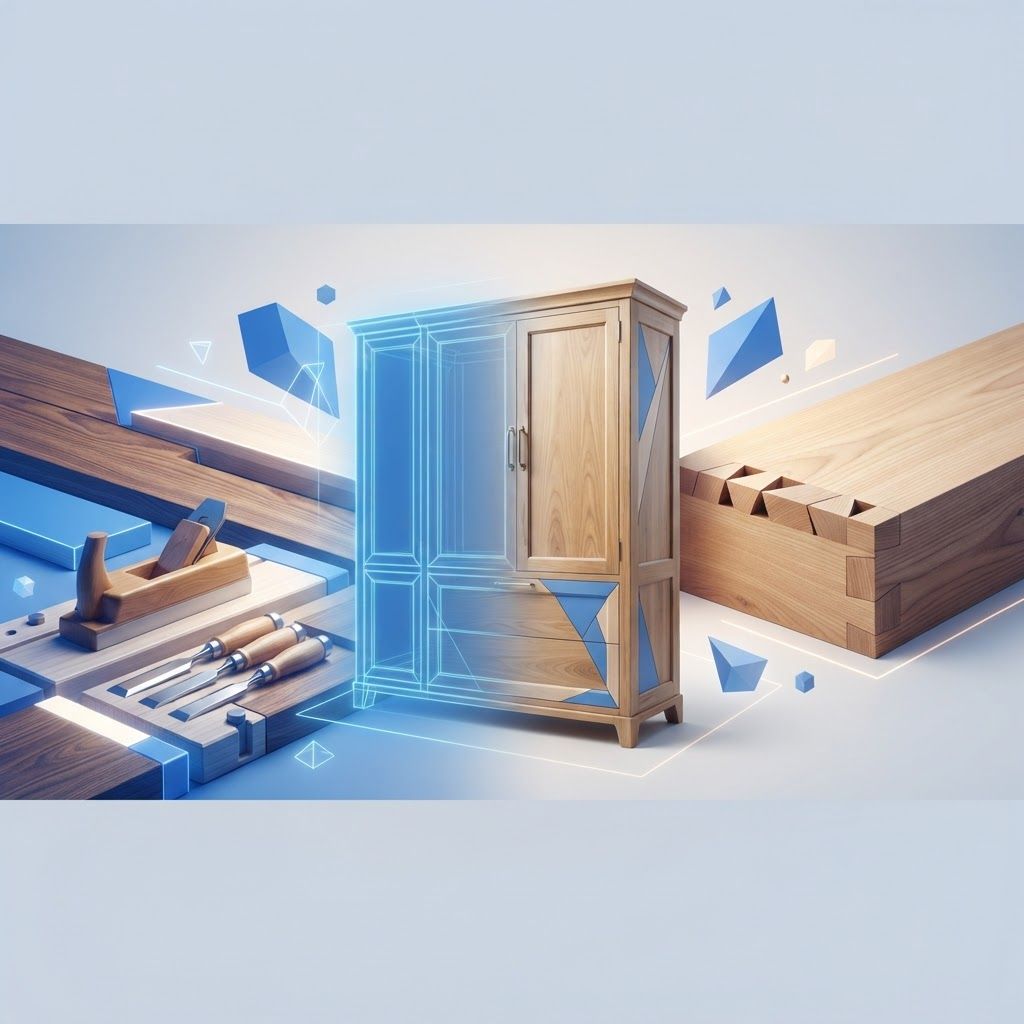
Carpentry and Joinery: A Meaningful Distinction
The two terms are often used interchangeably, but the trades differ. Carpentry is site-based timber work: roof structures, floor joists, stud partitions, staircase installation, door hanging, skirting and architrave fixing, and structural timber repair. Joinery is workshop-based manufacture: making windows, doors, staircases, cabinetry and fitted furniture that is then installed on site. First-fix carpentry happens before plastering; second-fix carpentry delivers the visible finish.
In Richmond upon Thames both are in constant demand. The borough's period housing requires structural timber repair, sash window restoration and replication of original mouldings, while its high property values support substantial investment in bespoke fitted furniture, media walls, alcove cabinetry, wardrobes and home offices. Loft conversions and extensions generate continuous structural carpentry work.
What Distinguishes Skilled Carpenters
Precision is the obvious marker. Well-executed carpentry shows tight, consistent joints, scribed rather than caulked junctions where walls are uneven, mitres that close cleanly, doors that hang with even margins and latch without adjustment, and fixings that are concealed or consistently placed. Poor carpentry is visible immediately to anyone who looks at reveals and returns.
Material knowledge is less visible but equally important. Timber moves with humidity, and a carpenter who ignores this produces work that cracks, gaps or binds within a season. Understanding the difference between kiln-dried and air-dried stock, choosing quarter-sawn timber where stability matters, allowing for expansion in panel construction, and selecting appropriate species for internal versus external use all separate craftsmen from fitters.
Structural competence is a further dimension. Carpenters undertaking roof work, floor strengthening or loft conversions must understand load paths, notching and drilling limits in joists, appropriate use of engineered timber such as glulam and laminated veneer lumber, and the interface with structural steel. Work of this kind should follow an engineer's design, and good carpenters read and query drawings rather than improvising.
Carpentry Providers in the Borough
Richmond upon Thames is served by a mix of independent craftsmen, joinery workshops and building firms with in-house carpentry teams. Bespoke joinery workshops across south west London manufacture fitted furniture, kitchens and staircases to order, and their capability is best judged by visiting the workshop and inspecting completed pieces rather than by photographs.
For period property work, specialist sash window restoration companies operate throughout the borough, repairing rather than replacing original windows. This is significant because in conservation areas and listed buildings replacement is frequently not permitted, and well-executed repair with draught sealing and slim double-glazed or secondary glazing achieves substantial performance improvement while retaining original fabric. Firms specialising in this niche have grown considerably as conservation policy has tightened.
Independent carpenters based in Twickenham, Teddington, Hampton, East Sheen and Richmond handle the everyday volume of door hanging, flooring, decking, garden structures, shelving, alcove units and second-fix work. Many are sole traders with long local reputations, and their work often reaches a standard that larger operations struggle to match because the same pair of hands does everything.
Popular Carpentry Projects Locally
Fitted alcove cabinetry either side of a chimney breast is among the most requested projects in Victorian and Edwardian houses, because it converts awkward recesses into useful storage while looking original. Executed well, with correct panel proportions and mouldings matched to existing joinery, it appears as though it was always there. Executed badly, with visible gaps and mismatched profiles, it diminishes the room.
Loft conversions require substantial carpentry: new floor structure, dormer framing, stud partitions, staircase installation and eaves storage. Staircase geometry is tightly regulated for rise, going and headroom, and fitting a compliant stair into a period house often demands ingenuity.
Garden carpentry is another strong local market, encompassing hardwood decking, pergolas, garden offices, bin stores, fencing and gates. Since the growth in home working, insulated garden studios have become a substantial category, requiring carpentry, insulation, electrical supply and weatherproof detailing.
Materials and Sustainability
Timber is a renewable material with low embodied carbon relative to steel and concrete, and its use is increasingly favoured for that reason. Certification through the Forest Stewardship Council or the Programme for the Endorsement of Forest Certification provides assurance of responsible sourcing, and clients increasingly request it.
Engineered products have expanded the trade's capability. Cross-laminated timber and structural insulated panels appear in higher-specification projects. Birch plywood with exposed edges has become fashionable in contemporary fitted furniture. Meanwhile, reclaimed timber is popular both aesthetically and environmentally, though it requires careful assessment for nails, moisture content and infestation before reuse.
Finishes matter as much as substrate. Water-based lacquers, hardwax oils and low-VOC paints have largely replaced solvent-heavy alternatives, improving air quality during and after installation. Good joiners advise on finish selection according to wear expectation rather than defaulting to one product.
Specifying and Judging Bespoke Work
Successful bespoke joinery begins with clear specification: material and species, construction method, whether carcasses are plywood or MDF, drawer runner and hinge quality, edge and moulding profiles, and finish type. Hardware quality is a frequent differentiator, since soft-close runners and adjustable concealed hinges from reputable manufacturers outlast budget alternatives considerably.
Expect a survey and, for complex pieces, drawings for approval before manufacture. Understand lead times, since workshop-made items cannot be compressed. Payment is commonly staged with a deposit for materials, and this is reasonable for bespoke manufacture provided the amount is proportionate and the agreement is written.
When judging finished work, inspect the parts that are easy to neglect: the back of a cabinet, the inside of a drawer, the junction where a unit meets an uneven wall, the consistency of grain direction across adjacent doors. Craftsmen attend to these; fitters do not.
Conclusion
The best carpentry services in Richmond upon Thames span structural timber competence and fine bespoke joinery, and the strongest practitioners understand both timber behaviour and the architectural language of the borough's period housing. Specifying clearly, inspecting previous work in person and valuing precision over speed remain the most reliable ways to secure joinery that looks right and lasts.
Want your brand featured in front of decision-makers? Publish a guest post or get a link insertion in our guides through AAMAX's guest post and link insertion service.
Helpful Links
 SponsoredAAMAX — Full-Service Digital Agency
Write for Us
Share your expertise with our readers. We welcome guest contributions from industry specialists.
Pitch your idea