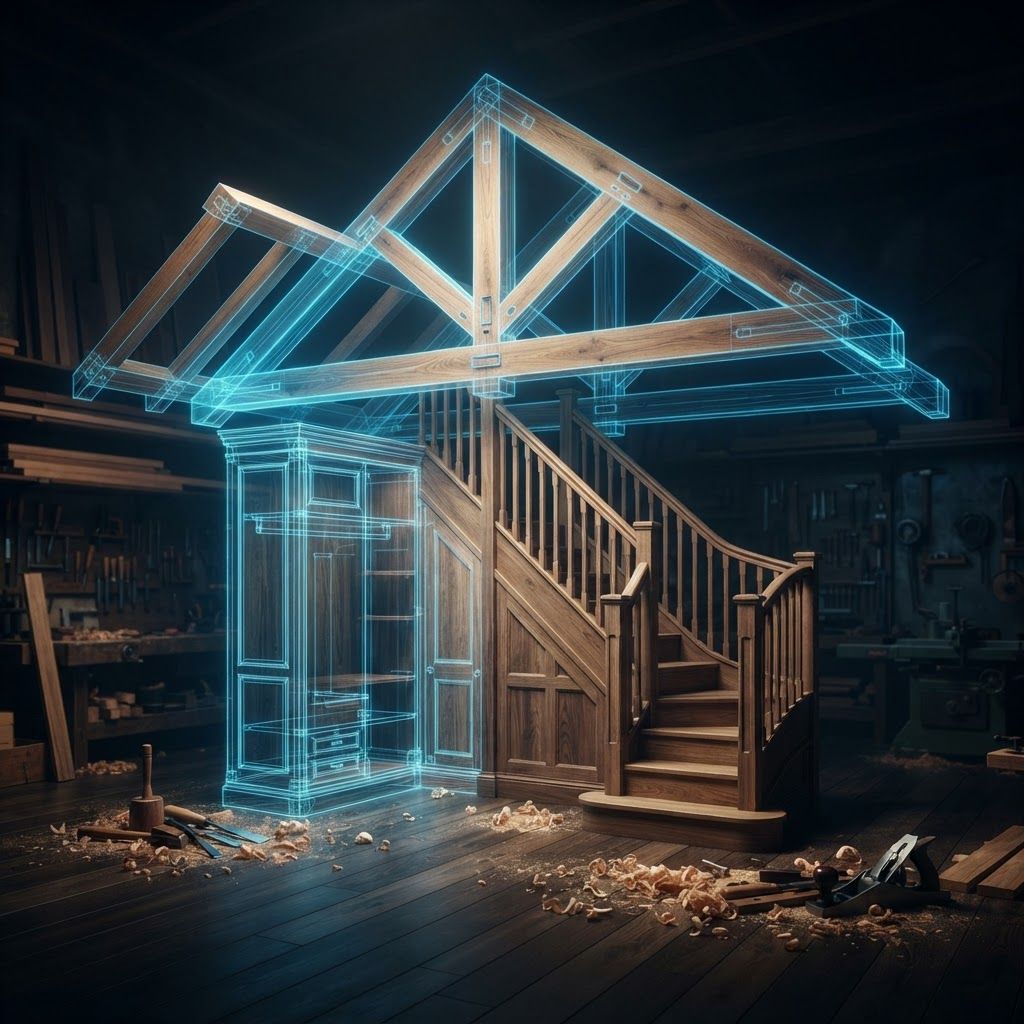
Carpentry, Joinery and Why the Distinction Matters
Carpentry and joinery are often used interchangeably, but they describe different disciplines. Site carpentry, sometimes called first fix, is structural and includes floor joists, roof trusses, stud partitions, door linings and staircase installation. Second fix carpentry covers the visible finishing work: skirting, architrave, doors, ironmongery and trim. Joinery is workshop-based manufacture, producing windows, doors, staircases, fitted furniture and bespoke items that are then installed on site.
Understanding which you need is the first step in hiring well. A superb site carpenter may have no workshop capability, and an outstanding bench joiner may not be the right person to install a complex roof. The strongest firms in Portsmouth either specialise clearly or maintain genuinely separate teams for each discipline.
Why Portsmouth Carpentry Has a Heritage Dimension
Portsmouth's dense Victorian and Edwardian housing means a large share of local carpentry work involves working with, matching or repairing original timber. Sash windows, panelled doors, moulded skirtings, staircases with turned balusters, picture rails and decorative architrave are everywhere in the city's terraces, and replacing them with generic modern profiles noticeably diminishes a property's character and value.
That has created strong local demand for carpenters who can replicate historic mouldings, splice and repair rather than replace, and overhaul sash windows so they operate properly with improved draught sealing. Coastal exposure adds a further consideration, since salt air and driving rain attack external timber aggressively, making species selection, detailing and finishing systems genuinely important rather than a matter of preference.
Ten Carpentry and Joinery Services in Portsmouth
1. Southsea Bespoke Joinery. A workshop-based joinery firm producing made-to-measure furniture, alcove shelving, window seats, wardrobes and staircases. Southsea Bespoke Joinery is frequently engaged in period homes where standard sizes simply do not fit, and its ability to match existing mouldings is a significant draw.
2. Portsea Carpentry Contractors. Focused on structural site carpentry, this firm handles roof construction, floor structures, stud work, loft conversion carcassing and timber frame erection. It works extensively as a subcontractor to local main contractors, which is usually a good indicator of reliability and pace.
3. Old Portsmouth Heritage Woodwork. Specialising in restoration, this company undertakes sash window overhaul, door repair, panelling restoration, staircase repair and moulding replication for listed and conservation-area properties. Its approach favours careful repair over replacement, which is both more sympathetic and often more economical than it first appears.
4. Harbour Kitchen and Fitted Furniture. Concentrating on fitted kitchens, utility rooms, boot rooms and media walls, Harbour Kitchen and Fitted Furniture designs and manufactures in-house. Working directly with a joiner rather than through a retailer typically produces better use of awkward spaces and a more durable carcass construction.
5. Fratton Doors and Windows. This joinery specialist manufactures timber windows and doors, including traditional box sash and casement designs suitable for period properties and conservation areas. It uses engineered timber and modern finishing systems to improve durability in the city's exposed coastal conditions.
6. Gunwharf Commercial Joinery. Serving the commercial fit-out market, Gunwharf Commercial Joinery produces reception desks, retail display units, bar and restaurant fittings, and office storage. Commercial joinery demands fire-rated materials, durable finishes and tight programme adherence, and the firm is set up for that environment.
7. Milton Staircase Works. A niche specialist in staircase design, manufacture and installation, including replacement stairs for loft conversions, open-tread designs, glass balustrades and repair of original staircases. Stairs combine structural, regulatory and aesthetic demands, and dedicated expertise shows in the result.
8. Hilsea Decking and Outdoor Carpentry. Focused on external timber work, this firm builds decking, pergolas, garden rooms, fencing and cladding. In a coastal environment, its emphasis on ventilated construction, stainless fixings and appropriate timber treatment materially extends the life of outdoor structures.
9. Eastney Second Fix Carpentry. Specialising in finishing carpentry, Eastney Second Fix Carpentry installs doors, skirtings, architraves, ironmongery, cupboards and trim. This is the work most visible to occupants, and precision here is what makes a completed renovation feel professionally finished rather than merely complete.
10. Landport Timber Solutions. Offering a broad service across structural repair, timber decay treatment, joist replacement and floor renewal, Landport Timber Solutions frequently works alongside damp specialists where wet rot or beetle infestation has affected structural timber. Its diagnostic approach avoids unnecessary wholesale replacement.
Trends in Carpentry and Joinery
Sustainability has raised the profile of timber generally. As a low-embodied-carbon structural material, timber is increasingly favoured in extensions and small buildings, and responsibly certified sourcing is now an expectation rather than a bonus. Engineered timber products offer better dimensional stability than solid softwood, which is particularly useful for external joinery in coastal conditions.
Digital manufacturing has reached even small workshops. Computer-controlled machining allows accurate replication of historic mouldings, efficient production of fitted furniture components and precise cutting of complex joinery, combining traditional design with modern consistency.
Demand for bespoke fitted storage continues to grow as homeowners in space-constrained Portsmouth housing look to use every alcove, chimney breast recess and under-stair void. Meanwhile, sash window restoration with slim double glazing or secondary glazing has become a popular alternative to replacement, satisfying both conservation requirements and thermal comfort.
Commissioning Carpentry Work Well
Provide clear dimensions and, for bespoke items, discuss materials, finishes and hardware in detail before manufacture begins. Ask to see examples of previous work in person if possible, since photographs conceal a great deal about finish quality and joint precision.
For structural carpentry, confirm that the work will comply with the relevant structural design and building regulations, particularly for loft conversions and roof alterations where joist sizing and fire separation matter. For external work, ask specifically about timber species, treatment, fixing metallurgy and the finishing system, because these determine whether the work lasts five years or twenty-five in Portsmouth's climate.
Finally, allow realistic lead times for bespoke joinery. Workshop-made items cannot be rushed without compromising quality, and the best joiners are usually booked well ahead. Building that time into your programme is far better than settling for off-the-shelf components that will never quite fit.
Want your brand featured in front of decision-makers? Publish a guest post or get a link insertion in our guides through AAMAX's guest post and link insertion service.
Helpful Links
 SponsoredAAMAX — Full-Service Digital Agency
Write for Us
Share your expertise with our readers. We welcome guest contributions from industry specialists.
Pitch your idea