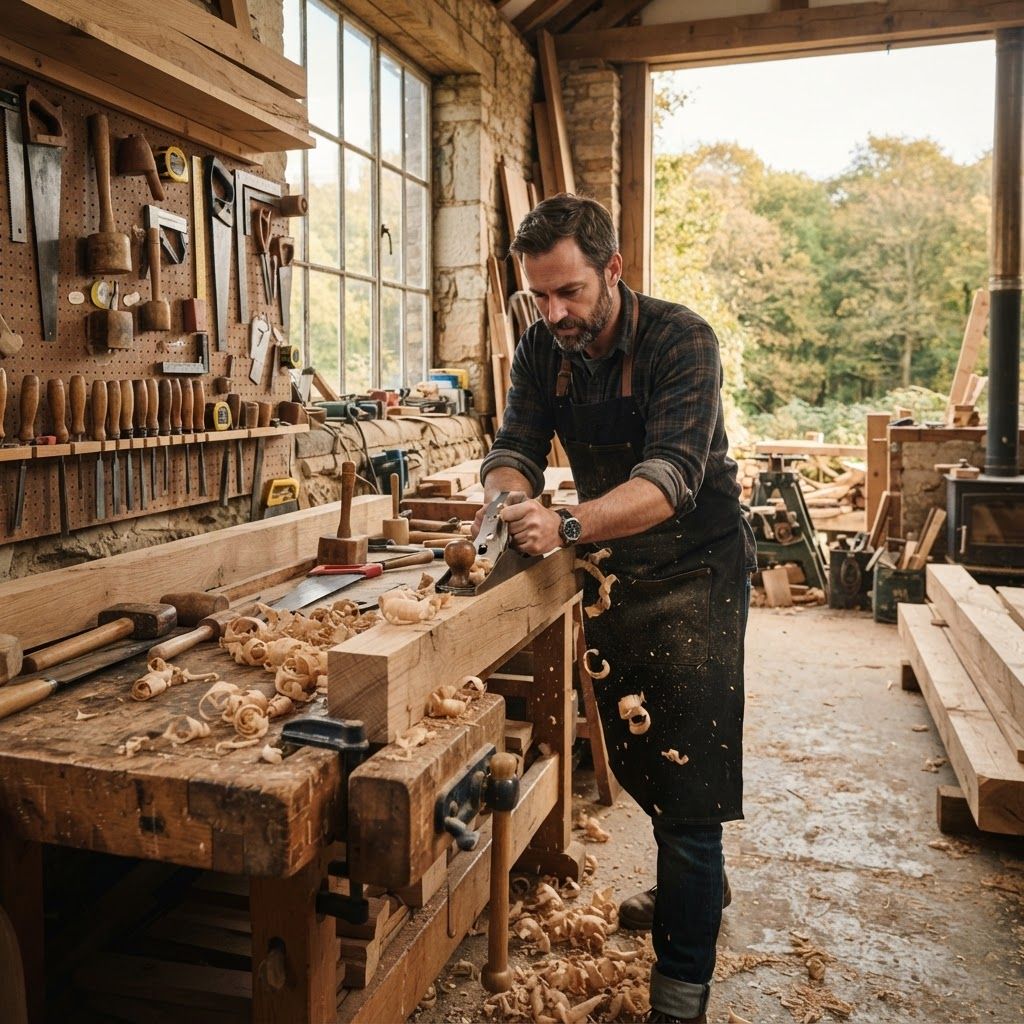
The Breadth of the Carpentry Trade
Carpentry is frequently misunderstood as a single trade when it actually covers several distinct disciplines. First-fix carpentry involves structural work completed before plastering: floor joists, roof timbers, stud partitions, door linings and window frames. Second-fix carpentry covers everything installed after plastering: skirting, architrave, doors and ironmongery, staircases, cladding and shelving. Joinery refers to the manufacture of timber components, usually in a workshop, including bespoke furniture, windows, doors and staircases.
Each requires different skills. A superb structural carpenter is not automatically a fine cabinetmaker, and a skilled joiner may have limited site experience. Understanding which discipline a project needs is the first step to appointing well.
Carpentry in Epping Forest
The district's building stock creates unusually varied demand. Period properties in Loughton, Buckhurst Hill and the rural parishes need sash window repair, staircase restoration, panelling and moulding reproduction, and structural timber repair where decay or beetle damage has occurred. Larger homes in Chigwell and Theydon Bois generate substantial bespoke joinery work: fitted wardrobes, libraries, media walls, boot rooms and kitchens.
Across the district, extension and loft conversion activity keeps structural carpenters busy with roof construction, floor strengthening and partition work. Garden rooms and outbuildings, now a mainstream request following the shift to home working, combine structural framing, cladding and joinery in a single compact project.
Structural Carpentry
Roof carpentry remains the most technically demanding site work. Cut roofs, where rafters, purlins and ridge are formed on site, require geometry skills that trussed roofs do not. Loft conversions frequently involve modifying existing roof structures, forming dormers and installing new floor structures capable of carrying habitable loads, all of which must follow engineer-designed details.
Floor construction, whether traditional joists, engineered I-joists or metal web systems, requires attention to notching and drilling limits, adequate support, strutting and deflection control. Squeaking, bouncing floors are almost always the result of inadequate specification or poor fixing rather than material failure.
Bespoke Joinery and Fitted Furniture
Fitted furniture is where local joiners most clearly demonstrate skill. The value of bespoke work over flat-pack alternatives lies in fitting to the actual space, which in the district's period properties means walls that are neither straight nor plumb, floors that slope and ceilings that vary in height. Skilled joiners scribe components to these irregularities rather than filling gaps.
Material choice matters. Solid hardwood offers durability and the ability to be refinished but moves with humidity. Veneered boards offer stability and consistent appearance. Painted finishes on MDF suit traditional interiors well and allow complex moulding profiles. A good joiner explains these trade-offs rather than defaulting to one approach.
Kitchen joinery has grown as a premium alternative to supplied units, with handmade cabinetry, in-frame construction and bespoke pantries and islands offering a level of fit and durability that mass-produced kitchens cannot match.
Period Restoration
Conservation carpentry is a valuable specialism in this district. Sash window restoration, reinstating cords, weights and parting beads, replacing decayed cills and bottom rails with matched timber, and draught-proofing without compromising operation, is almost always preferable to replacement on period properties, and is frequently required in conservation areas.
Other heritage work includes staircase repair, replicating turned balusters and moulding profiles, structural timber splicing where beam ends have decayed, and reinstating panelling and architectural mouldings. This work requires patience, an eye for profile matching and knowledge of traditional jointing methods.
Doors, Staircases and Second Fix
Second-fix quality is what occupants notice daily. Doors must be hung with consistent gaps, correct clearance and properly fitted ironmongery. Fire doors, increasingly required in loft conversions and multi-storey homes, must be installed with correct intumescent strips, hinge specification and gap tolerances to perform as tested.
Staircases must comply with regulations covering rise, going, headroom, balustrade height and gap limits. Bespoke staircases in oak, glass and steel combinations are a growing high-end request across the district, requiring careful structural design alongside the joinery.
External Carpentry and Garden Structures
Outside work includes timber cladding, decking, pergolas, fencing, gates, garden rooms and summer houses. Durability depends on species selection, appropriate treatment, detailing that allows drainage and ventilation behind cladding, and stainless or appropriately coated fixings. In a district with heavy tree cover and consequently damp, shaded gardens, ventilation detailing matters considerably more than in exposed sunny locations.
Sustainability and Materials
Timber is inherently the most sustainable mainstream construction material, sequestering carbon and requiring low processing energy. Responsibly certified sourcing is now expected, and increasing numbers of local joiners work with reclaimed timber, which offers character and environmental credentials, though it requires careful checking for nails, moisture content and stability.
Engineered timber products including glulam, laminated veneer lumber and cross-laminated timber are appearing more often in domestic projects, offering greater spans and dimensional stability than solid sections.
Choosing a Carpenter or Joiner
Assess the specific discipline required and look for evidence of comparable work. Photographs help, but inspecting completed work in person reveals joint quality, scribing accuracy, consistency of gaps and finish standard far better. Ask whether components are made in a workshop or on site, since workshop manufacture generally produces better accuracy for furniture and doors.
Expect a detailed quotation specifying timber species, board grades, finishes and ironmongery, along with a realistic lead time for bespoke work. Check insurance, and for structural work confirm the carpenter will work to engineer's details and accommodate building control inspection.
Final Thoughts
The best carpentry services in Epping Forest pair genuine craft with practical understanding of the district's period buildings and irregular spaces. Whether the work is a roof structure that will never be seen or a fitted wardrobe used every day, well-executed carpentry is among the most durable and satisfying investments a property owner can make.
Want your brand featured in front of decision-makers? Publish a guest post or get a link insertion in our guides through AAMAX's guest post and link insertion service.
Helpful Links
 SponsoredAAMAX — Full-Service Digital Agency
Write for Us
Share your expertise with our readers. We welcome guest contributions from industry specialists.
Pitch your idea