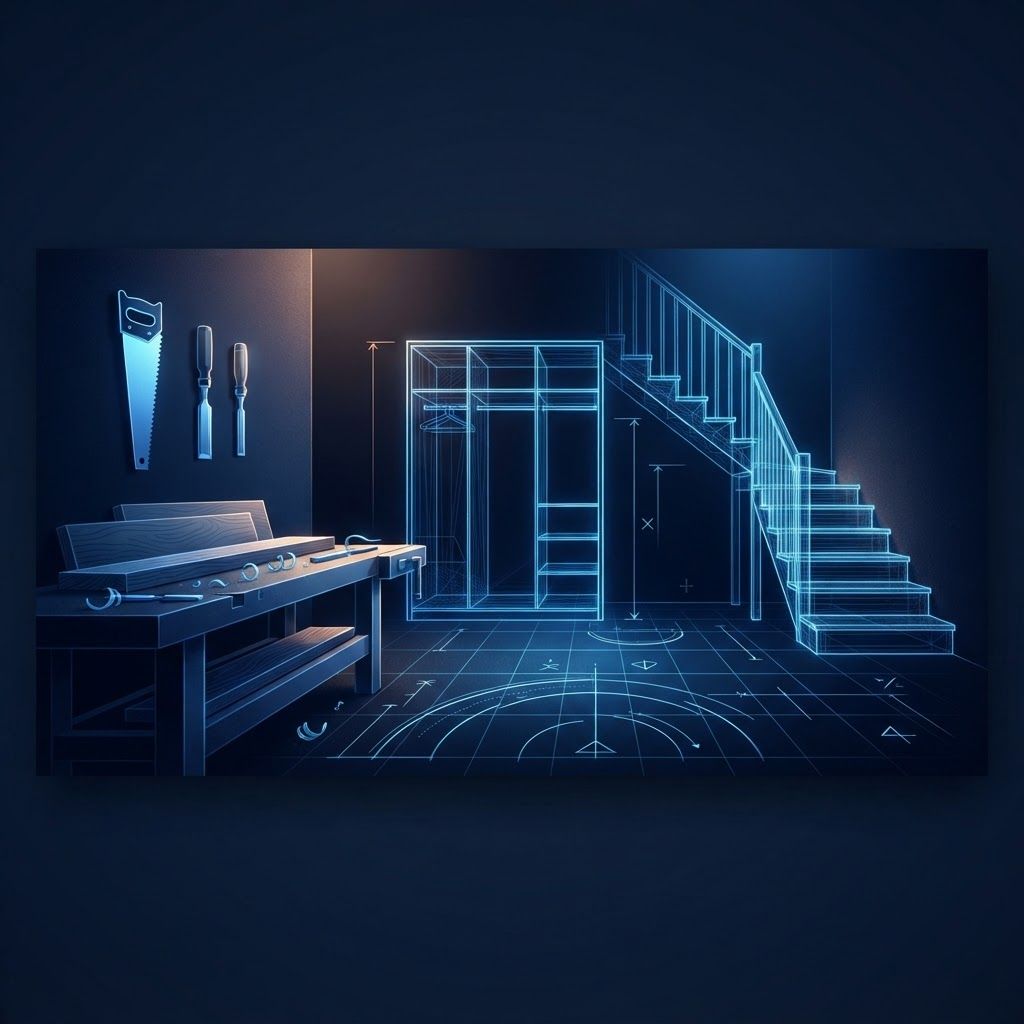
The Enduring Value of Good Carpentry
Carpentry is one of the oldest construction trades and remains among the most visible. Where plumbing and wiring are concealed, carpentry is on permanent display: a staircase, a fitted wardrobe, a kitchen, a set of doors. Poor work announces itself through uneven gaps, doors that catch and joints that open as timber moves. Good work quietly lasts for decades.
Dartford supports a healthy carpentry sector because its housing stock demands it. Period terraces need sash window repair and skirting to match original profiles. Awkward Victorian alcoves suit bespoke shelving far better than off-the-shelf units. Newer homes at Ebbsfleet and Stone generate demand for fitted storage, garden rooms and home office installations.
1. Darent Carpentry and Joinery
Darent Carpentry and Joinery offers both site carpentry and workshop-made joinery. The combination means a client can have structural work, doors and bespoke cabinetry handled by one team, with consistent detailing throughout the property.
2. Crayford Bespoke Joinery
Crayford Bespoke Joinery manufactures made-to-measure furniture: alcove units, media walls, window seats, libraries and dressing rooms. Its workshop produces components to fine tolerances before installation, which delivers a standard of finish rarely achievable working entirely on site.
3. Thameside Structural Carpentry
Thameside Structural Carpentry handles first-fix work: floor joists, roof timbers, stud partitions, trussed rafters and loft conversion structures. This is the carpentry nobody sees, and it determines whether floors feel solid and walls stay straight.
4. Stone Crossing Staircase Company
Staircases combine geometry, structure and craftsmanship. Stone Crossing Staircase Company designs and installs new stairs, replaces balustrades and renovates existing flights, working within the regulations governing rise, going, headroom and guarding that apply to any staircase alteration.
5. Wilmington Window and Door Joinery
Timber windows and doors have returned to favour, particularly in conservation areas where replacement plastic units are unsuitable. Wilmington Window and Door Joinery manufactures traditional sash and casement windows and repairs original frames rather than replacing them wholesale.
6. Greenhithe Kitchen Carpentry
Greenhithe Kitchen Carpentry builds and installs fitted kitchens, including handmade painted cabinetry and solid timber worktops. Installing in older properties requires skill, since few walls are square and few floors are level; scribing units accurately is what separates a good fit from a poor one.
7. Joyce Green Garden Rooms and Timber Structures
Demand for garden offices, studios and workshops has grown significantly. Joyce Green Garden Rooms and Timber Structures builds insulated, weatherproof outbuildings, handling base construction, framing, cladding, glazing and internal fit-out.
8. Temple Hill Second Fix Carpentry
Temple Hill Second Fix Carpentry specialises in the finishing stage: hanging doors, fitting architrave and skirting, installing ironmongery, boxing pipework and building fitted storage. Precision at this stage largely determines how finished a renovation feels.
9. Bean Valley Heritage Carpentry
Bean Valley Heritage Carpentry works on older and listed buildings, undertaking timber frame repair, spliced joints, oak pegging and the replication of historic mouldings. Conservation work prioritises repair over replacement and traditional jointing over modern fixings.
10. Hesketh Fine Woodworking
Hesketh Fine Woodworking completes the list with furniture-grade commissions: veneered panelling, curved joinery, reception counters and one-off pieces. Projects at this level blur the boundary between carpentry and cabinetmaking.
Carpenter, Joiner or Cabinetmaker?
The terms are often used interchangeably but describe different work. A carpenter typically works on site, fitting timber into the building. A joiner works in a workshop, making components such as doors, windows and staircases. A cabinetmaker produces fine furniture to the tightest tolerances. Knowing which you need helps you brief the right business and avoid paying workshop rates for site work or vice versa.
Materials and Their Behaviour
Softwood is economical and suits structural and painted work, provided it is properly dried and treated where exposed. Hardwoods such as oak and ash offer durability and appearance for stairs, worktops and exposed furniture. Engineered boards, including birch plywood and quality MDF, are dimensionally stable and ideal for painted cabinetry where solid timber would move seasonally.
Moisture content is the detail most often overlooked. Timber installed too wet will shrink and open joints; timber installed too dry in a humid space will swell and bind. Experienced carpenters acclimatise material before fixing it, particularly with flooring and solid doors.
Judging Quality
Look at consistency of gaps around doors and drawers, alignment of grain and mouldings at corners, the neatness of scribes against uneven walls, and whether fixings are concealed or filled cleanly. Check that doors close without catching, that drawers run smoothly when loaded, and that painted surfaces have been properly prepared rather than covering rough machining.
Regulations Worth Knowing
Structural timber work, staircase alterations, loft conversions and changes affecting fire escape routes fall under building regulations. Fire doors must be installed with the correct intumescent seals and gaps to perform as intended, which is a common failing in converted flats. Work to listed buildings requires consent even for apparently minor joinery changes.
Trends in Carpentry
Bespoke storage continues to dominate domestic demand as households seek to use space more efficiently rather than move. Home working has sustained interest in garden rooms and built-in office furniture. On the sustainability side, responsibly sourced timber, engineered structural products and an emphasis on repair rather than replacement are all growing, helped by timber's favourable carbon profile compared with alternative materials.
Final Thoughts
Carpentry is a craft where experience shows immediately in the finished result. Ask to see completed work in person rather than only photographs, discuss materials and finishes in detail, and allow adequate lead time for anything workshop-made. Dartford's carpentry businesses cover everything from roof structure to fine furniture, and matching the specialist to the task produces far better value than hiring a generalist for everything.
Want your brand featured in front of decision-makers? Publish a guest post or get a link insertion in our guides through AAMAX's guest post and link insertion service.
Helpful Links
 SponsoredAAMAX — Full-Service Digital Agency
Write for Us
Share your expertise with our readers. We welcome guest contributions from industry specialists.
Pitch your idea