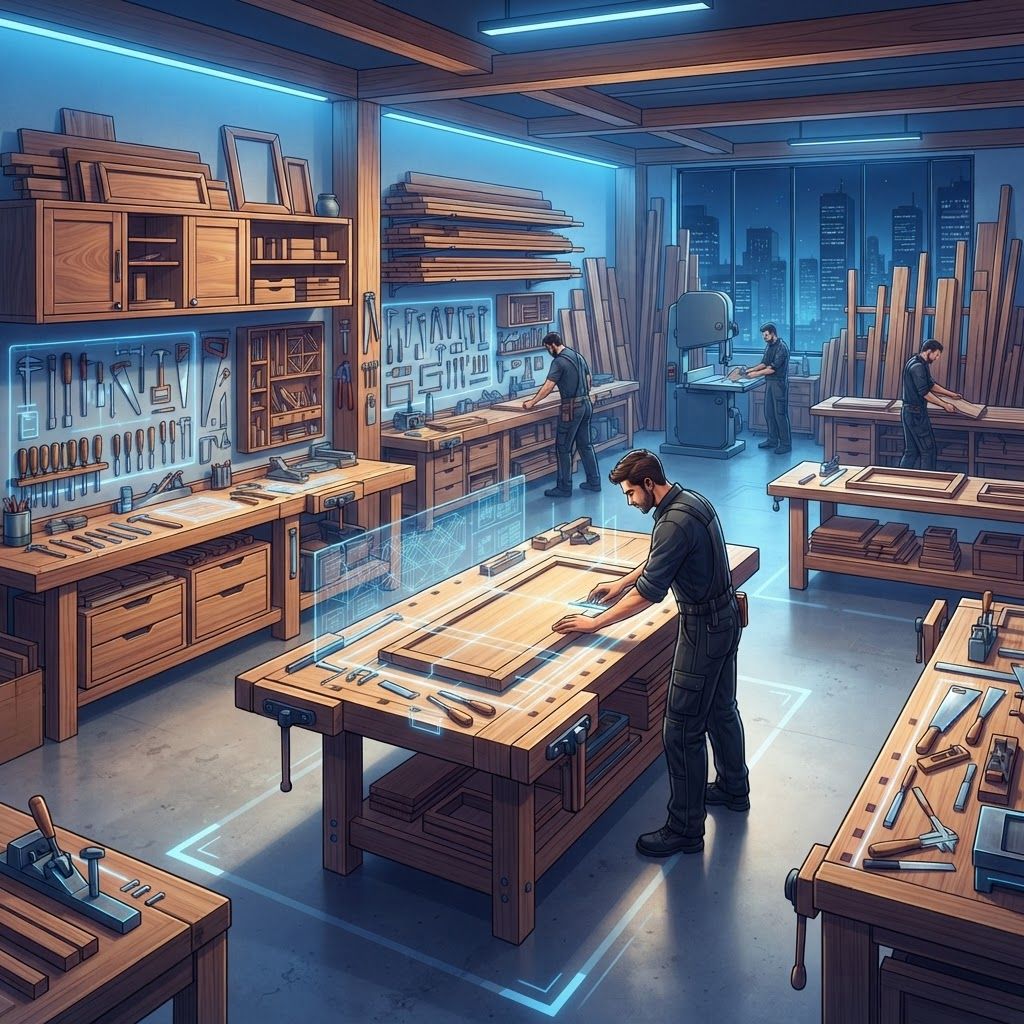
Carpentry and Joinery: Understanding the Difference
The terms are often used interchangeably, but the distinction is real and useful. Joiners traditionally work in a workshop, making timber components such as doors, windows, staircases, cabinetry and furniture using machinery and bench skills. Carpenters install and work with timber on site, fitting those components, constructing roof structures, studwork, floors and formwork.
Many businesses across Bracknell Forest do both, running a workshop while also providing site carpentry teams. Knowing which discipline your project needs helps you find the right specialist. A bespoke fitted alcove unit is joinery; a new roof structure is carpentry.
First Fix and Second Fix Carpentry
Site carpentry divides into two stages. First fix is the structural work carried out before plastering: floor joists and decking, stud partitions, roof trusses and cut roofs, door linings, window boards and noggins for fixings. Accuracy here determines how well everything that follows fits.
Second fix happens after plastering and includes hanging doors, fitting architrave and skirting, installing ironmongery, building staircases and balustrades, fitting kitchens and wardrobes, and installing cladding and panelling. Second fix is highly visible, so the tolerance for imprecision is minimal. Mitred architrave joints, consistent door gaps and perfectly level skirting are the marks of a good second fix carpenter.
The Range of Work Available Locally
Bespoke fitted furniture. This is the strongest growth area in Bracknell Forest's carpentry market. Alcove units either side of a chimney breast, floor-to-ceiling wardrobes in awkwardly shaped bedrooms, under-stairs storage, home office desks and shelving, and boot room and utility storage. Fitted furniture makes use of space that freestanding pieces waste, which matters in the borough's many compact estate homes.
Kitchens. Beyond flat-pack installation, skilled joiners build bespoke cabinetry, scribe units to out-of-square walls, fit solid timber and laminate worktops with precise mason's mitres, and construct islands and pantry units.
Staircases. Replacing or renovating a staircase transforms a hallway. Options range from replacing spindles and newel posts to constructing entirely new staircases in oak with glass or steel balustrades. Regulations govern rise, going, headroom and guarding, so competence matters.
Doors and windows. Hanging internal doors correctly, fitting fire doors to the required standard in loft conversions and flats, making and fitting bespoke external doors, and restoring or replicating timber sash and casement windows in older properties around Binfield, Winkfield and Crowthorne.
Structural timber work. Roof carpentry including cut roofs and dormers, floor structures, timber frame erection, and strengthening joists for loft conversions.
Exterior carpentry. Decking, pergolas, garden rooms and studios, cladding, fencing, gates and porches. Garden office demand has remained high across the Thames Valley as hybrid working has embedded.
Panelling and architectural detailing. Shaker panelling, tongue and groove, picture rails, dado rails and ceiling beams. Wall panelling has become extremely popular and, done properly with correctly proportioned framing and careful setting out, adds genuine character.
Heritage and restoration joinery. Repairing or replicating historic mouldings, splicing in new timber to repair rot rather than wholesale replacement, and matching original profiles on period homes.
Materials and Their Implications
Material choice significantly affects cost, appearance and longevity. Softwoods such as redwood and whitewood are economical and suit painted work and structural applications. Hardwoods including oak, ash, walnut and iroko offer durability and grain character for staircases, worktops and exposed furniture. Engineered boards such as MDF and plywood are dimensionally stable and ideal for painted fitted furniture, with moisture-resistant grades used in bathrooms and kitchens. Veneered boards combine the appearance of solid hardwood with better stability for large panels.
Sustainability is increasingly relevant. FSC and PEFC certification confirms timber comes from responsibly managed forests. Timber also stores carbon, making it one of the lower-impact structural materials available, which is why timber frame and cross-laminated construction are gaining ground.
Moisture content is a technical point worth understanding. Timber installed too wet will shrink and open joints; too dry and it may swell. Good joiners acclimatise materials in the property before installation.
Commissioning Bespoke Work Well
Start with clear references. Photographs of the style you want, whether shaker, flat slab, traditional moulded or contemporary handleless, remove ambiguity. Discuss the finish early: spray-painted finishes are smoother and more durable than brush application, and whether painting is included in the quote should be explicit.
Expect a site survey and template process for fitted work. Walls in older homes are rarely square or plumb, and a joiner who measures once from a rough sketch will produce units with visible gaps.
Understand lead times. Bespoke joinery requires workshop time, and good makers are booked ahead. A quoted timescale of several weeks is normal and usually a positive sign.
Clarify what is included: hinges and runners, handles, internal fittings such as drawers and hanging rails, scribing and filling, painting, and removal of the old units and waste.
Choosing the Right Carpenter
Look at completed work in person wherever possible. Photographs flatter; standing in a room and examining joints, consistency of gaps and quality of finish tells the truth.
Check qualifications and memberships. City and Guilds or NVQ qualifications in carpentry and joinery, and membership of the Institute of Carpenters or the Guild of Master Craftsmen, indicate formal competence. For fire door installation, specific third-party certification is important and increasingly demanded.
Confirm insurance and, for structural work, that building regulations approval will be obtained where required.
Ask about the workshop. Businesses with their own premises and machinery can offer genuine bespoke work; those subcontracting everything are effectively fitters, which is fine but should be understood.
Finally, judge communication. Bespoke carpentry is collaborative, and a maker who asks detailed questions about how you will use the space, what you need to store and how you want it to look is far more likely to deliver something you will value for decades.
Want your brand featured in front of decision-makers? Publish a guest post or get a link insertion in our guides through AAMAX's guest post and link insertion service.
Helpful Links
 SponsoredAAMAX — Full-Service Digital Agency
Write for Us
Share your expertise with our readers. We welcome guest contributions from industry specialists.
Pitch your idea