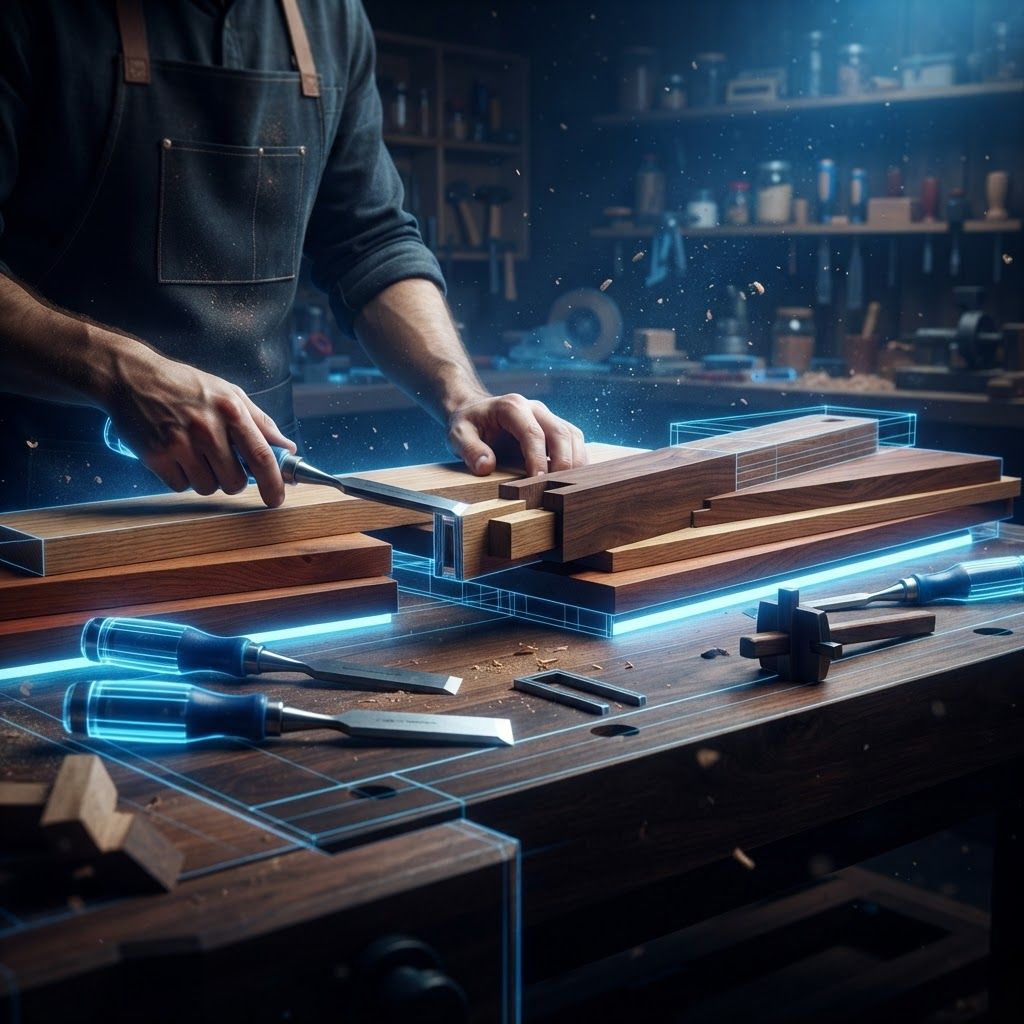
Carpentry's Place in Kent's Building Tradition
Kent has one of the richest timber-framed building traditions in England. Oak-framed halls, weatherboarded cottages and peg-tiled roofs on hand-cut timber structures remain common throughout the villages surrounding Ashford. That heritage sustains a carpentry sector with genuine depth, where traditional skills continue alongside modern engineered timber construction.
Carpentry divides broadly into two disciplines. First fix, or structural carpentry, covers the timber elements built into a structure: floor joists, roof framing, stud partitions and door linings. Second fix, or finish carpentry and joinery, covers everything visible: doors, skirting, architrave, staircases, fitted furniture and trim.
Structural and First Fix Carpenters
Structural carpenters install floor joists, engineered beams, wall plates, stud walls and roof structures. Accuracy here determines everything that follows: floors that are not level and walls that are not plumb create problems for every subsequent trade. Competent first fix carpenters work to setting-out lines rather than measuring from existing surfaces, and understand the load paths their work supports.
Roofing Carpenters and Truss Specialists
Roof carpentry ranges from installing prefabricated trusses to cutting complex roofs on site. Cut roofs, where rafters, purlins, hips and valleys are formed individually, allow full use of loft space and accommodate irregular plan shapes that trusses cannot. This requires genuine geometric skill in setting out bevels and lengths.
Truss installation demands correct bracing, which is frequently under-specified and is essential to the roof's stability against racking forces.
Second Fix and Finishing Carpenters
Finish carpentry is where quality becomes visible. Hanging doors with consistent margins, mitring architrave and skirting cleanly, scribing to uneven walls and fitting ironmongery precisely separate competent work from excellent work. Second fix carpenters also install shelving, boxing for services and window boards.
The mark of good finishing carpentry is that it looks effortless — joints closed, lines straight, and no reliance on filler to disguise poor cutting.
Bespoke Joinery Workshops
Joinery workshops manufacture items off site in controlled conditions: windows, doors, staircases, panelling and furniture. Working with machinery and jigs allows accuracy that hand tools on site cannot match. Ashford and the surrounding area support several workshops producing made-to-measure timber windows and doors, which are particularly valuable for period properties where standard sizes and profiles are unsuitable.
Kitchen Fitting Specialists
Kitchen installation is a carpentry discipline in its own right. Cabinets must be levelled precisely so that worktops sit true and doors align, appliance housings need accurate cut-outs, and end panels and plinths must be scribed to walls and floors that are rarely square. Experienced fitters also coordinate with plumbers and electricians so that services emerge in the right places before cabinets are fixed.
Staircase Manufacturers and Installers
Staircases are among the most technically demanding joinery items, governed by regulations covering rise and going dimensions, headroom, handrail height and balustrade gaps. Bespoke stair makers produce straight flights, winders and curved staircases in timber and combinations with glass and steel. Installation requires precise measurement of the opening, since a stair that does not fit cannot be adjusted easily.
Fitted Furniture and Wardrobe Makers
Built-in furniture maximises space in a way freestanding pieces cannot, particularly in older Ashford properties with awkward alcoves, chimney breasts and sloping ceilings. Makers survey the space, design storage around how it will actually be used and manufacture to suit. Material choice ranges from painted MDF for cost-effective painted finishes to solid hardwood and veneered panels for higher-end work.
Heritage and Timber Frame Restoration Carpenters
Restoring historic timber structures requires understanding of traditional jointing — mortise and tenon, scarf joints, pegged connections — and the principle of repairing rather than replacing wherever possible. Green oak is often used for repairs because it behaves similarly to the original material as it seasons.
Heritage carpenters also diagnose decay accurately, distinguishing between active infestation requiring treatment and historic damage that is stable and needs no intervention.
Decking, Garden Structures and External Carpentry
Outdoor carpentry covers decking, pergolas, garden rooms, fencing and timber cladding. Material durability is the central concern: pressure-treated softwood, naturally durable species such as oak and cedar, or modern composites each suit different applications and budgets. Good external carpentry details end grain protection, ventilation behind cladding and stainless or coated fixings that will not stain the timber.
Shopfitting and Commercial Carpentry
Commercial carpenters produce and install retail displays, counters, reception desks, bar fronts and office furniture. Work is typically to tight programmes and must withstand heavy public use. Fire performance requirements apply to materials and finishes in commercial settings, which is a significant difference from domestic work.
Choosing Timber Wisely
Softwood suits most structural and painted applications and should be specified with the appropriate treatment level for its exposure. Hardwoods such as oak, ash and walnut offer durability and appearance for visible work, at higher cost. Engineered products including glulam, laminated veneer lumber and plywood provide dimensional stability and long spans that solid timber cannot achieve economically.
Sustainably certified timber is now widely available and should be the default choice, confirming that material comes from responsibly managed forests.
Commissioning Bespoke Work
When commissioning joinery, provide as much detail as possible about intended use, preferred materials and finish. Ask to see previous work in person rather than only in photographs, since photographs rarely reveal joint quality. Agree a specification covering materials, construction method, finish and hardware, and expect a lead time of several weeks for workshop-made items.
Recognising Quality Craftsmanship
Good carpentry shows itself in details: consistent reveals around doors, mitres that close cleanly without filler, drawer runners that operate smoothly, and grain matched across adjacent panels. Hardware should be substantial and correctly fitted rather than the cheapest option.
Skilled carpenters in the Ashford area are generally busy and worth waiting for. Timber work executed properly lasts for generations, while poor work announces itself within a year or two through shrinkage gaps, dropped doors and split joints. For anything visible or structural, the craftsmanship is worth the patience.
Want your brand featured in front of decision-makers? Publish a guest post or get a link insertion in our guides through AAMAX's guest post and link insertion service.
Helpful Links
 SponsoredAAMAX — Full-Service Digital Agency
Write for Us
Share your expertise with our readers. We welcome guest contributions from industry specialists.
Pitch your idea