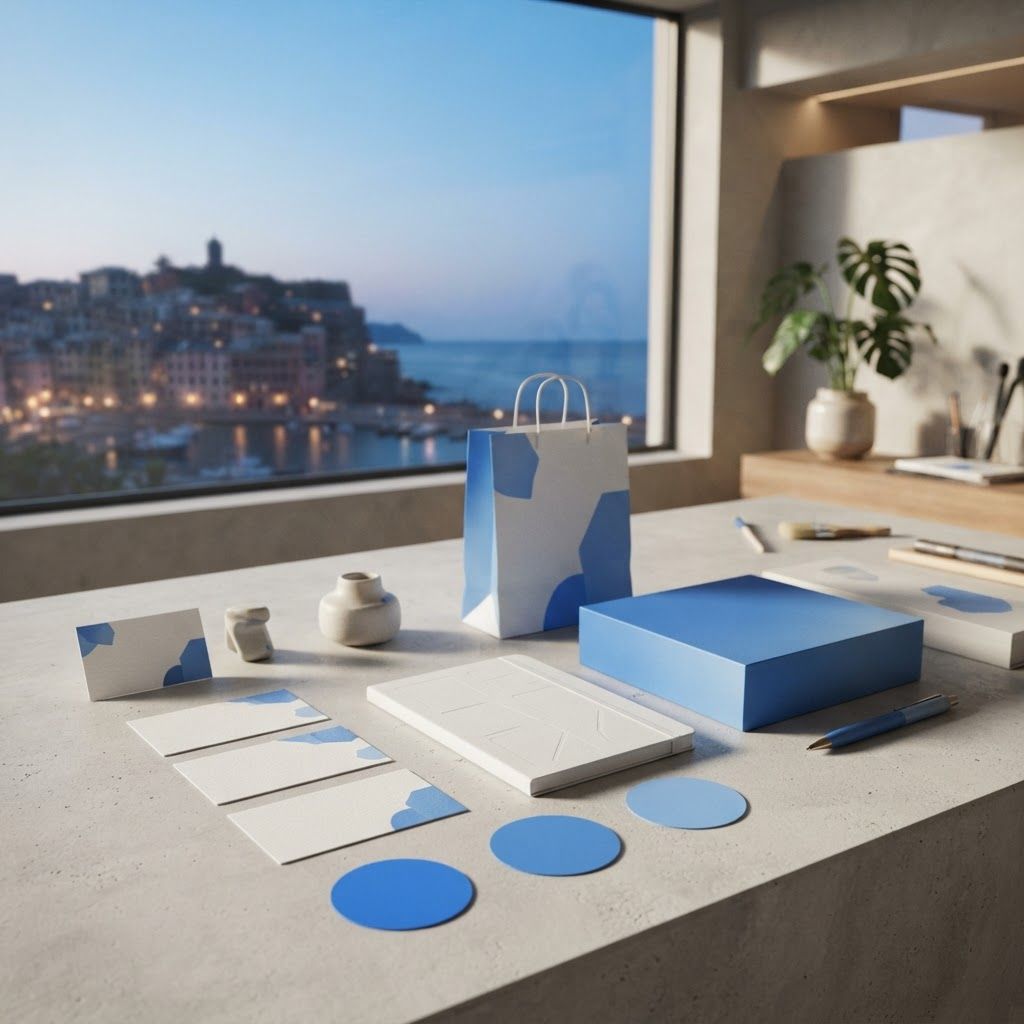
Why Branding Matters in Torbay
Torbay presents a specific branding challenge: many businesses offer superficially similar things. Dozens of guest houses overlook the sea, numerous restaurants serve local seafood, and multiple attractions promise family fun. Without a clear brand, price becomes the only differentiator, which erodes margins across the board.
Branding solves this by establishing meaning. A well-branded hotel is not simply accommodation near a beach; it stands for something specific, whether that is adults-only calm, dog-friendly adventure, heritage elegance or contemporary design. That clarity attracts the right customers, justifies premium pricing and reduces reliance on discounting during quieter months.
What Branding Agencies Actually Deliver
Branding extends far beyond a logo. A complete brand project typically includes market and audience research, competitor positioning, brand strategy and proposition, naming where relevant, visual identity covering logo, colour, typography and imagery, tone of voice guidelines, application across signage, packaging, uniforms, vehicles and digital touchpoints, and a usage manual to maintain consistency.
The strategic layer matters most. Attractive visuals applied to an unclear proposition produce a pretty business that still fails to explain why anyone should choose it.
1. Full-Service Brand Strategy and Identity Agencies
These agencies handle the complete process from research through to rollout. They suit businesses undergoing significant change, such as a hotel repositioning, a merger, or a family business transitioning to new ownership. Their value lies in rigour: structured discovery workshops, stakeholder interviews, competitor mapping and evidence-based positioning before any design work begins.
2. Hospitality and Tourism Branding Specialists
Specialists in hospitality understand the specific touchpoints that shape guest perception, from booking confirmation emails and signage to room directories, menus and staff uniforms. For Torbay hotels, holiday parks and restaurants, this experience means faster, more practical results. They also understand how brand consistency affects review scores and repeat bookings.
3. Independent Design Studios
Small independent studios across Devon deliver high-quality identity work with close personal involvement from senior designers. Clients typically work directly with the person doing the creative thinking, which speeds decisions and reduces cost. For owner-managed Torbay businesses, this collaborative model often produces more distinctive work than a larger process-driven agency.
4. Packaging and Product Branding Agencies
Devon's thriving food, drink and artisan sector needs packaging that performs on crowded shelves and in farm shops. Packaging specialists handle structural design, label artwork, regulatory compliance, print specification and sustainability considerations. For producers selling gin, preserves, seafood, baked goods or skincare, packaging is frequently the single most important brand asset.
5. Digital Brand and Web Design Studios
Digital-first studios build brand identity with the website as the primary expression. They focus on design systems, responsive components, accessibility, photography direction and conversion-focused layout. Given that most Torbay customers encounter a business online before visiting, this digital-led approach reflects reality better than print-first thinking.
6. Signage, Wayfinding and Environmental Branding Firms
Physical branding is critical in a visitor economy. Firms specialising in signage, shopfronts, vehicle liveries, interior graphics and wayfinding turn brand identity into tangible presence on the street. They also navigate practical constraints such as conservation area consent, listed building restrictions and coastal weather durability, which are genuine considerations across Torbay's historic seafronts.
7. Brand Photography and Visual Content Agencies
Photography defines brand perception more than almost any other element, particularly in tourism. Specialist agencies produce consistent libraries covering property, food, people, detail and location imagery, shot to a defined art direction. Using the English Riviera's light and coastline effectively can transform how a business is perceived.
8. Naming and Verbal Identity Consultancies
Verbal identity specialists develop names, taglines, tone of voice and messaging frameworks. For new ventures or businesses whose names no longer reflect what they do, this work is foundational. Good consultancies also check trademark availability and domain options before recommending a direction, avoiding costly problems later.
9. Rebranding and Brand Refresh Consultancies
Rebranding specialists focus on evolving established brands without destroying accumulated recognition. This is delicate work for long-standing Torbay businesses with loyal customers, where wholesale change risks alienating the existing base. A considered refresh modernises visual language while retaining the equity built over decades.
10. Freelance Brand Designers and Creative Consultants
Experienced freelancers offer senior creative capability at accessible rates, making professional branding viable for startups, cafés, tradespeople and independent retailers. Many assemble collaborator networks for photography, copywriting and print production, effectively operating as a flexible micro-agency. For a first brand identity on a modest budget, this is frequently the most sensible route.
Branding Trends Shaping the Market
Authenticity and provenance are increasingly central. Brands that genuinely reflect their place, using local materials, honest storytelling and real people rather than stock imagery, connect more strongly with both residents and visitors. In Devon specifically, regional identity carries commercial weight.
Sustainability is now a brand attribute rather than an add-on, expressed through recyclable packaging, reduced print, responsible suppliers and honest communication about limitations. Consumers respond badly to overstated environmental claims, so credibility matters.
Flexible identity systems have also become standard, designed to work across tiny app icons, social avatars, large signage and animated formats. Motion is increasingly part of identity, with animated logos and transitions built into brand guidelines from the outset. Finally, accessibility is rightly influencing design decisions, with colour contrast and legible typography treated as requirements rather than afterthoughts.
How to Choose and Work With a Branding Agency
Review portfolios for strategic thinking, not just attractive visuals. Ask what problem each project solved and what changed commercially afterwards. Check whether the agency has worked in your sector or can demonstrate rapid learning in unfamiliar ones.
Be clear about scope and deliverables, including how many concepts, rounds of revision and file formats are included. Confirm you will own full intellectual property and receive editable source files. Budget for implementation, since a new identity requires signage, print, uniforms, vehicle wraps and web updates that often exceed the design fee itself.
Finally, involve your team. Staff who understand the brand deliver it consistently in person, which matters enormously in hospitality where human interaction is the product.
Final Thoughts
In a market as visually competitive as the English Riviera, branding is not decoration but commercial infrastructure. Whether you engage a full-service strategic agency, a packaging specialist or a talented independent designer, the goal is the same: clarity about who you are, who you serve and why you are different. Torbay businesses that invest properly in that clarity consistently compete on value rather than price.
Want your brand featured in front of decision-makers? Publish a guest post or get a link insertion in our guides through AAMAX's guest post and link insertion service.
Helpful Links
 SponsoredAAMAX — Full-Service Digital Agency
Write for Us
Share your expertise with our readers. We welcome guest contributions from industry specialists.
Pitch your idea