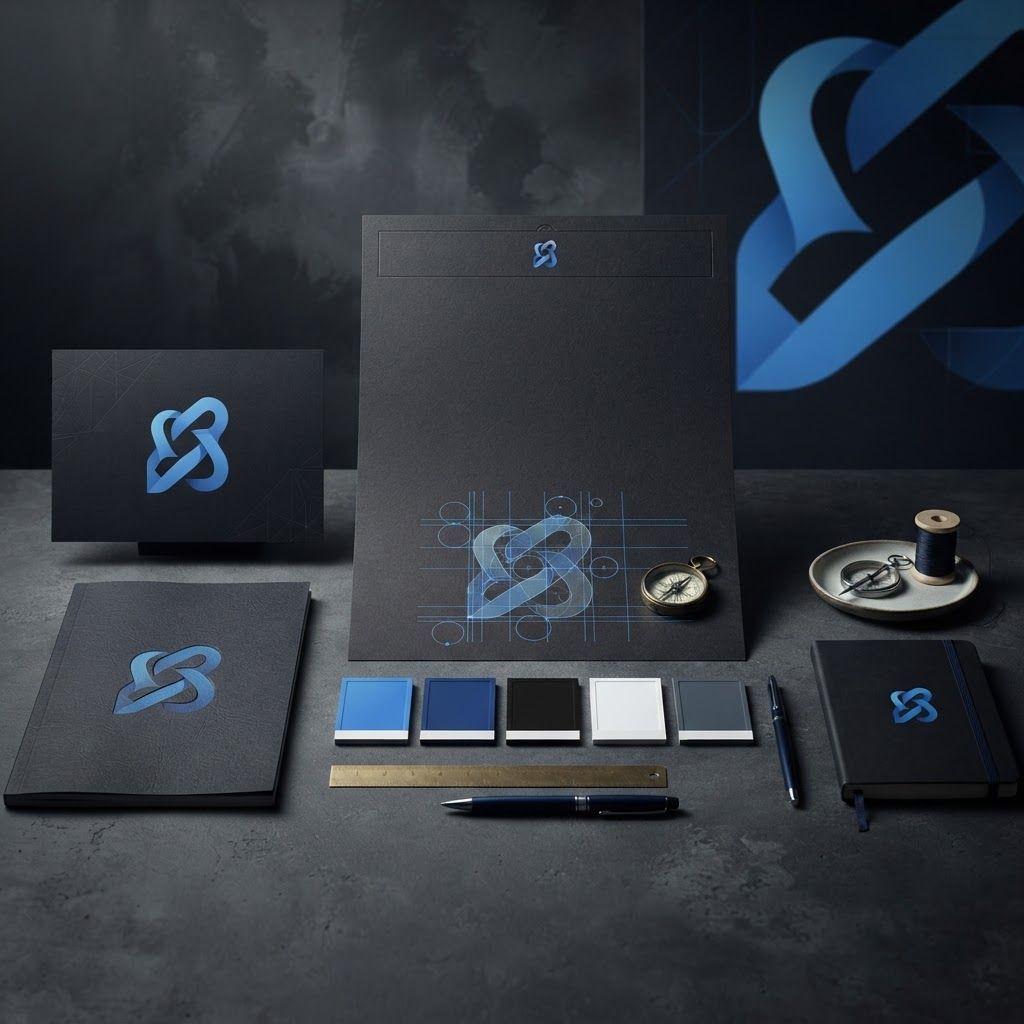
Why Branding Matters for South Ribble Businesses
Branding is frequently misunderstood as logo design. In reality, a brand is the accumulated impression a business creates across every interaction, and the visual identity is only the most visible part of it. For businesses across South Ribble, from long-established Leyland manufacturers to new independent cafes in Penwortham, brand strength directly affects pricing power, customer loyalty, recruitment and resilience during difficult trading periods.
The commercial case is straightforward. Two businesses offering identical quality at identical cost will not achieve identical results if one has a clear, consistent and credible brand and the other does not. Customers pay more for businesses they trust and remember, and staff prefer to work for organisations with a coherent sense of purpose.
South Ribble presents a particular opportunity here. Many local businesses compete on price or proximity alone, having never invested in brand development. Those that do invest often find they stand out immediately in categories where competitors look interchangeable.
What a Branding Agency Actually Delivers
Discovery and research form the starting point. This involves stakeholder interviews, customer research, competitor audits and market analysis. The objective is to understand what the business genuinely offers, who values it most and what position is both credible and distinctive. Skipping this stage produces attractive design that fails commercially.
Brand strategy follows. This defines positioning, target audiences, value proposition, personality, tone of voice and messaging architecture. These are written documents rather than visual outputs, and they inform everything that comes afterwards. A well-articulated strategy allows a business to make consistent decisions long after the agency engagement ends.
Visual identity development covers the logo, colour palette, typography, photographic style, illustration approach, iconography and layout systems. The strongest identities are distinctive, legible at every size, reproducible across print and digital, and durable enough to avoid looking dated within three years.
Verbal identity is equally important and frequently neglected. Naming, taglines, tone of voice guidelines and key messaging ensure the business sounds consistent whether a customer reads a website, receives an email or speaks to staff.
Brand guidelines and asset systems ensure consistency at scale. Templates for stationery, signage, vehicle livery, packaging, presentations and social media allow internal teams to produce on-brand material without returning to the agency for every item.
Types of Branding Studio in the Region
Strategic brand consultancies lead with research and positioning, often working with larger organisations facing complex challenges such as mergers, market repositioning or international expansion. Their outputs are as much organisational as visual.
Design-led studios emphasise craft and visual distinctiveness. These suit businesses with clear strategic direction who need exceptional execution, particularly in consumer-facing sectors where visual appeal drives purchase.
Full-service marketing agencies with branding capability can carry an identity through into advertising, digital and content, which offers continuity advantages for businesses wanting a single partner.
Independent designers and small studios serve the substantial base of small businesses across South Ribble effectively. For a sole trader or small retailer, a skilled independent designer delivers a professional identity at a fraction of consultancy cost, and the personal relationship often produces work that genuinely reflects the owner.
Specialist packaging and retail branding studios serve food producers, manufacturers and consumer goods businesses where shelf presence and regulatory compliance both matter.
Branding Trends Shaping 2026
Distinctiveness has returned as the primary objective after a long period of minimalist convergence. A decade of sans-serif wordmarks and muted palettes left many categories visually indistinguishable, and brands are now deliberately reintroducing character through expressive typography, richer colour and illustration.
Motion has become integral rather than an afterthought. Brands now need animated logo behaviours, transition styles and video treatments defined from the outset, because a large proportion of brand exposure happens on screens in motion.
Accessibility is now a design requirement rather than a compliance afterthought. Colour contrast ratios, legible type sizes, clear hierarchy and alternative text considerations are built into identity systems from the start, which improves the work for everyone.
Authenticity and local rootedness carry real weight. Businesses connecting genuinely to Lancashire heritage, local materials, regional character or community contribution build stronger emotional connections than those adopting generic corporate positioning.
Sustainability communication has matured considerably. Vague environmental claims now attract scepticism and regulatory attention, so brands are moving towards specific, verifiable statements supported by evidence.
Choosing a Branding Agency
Review portfolios for strategic thinking rather than aesthetic preference alone. Ask what problem each project solved and what changed commercially afterwards. An agency that can articulate the reasoning behind design decisions is far more valuable than one presenting pretty images without rationale.
Check sector breadth. An agency working across many industries brings fresh perspective, while one specialising in your sector brings shortcuts and category knowledge. Both can work, but the trade-off should be conscious.
Clarify deliverables precisely. A branding project can range from a logo and basic guidelines through to a complete strategic and visual system with implementation across every touchpoint. Scope ambiguity is the most common source of dissatisfaction.
Understand ownership and file formats. You should receive full intellectual property rights and source files in editable formats, not just flattened images.
Implementing a New Brand Successfully
Plan the rollout carefully. Signage, vehicle livery, uniforms, packaging, print materials, website and digital profiles all need coordinating, and a phased approach usually works better than attempting everything simultaneously.
Bring staff with you. Internal understanding of what the brand stands for matters more than any external campaign, because employees deliver the brand experience daily. Brief them properly and explain the reasoning.
Communicate the change to existing customers rather than surprising them. Framing a rebrand as evolution and improvement protects the recognition and goodwill already built.
For South Ribble businesses, investing properly in branding is one of the few marketing decisions that continues paying returns for a decade or more. The agencies serving the region are capable of genuinely excellent work when briefed well and given the space to think strategically.
Want your brand featured in front of decision-makers? Publish a guest post or get a link insertion in our guides through AAMAX's guest post and link insertion service.
Helpful Links
 SponsoredAAMAX — Full-Service Digital Agency
Write for Us
Share your expertise with our readers. We welcome guest contributions from industry specialists.
Pitch your idea