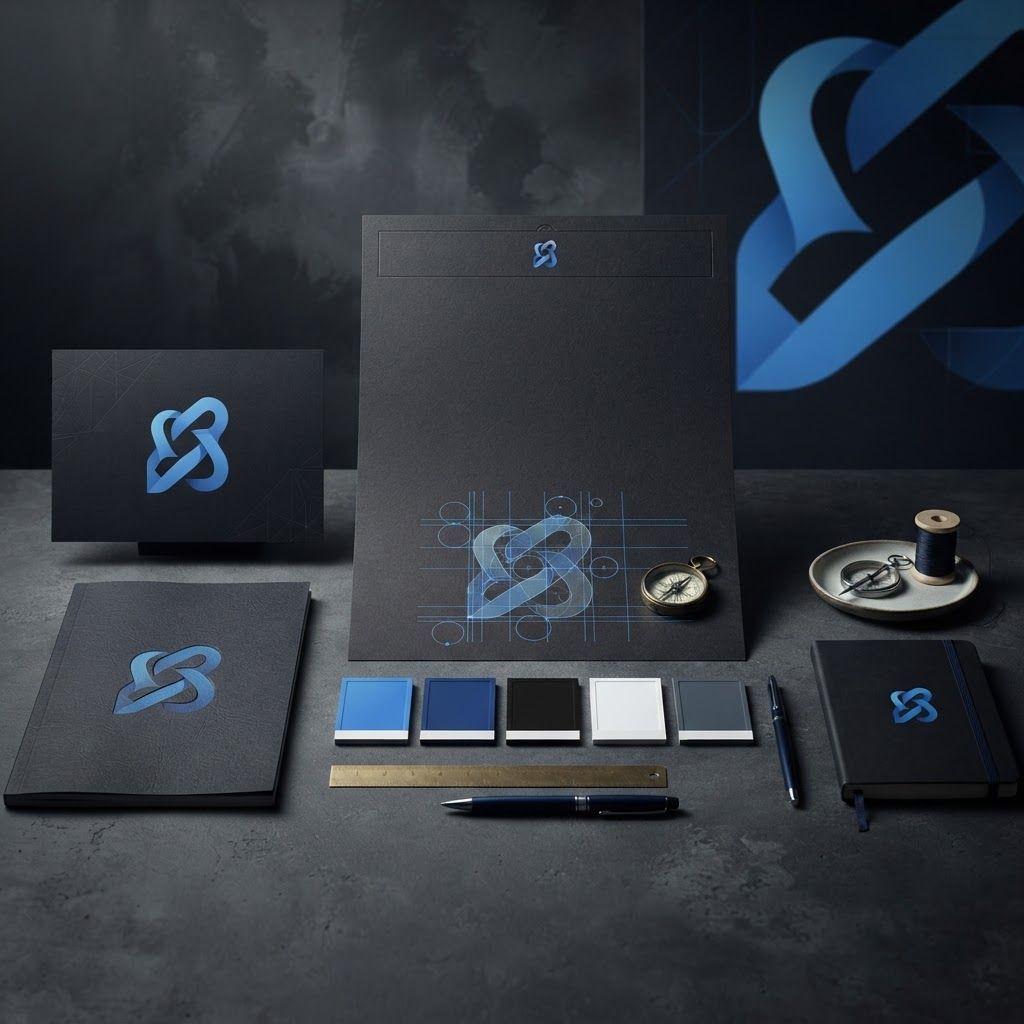
What Branding Actually Means
Branding is frequently confused with graphic design, but the two are not the same thing. Design is the visible output. Branding is the underlying decision about what a business stands for, who it serves, how it differs from alternatives and what it wants to be known for. The visual identity follows from those decisions rather than preceding them.
For businesses across North West Leicestershire, this distinction matters commercially. The district's economy contains many businesses operating in crowded, comparable markets: logistics providers with similar capabilities, engineering firms with overlapping capabilities, and retail or hospitality operators competing for the same local spend. When functional offerings are similar, brand becomes the deciding factor. A haulage company that is clearly known for reliability with time critical loads will win work over an equally capable but undifferentiated competitor.
Ten Branding Agencies Serving the District
1. Ashby Brand Studio
A strategy led agency that begins with research and positioning before moving into identity design, Ashby Brand Studio produces brand platforms covering purpose, audience, personality and messaging alongside visual systems.
2. Forest Identity Design
Specialising in visual identity systems including logos, colour, typography and application guidelines, Forest Identity Design creates flexible systems that work across signage, vehicles, digital and print without breaking down.
3. Coalville Rebrand Specialists
Focused on rebranding established businesses, this agency handles the particular challenges of changing identity without losing existing recognition, including phased rollouts and internal communication planning.
4. Bardon Industrial Branding
Serving manufacturers, logistics operators and engineering firms, Bardon Industrial Branding understands technical audiences and the practical demands of applying identity to vehicles, workwear, machinery and large format signage.
5. Ivanhoe Naming and Verbal Identity
Working on names, taglines, tone of voice and messaging frameworks, Ivanhoe Naming and Verbal Identity addresses the written half of branding that many agencies treat as an afterthought.
6. Measham Packaging Design
Creating packaging identity for food, cosmetics and consumer product brands, Measham Packaging Design balances shelf standout with regulatory requirements and production realities.
7. Donington Brand Experience
Extending brand into physical environments, this agency designs retail interiors, exhibition stands, reception spaces and signage so that a brand feels consistent when experienced in person.
8. Charnwood Employer Brand
Addressing recruitment challenges across the district, Charnwood Employer Brand develops employee value propositions and careers identity, helping employers compete for candidates in tight labour markets.
9. Willow Row Small Business Branding
Offering structured, affordable brand packages for startups and independents, Willow Row Small Business Branding delivers essential identity assets without the cost of a full corporate programme.
10. Hermitage Brand Guardianship
Supporting organisations after launch, this agency maintains brand consistency through guideline management, asset libraries and ongoing design support for internal teams.
What a Brand Project Involves
A credible branding process typically begins with discovery: interviewing leadership, speaking to customers, reviewing competitors and auditing existing materials. This stage frequently uncovers a gap between how a business sees itself and how the market perceives it, and closing that gap is often the most valuable part of the work.
Positioning follows, defining the specific space the business intends to occupy and the reasons customers should believe it. This is a commercial decision as much as a creative one, and it requires the business to choose, since a brand that tries to appeal to everyone typically appeals strongly to no one.
Only then does identity design begin, translating positioning into a visual and verbal system. The deliverables should include not just a logo but colour specifications, typography, imagery direction, layout principles, tone of voice guidance and practical application examples. Implementation and internal adoption complete the process, since a brand that employees do not understand will not be delivered consistently.
Signs of a Strong Branding Agency
Look for agencies that ask difficult questions early and are willing to challenge assumptions rather than simply accepting a brief. Strong agencies present strategic rationale alongside creative work, explaining why a direction serves the commercial objective rather than defending it purely on aesthetics.
Examine portfolios for range. An agency whose work all looks similar may be imposing a house style rather than responding to each client's distinct situation. Ask about results, including whether clients experienced measurable improvements in recognition, recruitment, pricing power or win rates after rebranding.
Trends in Branding
Flexible identity systems have replaced rigid single logo thinking, with brands designed to adapt across enormous variation in format and context. Accessibility has become central, influencing colour contrast decisions, typography choices and imagery selection so that brands work for all audiences.
Authenticity and specificity are increasingly favoured over generic corporate polish, particularly for regional businesses where local credibility is an asset rather than a limitation. Motion and sound identity are growing as brands appear more frequently in video and audio contexts. Finally, employer branding has become a mainstream discipline as competition for skilled staff intensifies across the district's key sectors.
Making the Investment Worthwhile
Budget for implementation, not just design. Many rebrands underdeliver because the organisation spends heavily on creating an identity and then applies it inconsistently through lack of remaining budget or internal capacity. Plan for signage, vehicle livery, uniforms, digital assets and printed materials as part of the project.
Involve employees early. Staff who understand the reasoning behind a brand deliver it far more convincingly than those who simply receive new stationery. Finally, allow the brand time to establish, since recognition builds through repeated consistent exposure rather than through a launch moment.
Final Thoughts
Branding is a commercial discipline with creative output, and the agencies above understand that balance. For businesses in North West Leicestershire competing in comparable markets, a clear and consistently applied brand is one of the few genuinely defensible advantages available.
Want your brand featured in front of decision-makers? Publish a guest post or get a link insertion in our guides through AAMAX's guest post and link insertion service.
Helpful Links
 SponsoredAAMAX — Full-Service Digital Agency
Write for Us
Share your expertise with our readers. We welcome guest contributions from industry specialists.
Pitch your idea