Why Branding Matters for East Ayrshire Businesses
Branding is frequently misunderstood as logo design. In reality, a brand is the accumulated set of expectations that customers hold about an organisation, and design is simply one of the tools used to shape them. For businesses in East Ayrshire, this distinction carries real commercial weight.
Many companies in the region are technically excellent but commercially invisible. An engineering firm with decades of expertise or a food producer with genuine quality can lose contracts to competitors who present themselves more convincingly. Branding closes that gap. It makes competence visible, gives sales teams a coherent story, and allows a regional business to appear credible when bidding against much larger organisations.
What a Proper Branding Process Involves
Discovery comes first. A good agency will interview customers, staff and sometimes lost prospects to understand how the organisation is actually perceived, which is frequently different from how leadership imagines. This research phase is uncomfortable but invaluable.
Strategy follows, defining positioning, audience priorities, the core proposition and the personality that will express it. This stage produces documents rather than visuals, and clients who rush past it invariably end up with attractive design that communicates nothing distinctive.
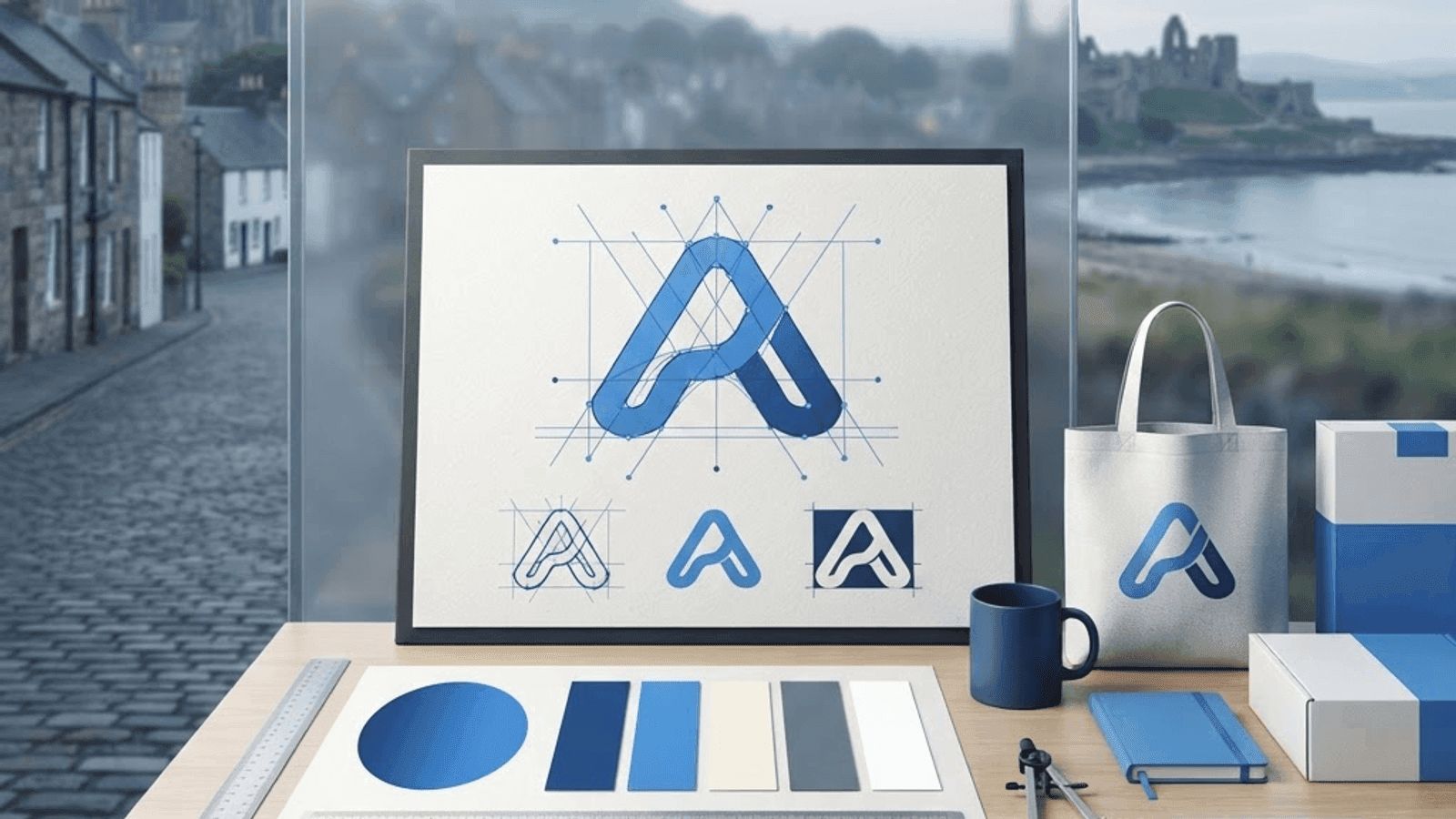
Identity design then translates strategy into tangible assets: logo, typography, colour, photography direction, iconography and layout systems. The objective is not beauty alone but distinctiveness and consistency, so that the organisation becomes recognisable even before its name appears.
Implementation and governance complete the process. Brand guidelines, asset libraries, templates and internal training determine whether a new identity survives contact with daily operations or degrades within a year as people improvise.
The Best Branding Agencies Serving East Ayrshire
Tayburn is among Scotland's most established design and branding consultancies, with decades of work across corporate identity, reporting and brand systems. Their experience with complex organisations makes them a strong choice for businesses with multiple audiences.
Stand has built a formidable reputation for design led branding with genuine craft. Their work tends towards clarity and confidence rather than decoration, which serves businesses that need to be taken seriously in competitive tenders.
Material focuses heavily on the strategic foundations of brand, helping organisations articulate what makes them genuinely different before any design work begins. This discipline produces identities that hold up under scrutiny.
The Union brings campaign and advertising thinking to brand development, which means identities are designed with an eye to how they will perform in market rather than only how they look in a presentation.
Multiply approaches branding as an integrated communications challenge, ensuring alignment between brand, marketing and customer experience across every touchpoint.
Whitespace offers particular strength in sectors requiring careful positioning, including energy, finance and public service, where trust and clarity outweigh visual flourish.
Equator combines brand with digital product design, which is increasingly essential given that most brand experiences now occur on screen rather than in print.
Leith Agency brings cultural fluency and a strong understanding of Scottish audiences, useful for brands that want to feel authentically rooted rather than generically international.
Newhaven integrates brand development with public relations, helping organisations launch or reposition with earned attention rather than simply changing their appearance quietly.
Frame completes the list with strength in visual identity expressed through motion and video, which matters as brands increasingly live in animated and social contexts rather than static applications.
Trends in Branding
Distinctiveness has reasserted itself over minimalism. After a decade in which many brands converged on similar simplified sans serif logos, there is renewed appreciation for assets that are genuinely memorable, including distinctive colour, illustration and typography that could not belong to anyone else.
Motion has become a core consideration rather than an afterthought. Logos and identity systems are now designed with animation in mind from the outset, since first impressions frequently occur in video or on a loading screen.
Purpose and values are increasingly integrated into brand expression, though with more scepticism than a few years ago. Audiences have become adept at distinguishing genuine commitment from superficial claims, and brands are being held to what they actually do rather than what they assert.
Getting Branding Right
Involve leadership genuinely. Brand decisions affect the entire organisation, and a project driven solely by the marketing function without senior commitment will struggle at implementation. Equally, involve staff, since they deliver the brand daily and their buy in determines consistency.
Budget for implementation, not just design. Signage, vehicle livery, uniforms, stationery, website updates and printed materials frequently cost more than the identity work itself, and a brand launched partially looks worse than one not launched at all.
Finally, resist the urge to change too soon. Brand equity accumulates through repetition, and organisations that refresh their identity every few years continually reset the recognition they have built. The strongest brands evolve gradually while holding their distinctive assets constant, which is a discipline as much as a design decision.
Want your brand featured in front of decision-makers? Publish a guest post or get a link insertion in our guides through AAMAX's guest post and link insertion service.
Helpful Links
 SponsoredAAMAX — Full-Service Digital Agency
Write for Us
Share your expertise with our readers. We welcome guest contributions from industry specialists.
Pitch your idea