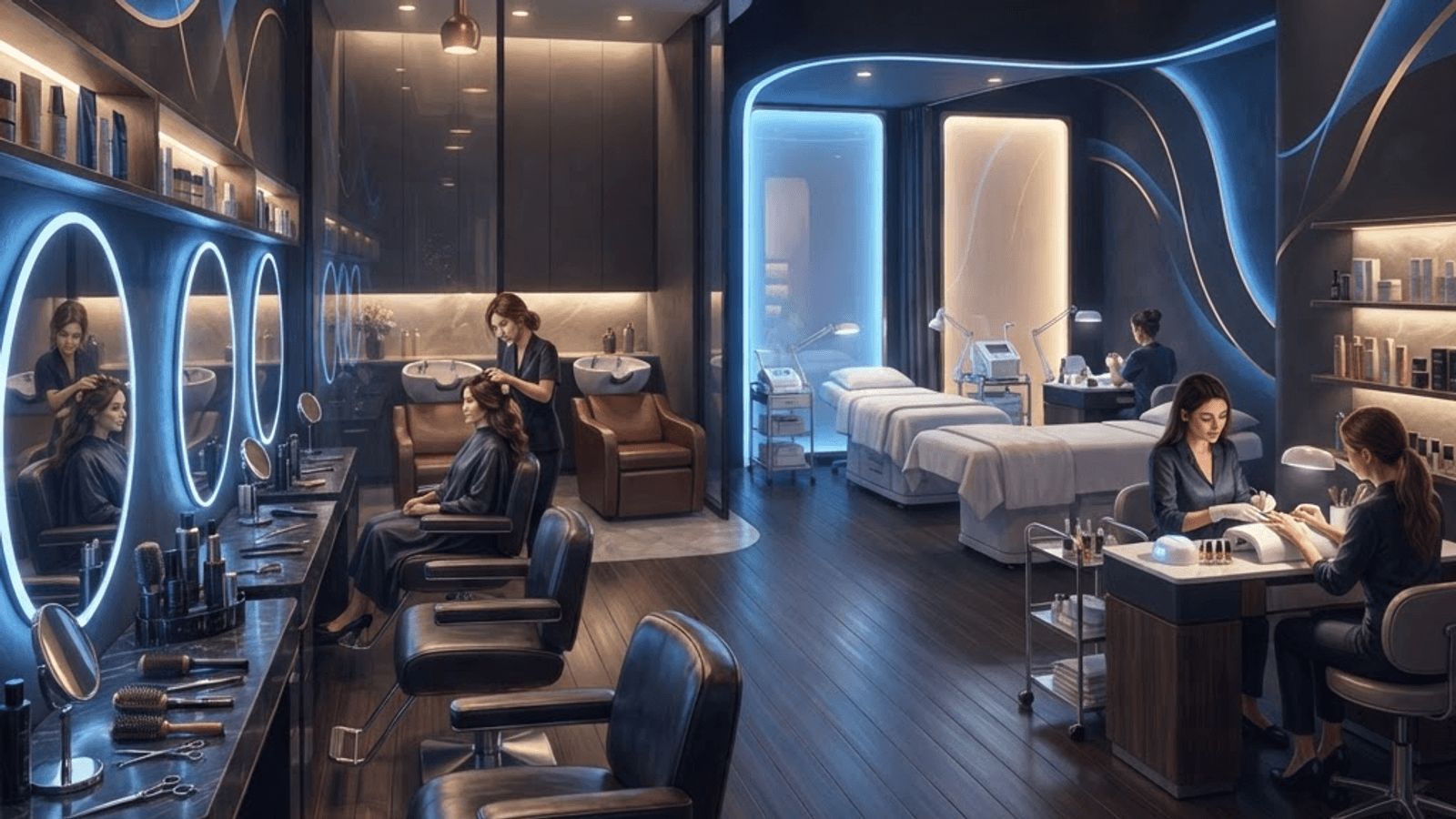
Beauty and Wellbeing in Winchester
Winchester supports a beauty and wellbeing sector of real depth. The city's affluent catchment, its concentration of professionals, a substantial student population and a steady flow of visitors combine to sustain everything from quick blow-dry bars to advanced aesthetic clinics. Premises range from converted historic buildings in the centre to modern purpose-built spaces on the outskirts and country house spas in the surrounding countryside.
The sector has professionalised considerably. Treatments that were once purely cosmetic now sit alongside genuinely clinical procedures requiring medical qualification and regulatory oversight. At the same time, consumer expectations around hygiene, consultation quality, ingredient transparency and sustainability have risen sharply. The salons that thrive in Winchester are those that have adapted to both shifts.
1. Full-Service Hair Salons
Established hair salons offer cutting, colouring, treatments and styling across all hair types and lengths. The strongest operators in Winchester distinguish themselves through consultation rather than technique alone, taking time to understand lifestyle, maintenance willingness and hair condition before recommending an approach. Colour expertise is the clearest marker of quality, particularly in correction work and in creating grown-out-friendly results such as balayage that reduce the frequency of salon visits without looking unkempt.
2. Specialist Colour Studios
Colour-focused salons concentrate on technical work: bleaching, vivid fashion shades, grey blending, colour correction and bespoke toning. These require genuine chemistry knowledge, since lifting dark or previously coloured hair safely demands careful assessment of hair integrity and appropriate use of bond-building products. Studios in this category typically insist on patch testing and strand testing, which signals professionalism rather than inconvenience.
3. Barbershops and Men's Grooming
Winchester's barbering scene combines traditional wet shaving and classic cuts with contemporary fades, beard sculpting and grooming products. The best barbershops have become social spaces as much as service providers, with regular clients returning on a consistent cycle. Skills in clipper work, scissor-over-comb and razor finishing distinguish a genuine barber from a general stylist, and the growth of beard care as a category has expanded the treatment menu considerably.
4. Advanced Skin Clinics
Skin clinics offering chemical peels, microneedling, laser treatments, LED therapy and medical-grade skincare occupy the clinical end of the market. These treatments can deliver meaningful results for pigmentation, acne scarring, texture and ageing, but they carry genuine risk if poorly performed. Practitioner qualification, device certification, thorough consultation including medical history, patch testing and realistic outcome expectations are all essential. Reputable Winchester clinics decline unsuitable clients rather than taking the booking.
5. Aesthetic and Injectable Practices
Injectable treatments including botulinum toxin and dermal fillers are increasingly delivered by medically qualified practitioners: doctors, dentists, nurses and prescribing pharmacists. This matters because complications, while uncommon, require clinical management. Prospective clients should verify the practitioner's registration, ask who prescribes the product, confirm that emergency reversal agents are held on site where relevant, and expect a consultation with a cooling-off period rather than immediate treatment. Conservative, natural results are the prevailing aesthetic and the mark of skilled practice.
6. Nail Salons and Studios
Nail services range from classic manicures and pedicures to gel, builder gel, acrylic extensions and nail art. Hygiene is the primary quality differentiator: proper sterilisation of metal implements, single-use files and buffers, effective ventilation and correct product handling. Nail technicians with strong training also prioritise nail health, recognising when a client's natural nails need a break and advising accordingly rather than continuously reapplying enhancements.
7. Spa and Holistic Treatment Centres
Winchester and its surrounding countryside host spas offering massage, facials, body treatments, hydrotherapy and relaxation facilities. Country house spas attract both residential guests and day visitors, combining treatment with the setting itself. Therapeutic massage, including deep tissue and sports massage, addresses genuine physical need for desk-based professionals and active individuals alike, and practitioners with anatomical training deliver considerably more benefit than generic relaxation routines.
8. Brow and Lash Specialists
Brow shaping, tinting, lamination and microblading, together with lash extensions and lifts, have become substantial categories in their own right. The technical demands are precise, particularly for lash extensions where correct isolation and weight selection protect the natural lash. Semi-permanent makeup and microblading require licensing from the local authority and rigorous hygiene practice, since they involve breaking the skin. Patch testing before tinting is a non-negotiable safety step.
9. Waxing and Hair Removal Studios
Waxing, threading, sugaring and laser hair removal each suit different needs, skin types and pain tolerances. Studios specialising in this area develop speed and consistency that general salons rarely match, which meaningfully reduces discomfort. Laser and intense pulsed light treatments require proper skin typing, patch testing and appropriate device settings, and practitioners should be candid that results depend on hair colour and skin tone.
10. Independent Mobile and Home-Based Therapists
A substantial part of Winchester's beauty provision operates from home studios or travels to clients. These practitioners often deliver excellent value and highly personal service, with the flexibility to work around clients' schedules. The considerations are the same as for high street salons: appropriate qualifications, professional insurance, local authority registration for treatments that require it, and proper hygiene practice. Many home-based therapists build loyal followings precisely because the experience is unhurried and consistent.
Choosing a Salon Wisely
The most reliable indicators of quality are not marketing but process. A thorough consultation before any significant treatment, honest advice about what will and will not work, willingness to recommend a smaller treatment or none at all, clear pricing communicated before starting, and evidence of ongoing training all suggest a professional operation.
For chemical and clinical treatments, patch testing is a genuine safety requirement rather than a formality. Allergic reactions to hair dye and tinting products can be severe, and a salon that skips this step to accommodate a same-day booking is prioritising convenience over safety. Similarly, any practitioner unwilling to discuss risks and aftercare is worth avoiding.
Current Trends in Hair and Skin
Hair trends have moved towards lower maintenance and better condition. Techniques that grow out gracefully, bond-building treatments that protect integrity during chemical processing, and a general reduction in heat styling reflect a shift from dramatic transformation towards sustained hair health. Scalp care has emerged as a distinct category, treating the scalp as skin that requires exfoliation, hydration and barrier support.
In skincare, the dominant theme is barrier health. After several years of aggressive active ingredient use, the emphasis has shifted towards gentler, consistent routines, sun protection as the foundation of prevention, and treatments that support rather than strip the skin. Professional facials increasingly combine modest exfoliation with hydration and LED therapy rather than relying on intensity.
Personalisation runs through everything. Skin analysis tools, hair porosity assessment and detailed consultation allow treatments tailored to the individual rather than applied as standard protocols. Clients in Winchester increasingly expect this and are willing to pay for demonstrable expertise.
Sustainability in the Salon
Environmental practice has become a genuine differentiator. Salons are reducing water use through efficient basins, recycling hair clippings, foils and colour tubes through specialist schemes, switching to refillable retail products, choosing formulations with reduced plastic packaging, and selecting professional ranges with cruelty-free and vegan credentials.
Energy use matters too, since salons run hot water, dryers and lighting continuously. Efficient equipment and sensible scheduling reduce both emissions and costs. Clients increasingly ask about these practices, and salons that can answer specifically rather than vaguely build trust.
Making the Most of an Appointment
Clients get better results by being specific. Bringing reference images helps, but explaining what appeals about them helps more, since a stylist can then adapt the idea to suit different hair or face shape. Being honest about maintenance willingness prevents disappointment; a look requiring daily styling will frustrate someone who has ten minutes in the morning. Disclosing medical conditions, medications and previous reactions is essential for safety.
Winchester's beauty sector rewards clients who build relationships with practitioners. Over several visits, a good stylist or therapist learns hair behaviour, skin responses and personal preference, and results improve accordingly. That continuity, more than any single treatment, is what the city's best salons offer.
Want your brand featured in front of decision-makers? Publish a guest post or get a link insertion in our guides through AAMAX's guest post and link insertion service.
Helpful Links
 SponsoredAAMAX — Full-Service Digital Agency
Write for Us
Share your expertise with our readers. We welcome guest contributions from industry specialists.
Pitch your idea