Why West Oxfordshire Bakes So Well
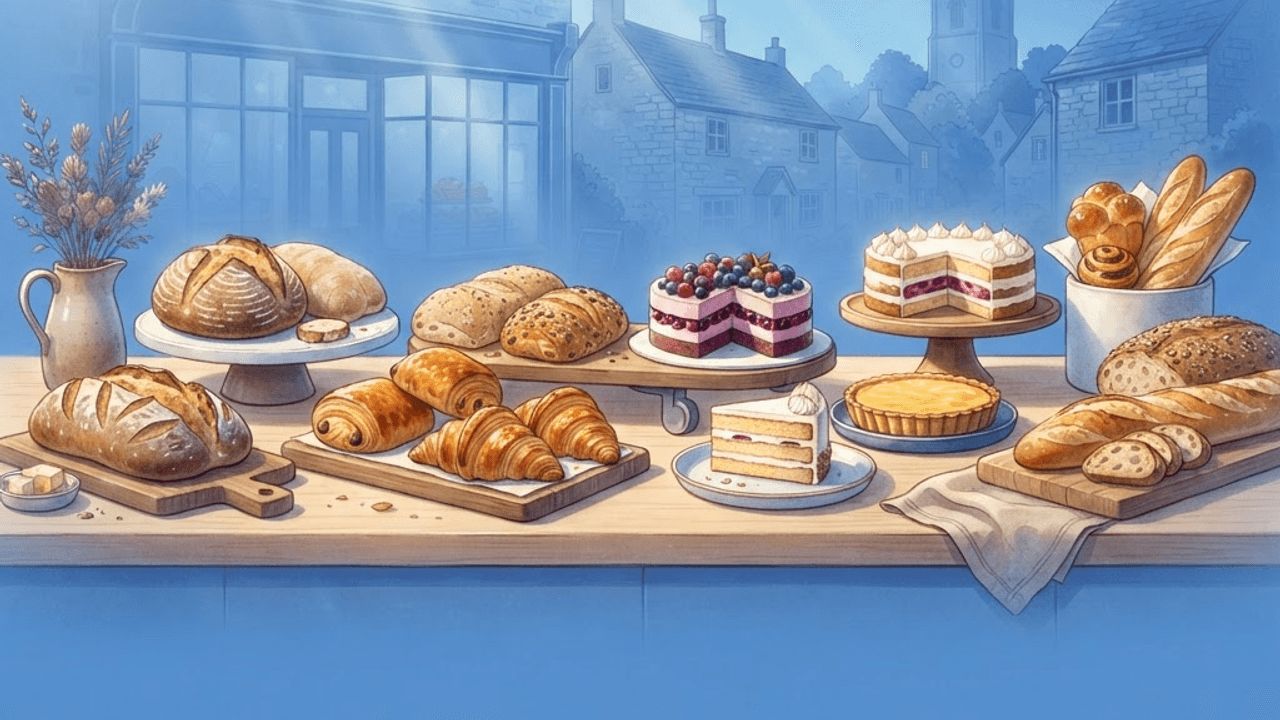
There is a reason the bakeries of West Oxfordshire enjoy a reputation well beyond the district's borders. The area sits amid some of England's best arable farmland, with heritage grain growers and traditional stone mills operating within a short drive of most village high streets. Add a population that appreciates provenance, a strong tourist trade drawn to the Cotswolds, and a generation of bakers who trained in serious kitchens before returning to rural life, and the conditions for excellent baking are close to ideal.
The district's bakery culture also reflects its geography. Towns such as Witney, Chipping Norton, Burford, Woodstock and Carterton each support their own independent bakers, while smaller villages are served by farm shops, weekly markets and micro-bakeries operating from converted outbuildings. The result is variety: classic English baking sits comfortably alongside naturally leavened sourdough and refined French patisserie.
The Best Bakeries Across the District
1. Hamblin Bread. Widely regarded as one of Oxfordshire's finest sourdough bakeries, Hamblin has built a devoted following through uncompromising standards. Long fermentation, carefully sourced flour and consistently excellent crust structure define the loaves. Demand regularly outstrips supply, which tells its own story.
2. The Cotswold Bakehouse. A traditional craft bakery whose strength lies in range and reliability. Alongside daily white and wholemeal tins, it produces seasonal fruit loaves, hand-raised pies and a rotating selection of viennoiserie. It is the sort of bakery that anchors a market town's food culture.
3. Huffkins. With deep Cotswold roots and a long-standing presence in Burford, Huffkins is among the most recognised names in the region. Its lardy cakes, scones and afternoon tea offering have made it a fixture for visitors, while locals rely on its bread counter throughout the week.
4. The Woodstock Bakery. Serving one of the district's most visited towns, this bakery balances tourist expectations with genuine craft. Its almond croissants and laminated pastries are frequently singled out, and the shop's proximity to Blenheim's gates makes it a natural first stop for visitors.
5. Barefoot Bakery. An artisan operation known for organic flour, slow fermentation and a strong seasonal ethos. Its focaccia and rye loaves have a particularly loyal following, and its presence at regional farmers' markets extends its reach across the district.
6. The Chipping Norton Bakehouse. A community-focused bakery serving the district's northern reaches. Its offering leans traditional, with excellent sausage rolls, Eccles cakes and a bread range that sells out by early afternoon on market days.
7. Cutler and Bayliss. Bakers with an emphasis on British classics executed precisely, including pork pies, quiches and celebration cakes. The strength here is consistency, and the business has become a default choice for local celebrations and workplace catering.
8. Dough Fired and mobile wood-fired bakers. A distinctive feature of the local scene is the number of bakers operating from wood-fired ovens, some permanent and some mobile. These producers appear at village events and markets, producing bread and pizza with the deep char and irregular crumb that only live fire delivers.
9. Farm shop bakeries across the Windrush and Evenlode valleys. Several of the district's farm shops operate their own in-house bakeries, baking through the morning and selling alongside local meat, dairy and produce. The advantage is context: bread bought metres from the fields that supplied the grain.
10. Micro-bakeries and subscription bakers. One of the most encouraging developments in recent years has been the rise of small-batch bakers selling through weekly collection or subscription. Operating from home kitchens and small units around Witney, Eynsham and Carterton, they produce limited runs of high-quality sourdough, brioche and seasonal specialities.
What Separates a Great Bakery from a Good One
The first marker is fermentation time. Properly fermented bread develops flavour, improves digestibility and keeps far better. A loaf that tastes bland on day one and is stale by day two has almost certainly been rushed.
The second is flour quality and provenance. The best local bakeries know which mill supplied their flour and often which farm grew the grain. Stoneground and heritage varieties bring depth that industrial roller-milled flour cannot match.
The third is crust and crumb structure. A well-baked sourdough should have a genuinely dark, crackling crust and an open, uneven crumb with a slightly translucent sheen. Uniform, pale bread suggests underbaking or excessive improvers.
Finally, look at the counter late in the day. A bakery that sells out is baking to demand rather than overproducing, which usually correlates with freshness and careful planning.
Baking Trends Across the District
Heritage grains have gained real momentum. Varieties such as spelt, emmer and older wheat landraces appear increasingly on local shelves, valued for flavour and for their role in supporting biodiversity on Oxfordshire farms.
Reduced-waste baking is another visible trend. Bakeries now routinely turn unsold bread into croutons, breadcrumbs, bread pudding and even new doughs, and several participate in end-of-day surplus schemes.
Allergen-aware baking has expanded considerably. Genuine gluten-free baking remains difficult to do well alongside wheat production, but a number of local producers have invested in separate facilities and processes to serve this market properly.
Finally, the coffee and bakery hybrid continues to grow. Many of the district's best bakeries now operate as day-long cafés, which improves their economics and gives visitors a reason to linger.
Practical Advice for Buying Bread Locally
Arrive early for the most popular items, particularly at weekends when visitor numbers rise sharply in Burford and Woodstock. Pre-ordering is widely offered and is the reliable route to securing specific loaves.
Store bread correctly once home. A proper sourdough keeps best cut-side down on a board or in a cloth bag, never in plastic, which softens the crust. Freezing in slices preserves quality remarkably well.
Ask questions. Bakers in this district are generally delighted to discuss their flour, their starter and their process, and the answers will tell you quickly whether the bread is genuinely craft-made.
Final Thoughts
West Oxfordshire's bakeries represent local food culture at its best: skilled producers working with regional ingredients, serving communities that value the result. Whether you are seeking a perfect Cotswold lardy cake, a deeply fermented country loaf or a flawless croissant, the district delivers at a standard that would be notable in any major city, and does so with a warmth that makes the visit as good as the purchase.
Want your brand featured in front of decision-makers? Publish a guest post or get a link insertion in our guides through AAMAX's guest post and link insertion service.
Helpful Links
 SponsoredAAMAX — Full-Service Digital Agency
Write for Us
Share your expertise with our readers. We welcome guest contributions from industry specialists.
Pitch your idea