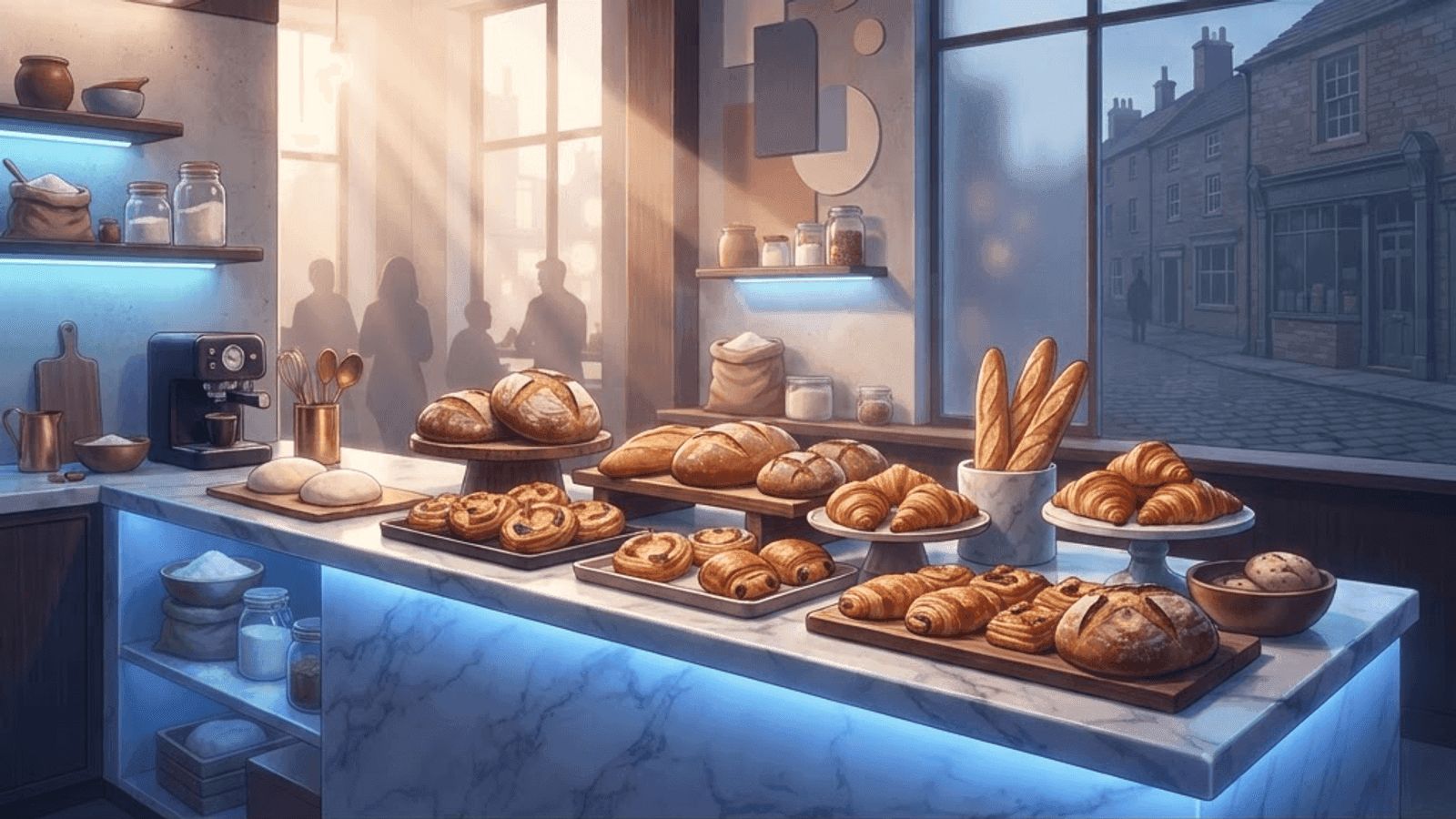
A Town That Takes Its Bread Seriously
Royal Tunbridge Wells has developed a bakery culture that would be impressive in a city three times its size. The combination of an affluent and food-literate population, a strong independent retail tradition around The Pantiles and Chapel Place, and proximity to some of the finest arable and dairy farmland in Kent has created ideal conditions for craft baking to flourish. Residents here genuinely understand the difference between a loaf proved overnight and one pushed through a commercial line in ninety minutes, and they are prepared to pay for the former.
What makes the local scene particularly interesting is its diversity. The town supports traditional English bakeries turning out bloomers and Kentish huffkins, French-influenced patisseries producing laminated pastry of genuine technical quality, wholegrain specialists milling their own flour, and modern hybrid bakery-cafés where the counter is as much a social hub as a shop. Very few towns of comparable size offer that breadth.
What Defines a Genuinely Excellent Bakery
The markers of quality are consistent regardless of style. Fermentation time is the most important. Bread developed slowly over twelve to twenty-four hours produces deeper flavour, better keeping qualities and a more digestible crumb than bread accelerated with additional yeast and improvers. A bakery that talks openly about its fermentation schedule is usually one worth visiting.
Ingredient sourcing is the second marker. Stoneground flour from regional mills, proper cultured butter in laminated pastry, and seasonal fruit rather than year-round imports all make an immediately perceptible difference. The third is the visible evidence of hand work: irregular scoring, varied crust colouration and slight differences between loaves are signs of craft, not inconsistency. Perfectly uniform products almost always indicate industrial production.
The Ten Best Bakeries in the Town
The Pantiles Bakehouse has become something of a benchmark for the town. Working with a mature sourdough culture and locally milled flour, the bakery produces a small, disciplined range of naturally leavened loaves alongside a rotating selection of seasonal buns. The open kitchen allows customers to watch shaping and loading, and the team is generous with technique advice for home bakers.
Maison Calverley approaches baking from a classical French perspective. Croissants and pain au chocolat are laminated over three days with high-fat cultured butter, producing the honeycomb interior and shattering exterior that distinguishes serious viennoiserie from the merely acceptable. Their entremets and fruit tarts are equally precise and sell out early at weekends.
Weald Grain Bakery specialises in wholegrain and ancient grain breads, milling spelt, emmer and rye on site. The bakery is a natural destination for customers who find conventional white bread difficult to digest, and the team is knowledgeable about the nutritional differences between grain varieties without ever lapsing into unfounded health claims.
Chapel Place Patisserie operates as a compact jewel box of a shop focused almost entirely on finished pastries and celebration cakes. Their work is notable for restraint, with clean flavour combinations and elegant finishing rather than elaborate decoration, which has made them a popular choice for weddings and formal occasions across west Kent.
Mount Pleasant Bread Company is a larger operation supplying local restaurants, delicatessens and hotels alongside its retail counter. The commercial scale has not compromised quality, and their focaccia, ciabatta and brioche buns appear on menus throughout the town. Trade customers particularly value their reliability and early delivery windows.
The Common Loaf combines bakery and café in a relaxed space popular with families and remote workers. The bread range is deliberately compact but the sandwich and toastie menu built around it is one of the strongest in the town, and the bakery has a well-earned reputation for accommodating dietary requirements without treating them as an inconvenience.
Kentish Hearth Bakery leans firmly traditional, producing cottage loaves, Kentish huffkins, lardy cake and seasonal specialities that have largely disappeared from commercial baking. For customers interested in regional food heritage this is the most rewarding stop in Tunbridge Wells, and the bakery's historical knowledge is genuinely deep.
Grosvenor Sourdough runs a smaller micro-bakery model with limited daily production and a pre-order system. The restricted output allows exceptional consistency, and their high-hydration country loaf with an extended cold ferment has developed a devoted following among local food enthusiasts.
Vale Road Vegan Bakery produces an entirely plant-based range, demonstrating convincingly that dairy-free baking need not be a compromise. Their cinnamon buns and laminated pastries using cultured plant fats have won over a substantial number of customers who do not follow a vegan diet at all.
Royal Wells Cake Studio focuses on bespoke celebration and wedding cakes, working to commission with detailed design consultations. The studio balances contemporary styling with genuinely good cake underneath, an area where many decorative specialists fall short.
Trends Shaping Bakery Culture in Kent
Long fermentation has moved from a niche enthusiasm to a mainstream expectation, driven partly by customers who report that slowly proved bread suits them better. Regional milling has expanded significantly, with Kent and Sussex mills supplying an increasing share of local bakeries and allowing genuine traceability from field to loaf.
Waste reduction has also reshaped daily operations. End-of-day discounting, surplus food applications and the creative reuse of yesterday's bread in croutons, panzanella and bread puddings have become standard practice. Meanwhile, the bakery-café hybrid continues to grow, with seating, speciality coffee and all-day brunch menus turning what were once purely transactional shops into genuine community spaces.
Practical Advice for Bakery Visitors
Arrive early, particularly at weekends, since the best small bakeries often sell out of their signature items before mid-morning. If you have your heart set on a specific loaf, ask whether pre-ordering is possible, as most independents are happy to reserve stock. Store sourdough cut-side down on a board rather than in plastic to preserve the crust, and freeze half a loaf on the day of purchase if you will not finish it within two days.
Talk to the staff. Bakers are typically enthusiastic about their work and will readily explain which loaf suits which use, when a particular seasonal product returns, and which items are best eaten within hours rather than days. That conversation is one of the genuine pleasures of buying from independent bakeries in Tunbridge Wells, and it consistently leads to better purchases than browsing a shelf in silence.
Want your brand featured in front of decision-makers? Publish a guest post or get a link insertion in our guides through AAMAX's guest post and link insertion service.
Helpful Links
 SponsoredAAMAX — Full-Service Digital Agency
Write for Us
Share your expertise with our readers. We welcome guest contributions from industry specialists.
Pitch your idea