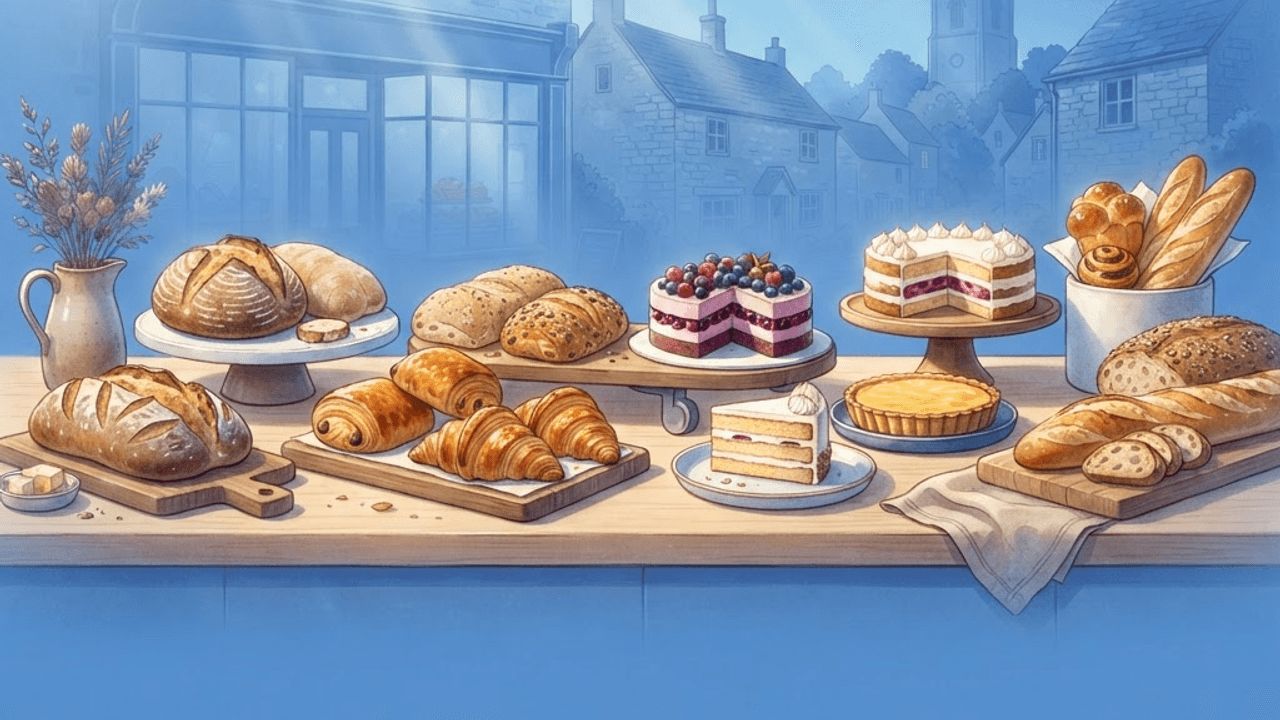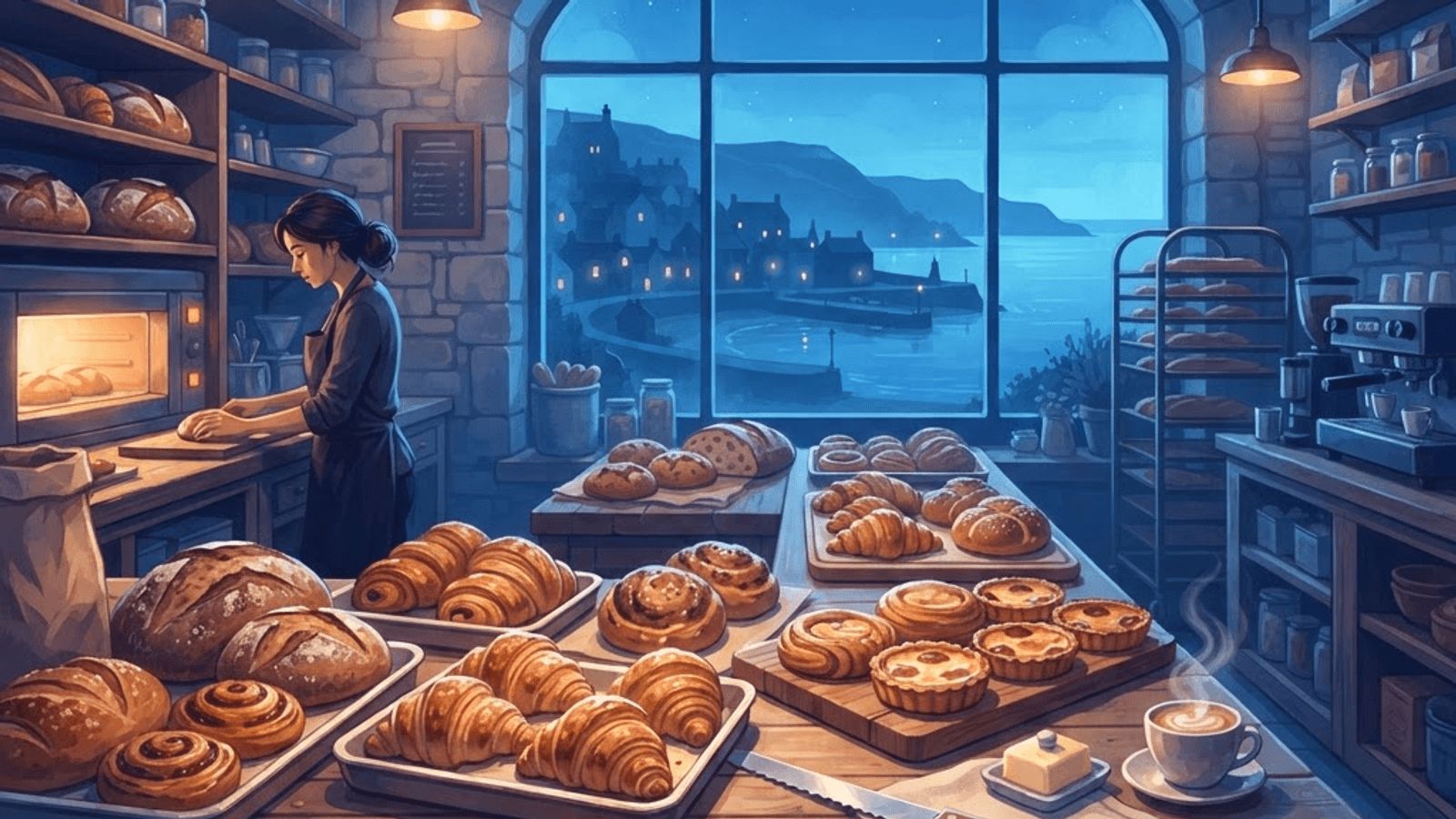
A County With a Real Baking Culture
Pembrokeshire has a baking heritage that predates any current food trend. Welsh cakes cooked on a bakestone, bara brith heavy with soaked fruit, and simple farmhouse loaves have been part of household routine here for generations. What has changed over the past decade is the arrival of a serious craft bakery movement alongside that tradition, driven by long-fermented sourdough, local stoneground flour and bakers who left city kitchens for the coast.
The county also has natural advantages. Welsh milling operations supply flour with genuine character, local dairies produce excellent butter, and the strong tourism trade supports bakeries that would struggle to survive on resident population alone. The combination has produced a bakery scene that punches well above the county size.
The Different Kinds of Bakery You Will Find
Traditional high street bakeries remain the backbone, particularly in Haverfordwest, Milford Haven, Pembroke and Fishguard. These are family businesses, often decades old, selling bloomers, tin loaves, pasties, custard slices and Welsh cakes at fair prices to people who have shopped there all their lives.
Craft sourdough bakeries are the fastest-growing category, typically small operations working with long fermentation, wood-fired or deck ovens and limited daily quantities. They usually sell out by early afternoon and often operate from a village premises or as part of a café.
Patisserie-focused bakeries concentrate on laminated pastry, viennoiserie and fine cakes, and are most common in the tourist towns of Tenby, Saundersfoot and Narberth. Farm shop and market bakers form a fourth group, baking for weekly markets in Haverfordwest, Fishguard, Narberth and Newport and supplying local delicatessens.
Bakeries frequently named by residents and visitors include Cleddau Bakehouse, Preseli Sourdough Company, Tenby Harbour Bakery, Narberth Craft Bakery, Saundersfoot Pastry House, Haven Bread Kitchen, Fishguard Wholegrain Bakers, Pembroke Traditional Bakery, Bluestone Stone Oven and Coastal Crust Bakery.
What to Look For in a Good Bakery
Crust and crumb tell you most of what you need to know. A properly fermented sourdough has a deeply coloured, blistered crust and an open, irregular crumb with a slightly tangy, complex flavour. Bread that is pale, uniformly fluffy and tastes only of salt has almost certainly been made quickly with improvers.
Ingredient transparency is a good indicator. Bakeries proud of their flour will name the mill. Those using Welsh butter, local eggs and seasonal fruit will say so. Short ingredient lists are generally a positive sign.
Limited ranges usually beat sprawling ones. A bakery producing six breads exceptionally well is more trustworthy than one offering forty products, most of which arrive frozen. Ask what is baked on the premises, because the answer is often revealing.
Timing matters more than at most food businesses. Craft bakeries bake overnight and sell through the morning, so arriving early is the difference between the full range and a bare shelf, particularly during summer weekends.
Regional Specialities Worth Seeking Out
Welsh cakes are the obvious starting point, best eaten warm from the bakestone with a dusting of sugar. Quality varies enormously, and the good ones are tender and lightly spiced rather than dry and dense.
Bara brith, the fruited tea loaf, should be moist and generously filled with fruit soaked in tea, sliced thickly and served with salted butter. Pembrokeshire bakeries also produce excellent savoury items, including pasties, sausage rolls made with local pork and cheese and onion turnovers.
Laverbread appears occasionally in more adventurous bakeries, worked into breads or savouries, reflecting the coastal food tradition. Seasonal baking is strong too, with hot cross buns, bonfire toffee cakes and Christmas fruit loaves all following the calendar closely.
Trends Shaping Pembrokeshire Baking
Slow fermentation continues to spread, partly for flavour and partly because customers report that long-fermented bread is easier to digest. Heritage and local grain is another movement, with bakers working with Welsh-grown wheat varieties and regional stoneground flour for distinctive flavour and shorter supply chains.
Inclusive baking has expanded significantly. Gluten-free, vegan and reduced-sugar options have moved from afterthought to properly developed products, though genuinely good gluten-free bread remains rare and worth seeking out.
Sustainability shows up in practical ways, including compostable packaging, surplus loaf schemes at the end of trading and collaboration with local cafés and restaurants to reduce waste.
Practical Advice for Visitors and Residents
Arrive before ten in the morning at craft bakeries during summer. Order celebration cakes and large orders well in advance, as small bakeries have limited capacity. If you are self-catering, a bakery loaf, local butter and Pembrokeshire cheese make a better lunch than anything a supermarket can offer.
Consider markets for variety, as several bakers who do not run permanent shops sell there. And if you find a loaf you love, buy two and freeze one, since good bread freezes well when sliced.
Final Thoughts
Pembrokeshire bakeries offer a genuine reason to plan a morning around food. The mix of long-established family bakers and ambitious craft newcomers means you can find a classic Welsh cake and an exceptional naturally leavened loaf within a short drive of one another. Support the small producers, get there early and pay attention to where the flour comes from.
Want your brand featured in front of decision-makers? Publish a guest post or get a link insertion in our guides through AAMAX's guest post and link insertion service.
Helpful Links
 SponsoredAAMAX — Full-Service Digital Agency
Write for Us
Share your expertise with our readers. We welcome guest contributions from industry specialists.
Pitch your idea