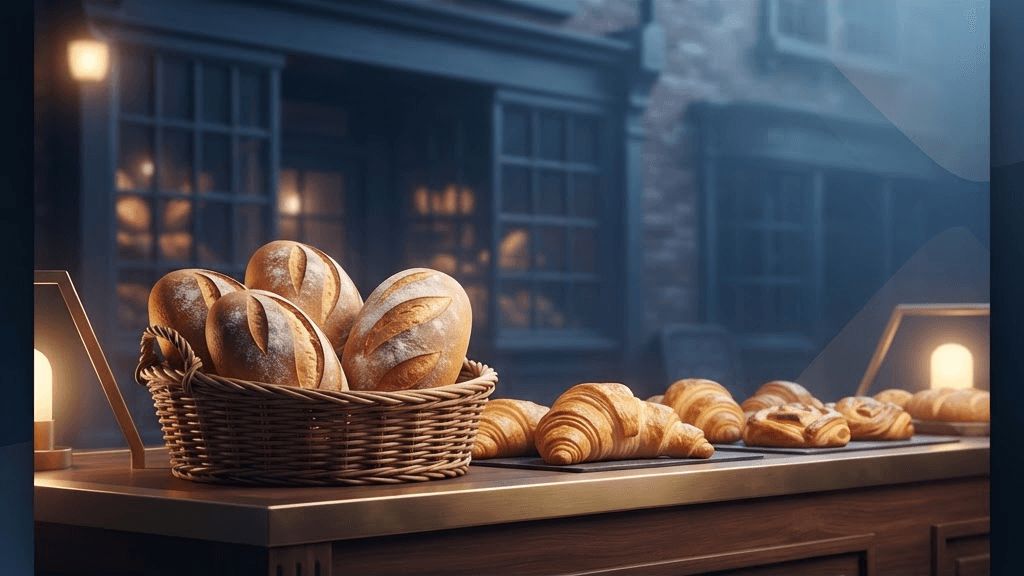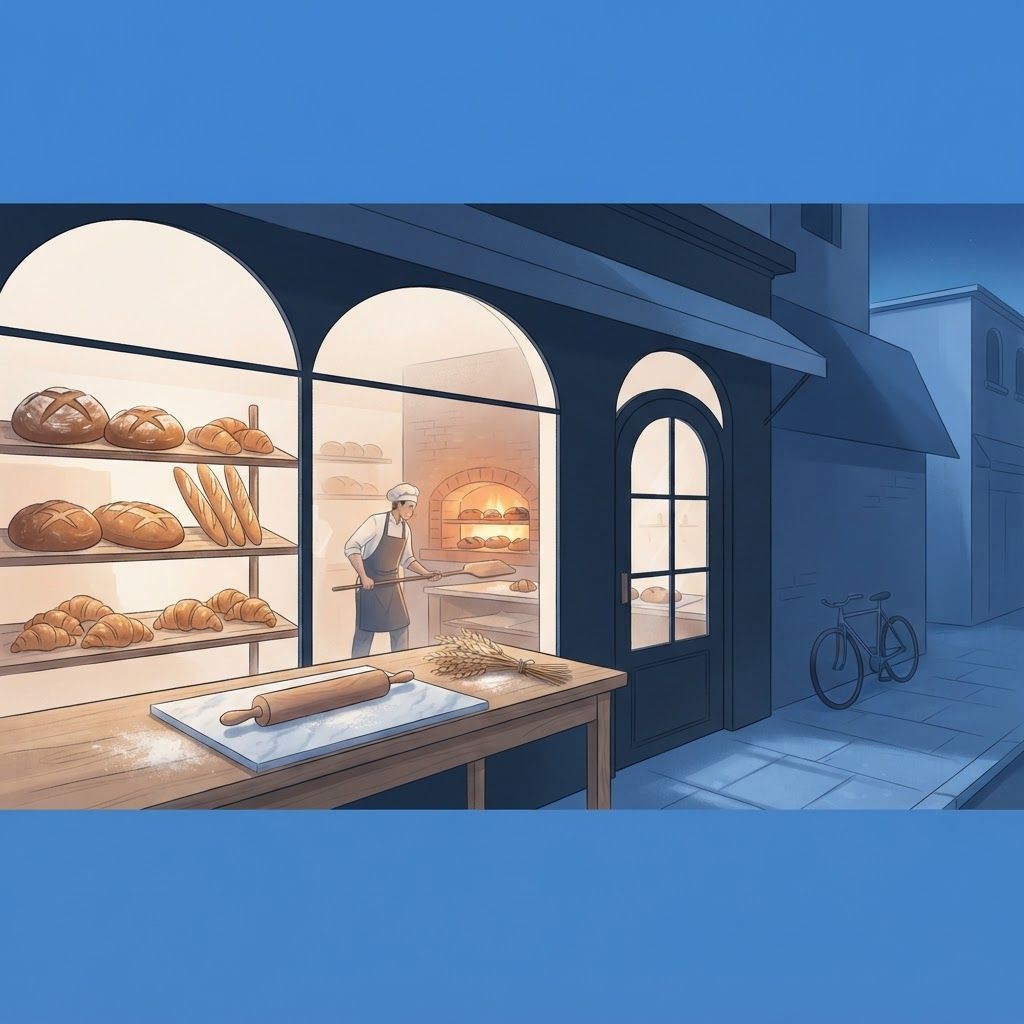
A Baking Tradition Rooted in the Downs
Bread has been baked commercially in East Hampshire for centuries, supported by the wheat grown on the chalk soils of the South Downs and the watermills that once lined the district's rivers. That heritage remains visible today in the number of independent bakeries operating in Alton, Petersfield, Liss, Liphook and the surrounding villages.
What makes the current baking scene notable is its diversity. Traditional family bakeries producing familiar tin loaves and iced buns operate alongside artisan microbakeries specialising in long-fermented sourdough, gluten-free producers serving a growing customer base, and continental patisseries offering laminated pastries to a standard that would hold up in any city.
The Craft Behind Good Bread
Understanding what separates exceptional bread from ordinary bread helps explain why craft bakeries command higher prices. Time is the principal variable. Industrial production compresses fermentation into a couple of hours using large quantities of yeast and processing aids. Craft bakers extend fermentation across twelve to twenty-four hours or longer, allowing enzymes to develop flavour compounds and break down components that some people find difficult to digest.
Flour quality is equally important. Many local bakers source from regional mills, some of which still use stone grinding, retaining more of the wheat germ and bran. Several bakeries in the district maintain relationships with specific farms, giving genuine provenance to their loaves.
The third factor is skill. Reading dough, adjusting hydration for humidity, judging proof by feel and managing oven heat are learned through years of practice. These are the elements that no equipment can substitute.
The Finest Bakeries in East Hampshire
1. Downland Craft Bakery
Operating in Alton, Downland Craft Bakery has built a devoted following for its naturally leavened sourdough. The bakery works exclusively with regionally milled flour and maintains a starter culture kept alive for many years. Its country loaf, with a deeply caramelised crust and open crumb, is widely regarded as among the best in the county.
2. Petersfield Bread Company
Petersfield Bread Company combines a working bakery with a small café. Alongside daily bread production, the team produces exceptional laminated pastries, with croissants and pain aux raisins that sell out most mornings. Seasonal specials draw on local fruit throughout the summer.
3. The Meon Valley Bakehouse
A village bakery with a strong community role, The Meon Valley Bakehouse produces a comforting range of traditional English baking. Bloomers, cottage loaves, lardy cake, Chelsea buns and substantial sausage rolls form the core offering, made to recipes largely unchanged for decades.
4. Liphook Artisan Bakers
Liphook Artisan Bakers focuses on wholegrain and ancient grain breads. Spelt, emmer, rye and khorasan feature prominently, appealing to customers seeking more nutritionally complex alternatives to standard white bread. The bakery is also known for its dense, long-keeping rye loaves.
5. Alton Patisserie
Alton Patisserie specialises in French-style pastry work. Fruit tarts, éclairs, opera cake and delicate macarons are produced daily, with a level of finish that reflects classical training. The shop also handles celebration cake commissions with considerable flair.
6. Bordon Village Bakery
Serving the growing Whitehill and Bordon community, Bordon Village Bakery has positioned itself as an everyday essential. Reliable daily bread, filled rolls, pasties and children's favourites are offered at approachable prices, and the bakery has become a genuine social hub for the area.
7. South Downs Gluten Free Bakery
South Downs Gluten Free Bakery operates a dedicated facility free from wheat contamination, serving customers with coeliac disease and gluten sensitivity. The bakery has invested heavily in developing recipes that avoid the dry, crumbly texture that characterises many gluten-free products, and its seeded loaf has won considerable praise.
8. Four Marks Farmhouse Bakery
Four Marks Farmhouse Bakery emphasises provenance, working with nearby farms for flour, eggs and dairy. The bakery's fruit cakes, scones and shortbread are staples at farmers markets across the district, and its seasonal hot cross buns generate queues each spring.
9. Clanfield Sourdough Microbakery
A small-batch operation working on a subscription and pre-order basis, Clanfield Sourdough Microbakery produces a limited number of loaves each baking day. The focused approach allows extremely long fermentation and exceptional consistency, with customers collecting directly from the bakery.
10. Liss Continental Bakery
Liss Continental Bakery brings European baking traditions to the district, producing German-style rye breads, Polish poppy seed cakes, Italian focaccia and Scandinavian cardamom buns. The variety has made it a favourite among customers looking for something beyond the British repertoire.
Trends in Local Baking
Several trends are evident across the district's bakeries. Interest in fermentation has grown substantially, with customers actively asking about proving times and starter cultures in a way that would have seemed unusual a decade ago. Bakeries have responded with greater transparency about their processes.
Waste reduction has become a visible priority. Many bakeries now offer discounted end-of-day bags, donate surplus to community projects, or transform unsold bread into croutons, breadcrumbs and bread pudding. This reflects both environmental awareness and sound commercial sense in a business with thin margins.
There is also a clear movement toward hybrid business models. Pure retail bakeries face difficult economics, so many have added café seating, wholesale supply to local restaurants, baking classes or subscription collection schemes to diversify income.
Getting the Most From Your Local Bakery
Visit early for the widest choice, particularly for pastries, which are usually baked in a single morning batch. Ask when specific items come out of the oven, as most bakers are happy to share their schedule. For sourdough, allow the loaf to cool completely before cutting, since the interior structure continues to set as it cools.
Store craft bread in a paper bag or bread bin rather than plastic, which softens the crust. Slicing and freezing is by far the best method for longer storage, allowing individual slices to be toasted directly from frozen.
Supporting the Craft
Independent bakeries operate on narrow margins against rising ingredient, energy and labour costs. Regular custom, pre-ordering for weekends and buying directly rather than through third-party platforms all make a meaningful difference. In return, East Hampshire's bakers continue to produce bread and pastry of genuine quality, keeping a centuries-old craft alive across the district's towns and villages.
Want your brand featured in front of decision-makers? Publish a guest post or get a link insertion in our guides through AAMAX's guest post and link insertion service.
Helpful Links
 SponsoredAAMAX — Full-Service Digital Agency
Write for Us
Share your expertise with our readers. We welcome guest contributions from industry specialists.
Pitch your idea