A Baking Tradition Shaped by Coast and Countryside
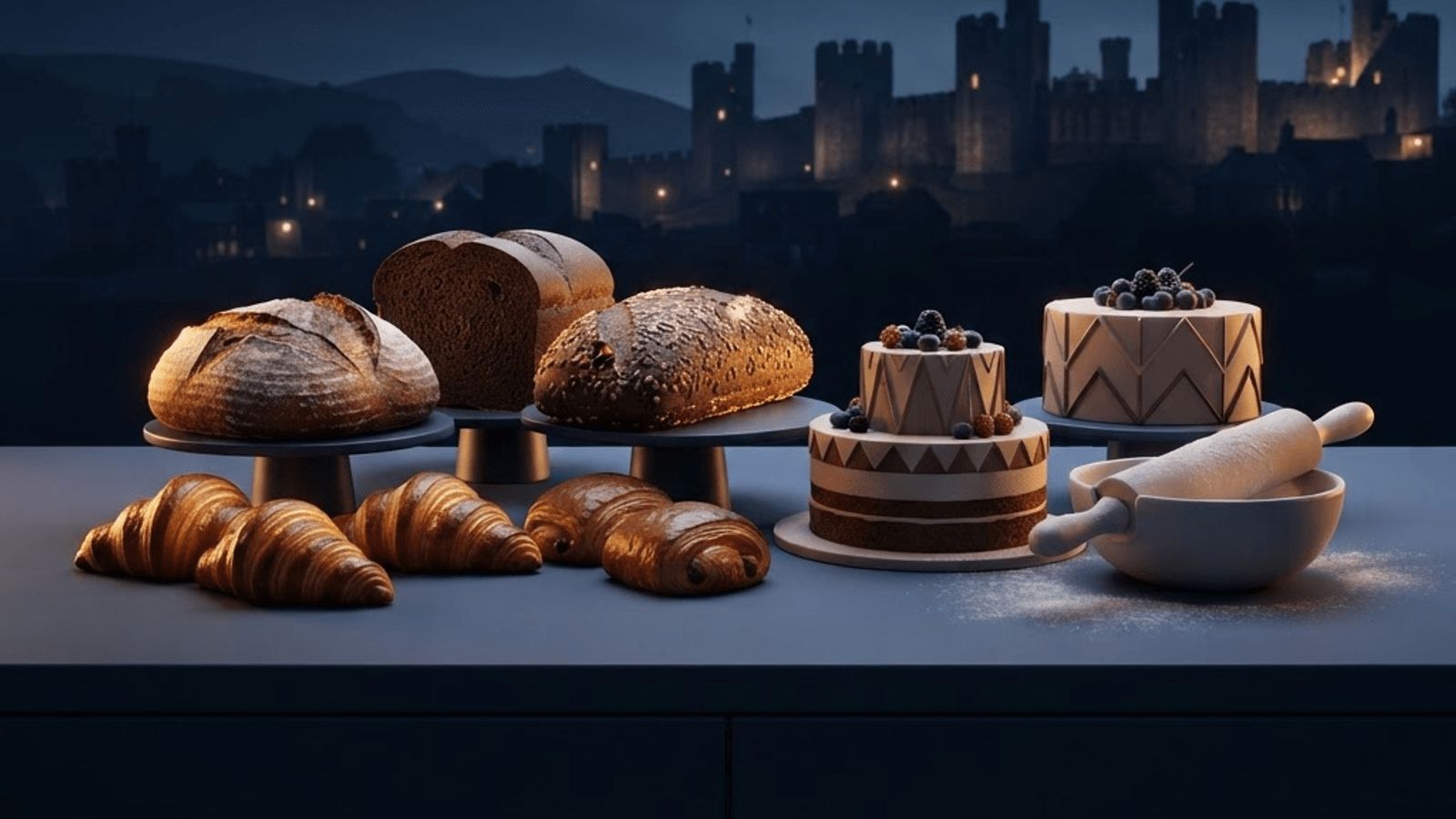
Baking in Conwy carries genuine historical weight. Welsh baking traditions developed around simple, nourishing food made from what was available locally, and the results have endured. Bara brith, the dark fruited tea loaf soaked overnight in tea, remains a fixture in cafes and bakeries throughout the county. Welsh cakes cooked on a bakestone are still made fresh daily in several shops, filling the surrounding street with the smell of spiced butter. Alongside these traditional items sits a newer wave of artisan bakers working with long fermentation, stone-milled flour and heritage grain, many of whom trained in cities before choosing to build their businesses on the North Wales coast.
Geography plays a part in the character of local baking. Conwy's mix of busy seaside towns and rural valley communities creates two distinct customer bases. Coastal bakeries in Llandudno, Colwyn Bay and Conwy town serve a fluctuating population of visitors that swells dramatically in summer, demanding volume, speed and portable items. Village bakeries in the Conwy Valley serve steady local trade where reputation is built slowly over years and a consistent daily loaf matters more than novelty.
The Rise of Artisan and Sourdough Baking
The most visible change in the county's baking landscape over recent years has been the growth of genuine artisan bread. Long-fermented sourdough, made with a natural starter and proved slowly over many hours, has moved from specialist curiosity to everyday purchase. Customers have become notably more informed, asking about hydration, flour provenance and fermentation times in a way that would have seemed unusual a decade ago.
This shift has been driven partly by health interest. Extended fermentation breaks down some components of wheat, and many people report that properly made sourdough sits more comfortably than fast-produced industrial bread. It has also been driven by flavour. A well-made loaf with a blistered, deeply caramelised crust and an open, moist crumb is simply a better product than a soft supermarket equivalent, and once people taste the difference they tend not to return.
The Top 10 Bakeries in Conwy
1. Conwy Town Bakehouse. Situated within the walled town, this bakery has become a reference point for sourdough in the county. It works with stone-milled British flour, ferments overnight and bakes in a deck oven that produces exceptional crust development. Its seeded rye and its country white are the standouts, while the cardamom buns sell out early most mornings.
2. Llandudno Artisan Bakery. A larger operation combining bread, patisserie and viennoiserie. The laminated pastry work is particularly strong, with croissants showing proper honeycomb structure and clean layer separation. It also produces beautifully finished tarts and entremets that would not look out of place in a city patisserie.
3. Bara Brith Traditional Bakers. As the name suggests, this bakery focuses on Welsh classics. The bara brith is made to a family recipe with overnight soaked fruit, and the Welsh cakes are cooked on a bakestone in view of customers. It also produces excellent teisen lap and a dense, buttery shortbread.
4. Conwy Valley Village Bakery. A traditional community bakery producing tin loaves, cobs, farmhouse bread and morning rolls for surrounding villages. Its value lies in reliability and warmth of service, and it supplies several local cafes and farm shops alongside its counter trade.
5. Colwyn Bay Patisserie. Specialising in fine pastry, celebration cakes and desserts, this bakery brings classical French technique to the coast. Choux work, mousse cakes and fruit tarts are executed with precision, and bespoke wedding cakes form a significant part of its business.
6. Deganwy Sourdough Company. A small-batch bakery built around a mature starter and organic flour. It bakes limited quantities each day and often sells out, operating a preorder system that regular customers rely on. Its focaccia and olive loaves have a devoted following.
7. Penmaenmawr Family Bakers. A long-standing family business producing pies, pasties, sausage rolls and savoury bakes alongside bread. Its steak and ale pie and its cheese and onion pasty are local institutions, and the shortcrust is made in-house daily.
8. Abergele Craft Bakery. Known for inventive seasonal specials while maintaining a strong core range. Autumn brings apple and cinnamon loaves, winter brings spiced fruit breads, and summer sees lighter ciabatta and herb breads. Its bread and butter pudding made from unsold loaves is a thoughtful waste-reduction touch.
9. Glan Conwy Gluten Free Bakery. A dedicated gluten-free facility, which matters enormously for people with coeliac disease who cannot risk shared-surface production. The quality of its breads and cakes has broken the common assumption that gluten-free baking must be a compromise.
10. Great Orme Coffee and Bakehouse. A combined bakery and coffee shop where baking happens in view of the seating area. Pastries are finished throughout the day rather than baked once in the morning, meaning afternoon customers get something genuinely fresh, and the espresso programme is taken as seriously as the baking.
Welsh Specialities Worth Seeking Out
Visitors to Conwy should make a point of trying several traditional items. Bara brith rewards being eaten thickly sliced with salted butter. Welsh cakes are best eaten warm, still slightly soft, dusted with caster sugar. Teisen lap, a moist flat cake, was historically carried by miners and remains an excellent accompaniment to tea. Picau ar y maen, another name for the bakestone cake, appears on many counters, and Welsh oatcakes made with local oats provide a savoury alternative alongside the excellent regional cheeses.
Ingredients, Provenance and Sustainability
Local bakers have increasingly shifted towards regional sourcing. Welsh and British flour, Welsh butter, free-range eggs from nearby farms and honey from local keepers appear routinely on ingredient lists. Several bakeries work with mills that stone-grind heritage grains, producing flour with more flavour and character than commodity alternatives.
Waste reduction has become a shared priority. Day-old bread is turned into croutons, breadcrumbs, puddings and French toast for cafe menus, and end-of-day discounting or donation to community organisations has become common practice. Packaging has moved towards paper and compostable materials, driven both by conviction and by clear customer expectation.
How to Judge a Good Bakery
A few practical indicators separate genuine craft baking from reheated frozen product. Look at the crust on the bread, which should show varied colour and blistering rather than uniform paleness. Check whether the shop smells of baking in the morning, which it will only if baking happens on site. Ask what time the bread comes out of the oven, because a real baker will know precisely. Examine a croissant in cross-section, where visible layers indicate proper lamination.
Seasonality is another good sign. A bakery that changes its offering through the year is paying attention to ingredients rather than repeating a fixed production schedule indefinitely.
The Future of Baking in Conwy
Rising ingredient and energy costs have put real pressure on small bakeries, and some have responded by reducing range and focusing on what they do best, which has arguably improved quality. Preorder systems and subscription bread boxes have helped stabilise production planning. Collaboration is also increasing, with bakeries supplying local cafes, restaurants and farm shops, creating a more interconnected food economy across the county. For anyone visiting or living in Conwy, the current standard of baking is genuinely high and well worth exploring beyond the obvious high street options.
Want your brand featured in front of decision-makers? Publish a guest post or get a link insertion in our guides through AAMAX's guest post and link insertion service.
Helpful Links
 SponsoredAAMAX — Full-Service Digital Agency
Write for Us
Share your expertise with our readers. We welcome guest contributions from industry specialists.
Pitch your idea