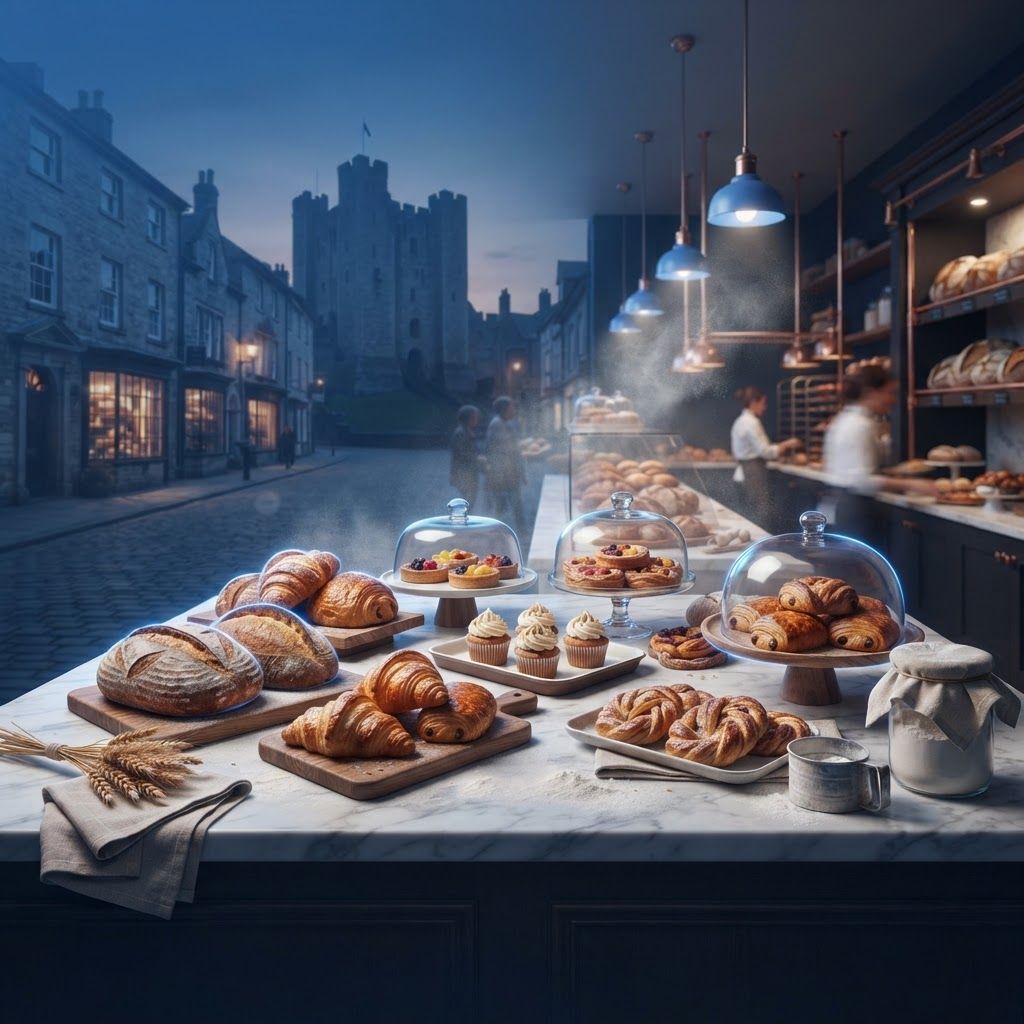
A Baking Culture Rooted in Essex Grain
Colchester sits at the heart of one of Britain's most productive arable regions. The fields of north Essex and south Suffolk produce substantial quantities of wheat, and while much of it enters industrial supply chains, an increasing proportion is milled locally and finds its way into bakeries within a short distance of where it grew. This proximity to grain has quietly shaped the town's baking culture, giving local bakers access to genuinely regional flour.
The town's bakery scene has also been transformed by the broader British sourdough revival. Where a decade ago artisan bread was a niche interest, it is now a mainstream expectation, and Colchester supports a healthy number of independent bakeries alongside long-established family firms. The result is unusual variety for a town of this size, spanning rustic long-fermented loaves, precise French patisserie, traditional English cakes and specialist gluten-free production.
What Separates Artisan Baking from Industrial Production
Understanding the difference helps explain the price gap. Industrial bread relies on high-speed mixing and chemical improvers to produce a loaf in a couple of hours. Artisan baking uses long fermentation, sometimes exceeding twenty-four hours, which develops flavour compounds and begins breaking down starches and gluten proteins before the bread is ever eaten. Many people who find commercial bread uncomfortable digest properly fermented sourdough far more easily.
Ingredient quality matters too. Real butter rather than vegetable fat, whole eggs rather than powder, and unbleached flour without additives all change both flavour and texture. Skilled hand work in shaping and lamination produces results that machinery cannot replicate, particularly in croissants and other laminated pastries where the layering is done by feel as much as by measurement.
The Finest Bakeries in Colchester
Camulodunum Bakehouse has become something of a benchmark for sourdough in the town. The bakery works with locally milled flour and runs extended fermentation schedules, producing loaves with pronounced open crumb structure and a dark, blistered crust. Their seeded rye and country white are consistently excellent, and morning queues are common.
Castle Street Patisserie brings classical French technique to Colchester, producing viennoiserie, tarts and entremets to a standard rarely found outside major cities. The croissants are laminated by hand and proved slowly, and the seasonal fruit tarts change according to what is available from Essex growers.
Colne Valley Bakery is a long-established family operation that has served the area for generations, specialising in traditional English baking. Their bloomers, cottage loaves, Chelsea buns, Eccles cakes and fruit slabs represent a style of baking that has become increasingly rare, executed with the confidence that decades of repetition brings.
Stanway Sourdough Company operates on a slightly larger scale, supplying restaurants and cafes across north Essex alongside their own retail counter. Their focaccia and ciabatta have a strong local reputation, and the bakery is notable for its transparency about flour sourcing and fermentation times.
Hythe Artisan Breads focuses on wholegrain and ancient grain baking, working with spelt, emmer and einkorn alongside conventional wheat. The loaves are dense, nutty and highly nutritious, appealing to customers prioritising nutritional density over lightness.
Abbey Gate Cake Studio concentrates on celebration and wedding cakes, combining serious baking with accomplished sugar craft. The studio works to commission, and its reputation rests on cakes that taste as considered as they look, an achievement less common in the decorative cake world than one might hope.
Wivenhoe Village Bakery serves the riverside community with a small daily range baked on the premises. The atmosphere is genuinely local, and the bakery has become a fixture of village life as much as a retail business. Their morning buns and simple white tin loaves sell out early.
Roman River Free From Bakery addresses a genuine gap, producing gluten-free and allergen-conscious baking in a dedicated environment that avoids cross-contamination. Their breads and cakes achieve texture that free-from baking often fails to deliver, and the bakery has become an important resource for coeliac customers across the region.
Lexden Continental Bakery reflects Colchester's diverse population, producing central and eastern European breads and pastries alongside Mediterranean specialities. Rye breads, poppyseed rolls, strudels and filled pastries make this a genuinely distinctive stop.
Mersea Road Doughnut Works takes a single product extremely seriously, producing brioche-style doughnuts filled to order with seasonal creams, curds and jams. The dough is proved slowly and fried in small batches throughout the day, which makes an enormous difference to texture.
Trends in Contemporary Baking
Several developments are visible across the sector. Regional grain sourcing has moved from niche to mainstream, with bakers increasingly naming the farm and mill behind their flour. Reduced waste practices are widespread, including bread-to-bread recycling where unsold loaves are dried and returned to new dough, and pre-order systems that allow bakeries to produce closer to actual demand.
Fermentation science has become a subject of genuine customer interest, with more bakeries willing to discuss hydration levels, starter maintenance and proving schedules openly. Plant-based baking has improved dramatically as vegan laminated pastry techniques have matured. And there is a noticeable revival of interest in historic British regional baking, with recipes that had nearly disappeared reappearing on counters.
How to Judge a Good Bakery
Look at the crust. A well-baked artisan loaf will have colour, some blistering and a crust that crackles rather than yields softly. Ask when the bread was baked, since a bakery proud of its schedule will answer immediately. Enquire about the flour, because bakers who care about ingredients enjoy talking about them.
Examine the pastry. Croissants should show visible layers when torn and should leave flakes behind. Check whether the range changes seasonally, which indicates genuine kitchen engagement rather than fixed production. And consider the queue: sustained local demand at a small bakery is usually the most reliable indicator available.
Final Thoughts
Colchester's bakeries offer remarkable range, from long-fermented sourdough and hand-laminated patisserie through to traditional English baking and specialist free-from production. The town's proximity to Essex grain and its healthy independent retail culture have combined to sustain a scene that rewards exploration. Visiting several over a few weeks is the best way to find the loaf and the counter that suit you.
Want your brand featured in front of decision-makers? Publish a guest post or get a link insertion in our guides through AAMAX's guest post and link insertion service.
Helpful Links
 SponsoredAAMAX — Full-Service Digital Agency
Write for Us
Share your expertise with our readers. We welcome guest contributions from industry specialists.
Pitch your idea