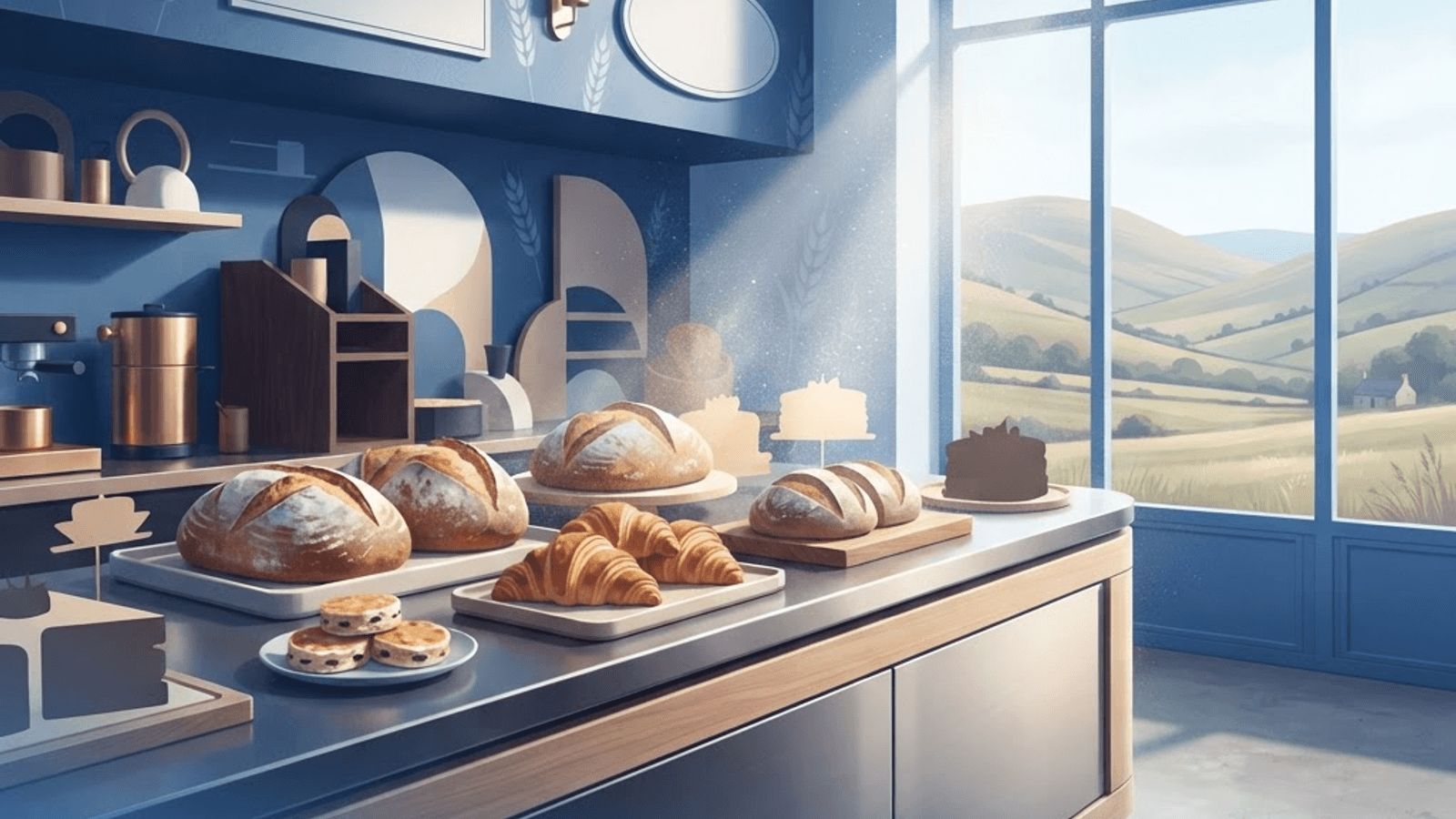
A County with Baking in Its Bones
Carmarthenshire's baking heritage is inseparable from its agriculture. This is a county of dairy and grain, and the traditional recipes reflect that abundance: Welsh cakes cooked on a bakestone with generous butter, bara brith heavy with fruit and tea, teisen lap that keeps moist for days, and the enriched breads that fed farming families through long working days.
What makes the county's current baking scene interesting is that this tradition never became a museum piece. It sits alongside a genuine artisan revival, with bakers producing long-fermented sourdough, laminated pastries and continental breads while still selling Welsh cakes by the dozen on market days. The market halls at Carmarthen and Llanelli, the food-focused high street of Llandeilo and the villages of the Tywi and Towy valleys all support bakeries that would hold their own anywhere.
What Defines Quality in a Bakery
Fermentation time is the clearest technical marker. Bread developed slowly over many hours has more flavour, better texture and improved digestibility compared with fast-produced equivalents. Bakers who talk openly about their fermentation schedules are usually the ones producing the best bread.
Flour sourcing matters enormously and is where Welsh bakeries have an advantage. Several regional mills produce stoneground flour from Welsh and border-county grain, and bakers using it produce bread with a character that industrial flour cannot deliver. The revival of heritage wheat varieties has added further distinctiveness.
Butter and dairy quality is decisive for pastry and Welsh cakes alike. In a county where dairy farming is a defining industry, using genuinely local butter is both practical and noticeable in the finished product. The difference in a croissant made with high-fat local butter is unmistakable.
Beyond ingredients, the mark of a serious bakery is consistency: the same loaf being excellent on a wet Tuesday in February as on a busy Saturday in August.
The Ten Bakeries Worth Seeking Out
Carmarthen Market Bakery represents the traditional market-hall bakers who have served the county town for generations. Their strength is doing familiar things extremely well: crusty white tin loaves, custard slices, Welsh cakes made in front of customers and pies with proper shortcrust.
Tywi Valley Sourdough exemplifies the modern artisan micro-bakery. Small batches, long overnight fermentation, local stoneground flour and a limited range done exceptionally rather than a broad range done adequately.
Llandeilo Artisan Bakehouse stands for the destination bakeries in the county's food-conscious towns. Laminated pastries, seasonal tarts, sourdough and good coffee draw visitors who plan trips around them.
Bara Brith Traditional Bakers covers the specialists in Welsh baking heritage. Bara brith, teisen lap, Welsh cakes and Aberffraw biscuits made to family recipes, often supplying farm shops and delicatessens across the region.
Llanelli Family Bakers reflects the long-established town bakeries serving daily needs across several shops: sandwiches, sausage rolls, iced buns and reliable everyday bread at prices local families can sustain.
Coastal Wholegrain Bakery represents the health-focused bakers concentrating on wholemeal, rye, spelt and seeded breads, often with strong gluten-free and vegan ranges produced in genuinely separated conditions.
Amman Valley Village Bakery stands for the village bakeries that anchor smaller communities, frequently combining bakery, small shop and informal meeting place in one premises.
Pendine Coast Patisserie covers the patisserie specialists producing celebration cakes, fine pastries and desserts, with the technical precision that decorated work demands.
Cross Hands Wholesale Bakers represents the production bakeries supplying cafes, pubs, farm shops and hotels across west Wales, operating at scale while maintaining recognisable quality standards.
Gwendraeth Farmhouse Bakery reflects the farm-based bakeries that grow or source grain locally and bake on site, offering the shortest possible chain from field to loaf.
Trends in Carmarthenshire Baking
Sourdough has moved from novelty to expectation, and with it a broader customer understanding of fermentation. Bakers report that customers now ask about proving times and flour origin, which was rare a decade ago and drives quality upward.
Local grain has become a genuine movement rather than a marketing claim. The re-establishment of milling capacity in Wales and the growing of heritage varieties has allowed bakeries to build supply chains measured in tens of miles, which appeals commercially as well as environmentally.
Dietary range has expanded substantially. Credible gluten-free baking, which requires separate handling and different technique rather than substitute flour in the same process, is now available across the county rather than in one or two specialist locations.
Pre-ordering and subscription models have spread since the pandemic and suited small bakeries remarkably well. Baking to known demand reduces waste dramatically and allows micro-bakeries to operate profitably at a scale that would otherwise be impossible.
Rising input costs remain the sector's central pressure. Energy for ovens, wheat prices and butter costs have all moved sharply, and bakeries have responded by tightening ranges, extending shelf life through better fermentation and being transparent with customers about pricing.
How to Judge a Bakery Yourself
Buy a plain loaf. Enriched or heavily flavoured products can hide poor technique, but a simple white or wholemeal loaf reveals everything about fermentation, shaping and baking. Look for an open, irregular crumb in sourdough, a deep-coloured crust and a flavour that develops rather than tasting merely of yeast.
Visit late in the day. A bakery that has sold out of its bread has judged demand well and is baking to order rather than overproducing. Empty shelves in the afternoon are usually a good sign.
Ask about the Welsh cakes. In this county, every bakery makes them, and the quality varies enormously. Good ones are cooked on a bakestone, generously buttered, lightly spiced and eaten warm. It is a reliable test of whether a bakery cares.
Why the Local Scene Matters
Bakeries occupy an unusual position in Carmarthenshire's communities. They open early, they see the same customers daily, and they connect local grain and dairy to local tables through a chain short enough to see end to end. The county's best bakeries succeed by respecting a genuine tradition while refusing to be limited by it, and that balance is what makes them worth travelling for.
Want your brand featured in front of decision-makers? Publish a guest post or get a link insertion in our guides through AAMAX's guest post and link insertion service.
Helpful Links
 SponsoredAAMAX — Full-Service Digital Agency
Write for Us
Share your expertise with our readers. We welcome guest contributions from industry specialists.
Pitch your idea